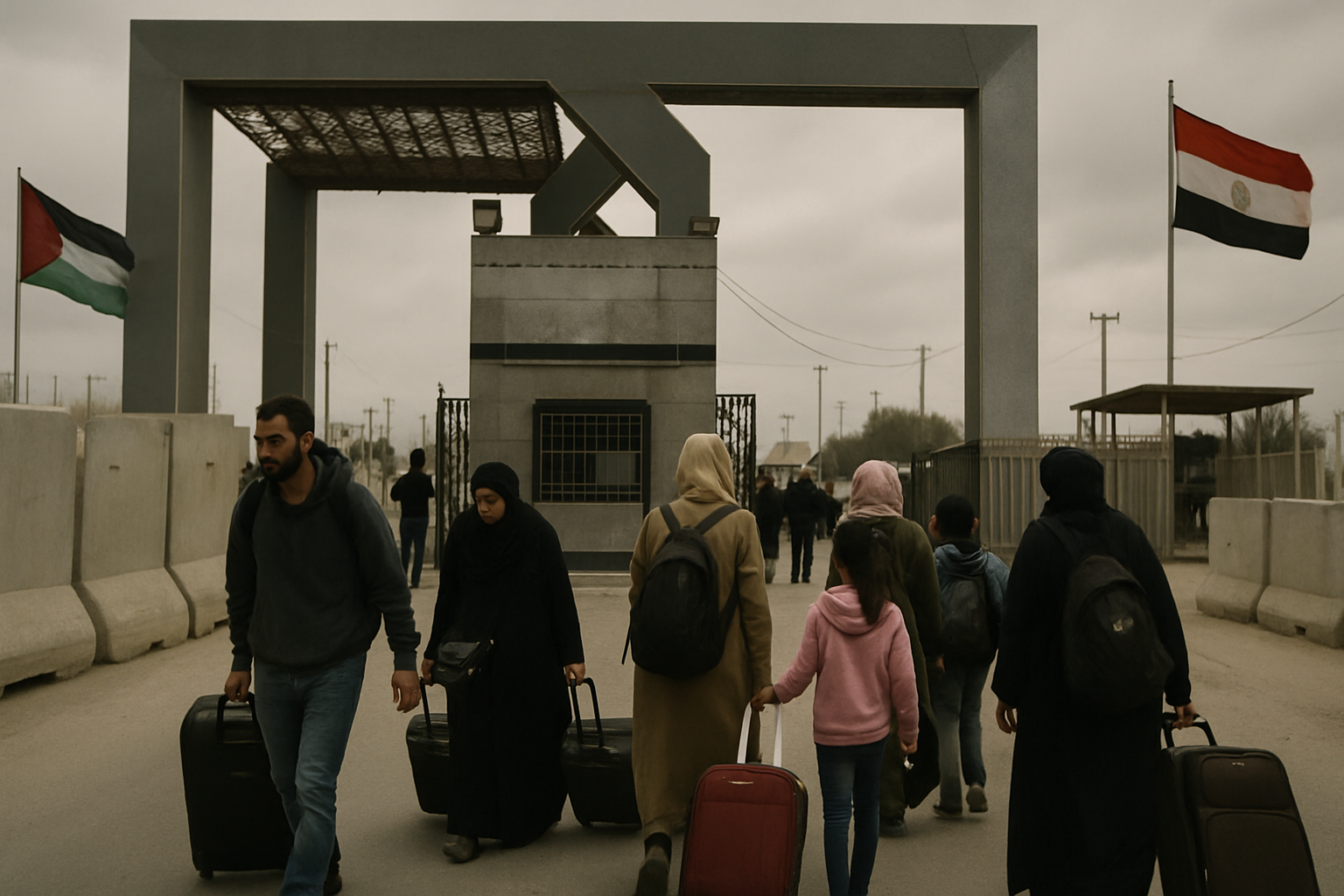
Palestinians who had been stranded in Egypt for months have started returning to Gaza through the newly reopened Rafah border crossing, but the fragile ceasefire continues to face systematic violations that threaten to undermine the US-backed peace agreement.
The vital border crossing, which connects Gaza to Egypt, reopened last week for the first time since mid-2024, marking a crucial milestone in the ceasefire implementation. The crossing serves as Gaza's primary gateway for its 2.3 million residents, offering hope for medical evacuations and family reunifications that have been stalled for nearly two years.
Documented Ceasefire Violations Mount
However, the crossing's reopening occurs against a backdrop of continued violence. According to the Palestinian Government Media Office, Israeli forces have committed 1,620 systematic violations of the ceasefire agreement over the four months since it took effect on October 10, 2025. These violations have resulted in 573 Palestinian deaths and 1,553 injuries, fundamentally undermining the humanitarian protocol attached to the agreement.
The violations span multiple categories, including 560 instances of gunfire, targeted killings, and building demolitions across various areas of the Gaza Strip. Most recently, three Palestinians were killed by Israeli forces on Tuesday, continuing a pattern of daily violations that have persisted for 122 consecutive days.
"The occupation continues its systematic violations of the ceasefire agreement, recording violations daily that undermine the essence of the agreement and its humanitarian protocol."
— Gaza Government Media Office Statement
Limited Operations at Rafah Crossing
Despite its symbolic importance, the Rafah crossing operates under severe restrictions that limit its humanitarian impact. Field monitoring reveals a sharp decline in crossing numbers, with only 27 Palestinians managing to cross on the opening day compared to a daily quota of 200. The crossing faces what Hamas officials describe as "systematic harassment" by Israeli security forces.
Palestinian sources report that of 50 Palestinians scheduled to return to Gaza, Israeli authorities denied passage to 38 individuals, forcing extended delays and creating additional hardship for families seeking reunification. The crossing operates under complex arrangements involving Palestinian staff, EU monitoring, and Israeli-Egyptian security protocols.
Mounting International Pressure
The continued violations have drawn widespread international condemnation. Eight Arab nations - Saudi Arabia, Jordan, Egypt, UAE, Qatar, Indonesia, Pakistan, and Turkey - have jointly condemned the breaches, warning that they threaten broader peace initiatives including Trump's Gaza reconstruction plan and UN Resolution 2803 implementation.
More than 400 EU diplomats have called for increased pressure on Israeli authorities to ensure ceasefire compliance. The European Left Coalition has gathered over 400,000 signatures on a petition opposing EU-Israel partnerships, while global protests have erupted in Berlin, Paris, and Rome demanding an end to arms exports.
Humanitarian Crisis Deepens
The restrictions at Rafah have severely impacted Gaza's humanitarian situation. Approximately 20,000 Palestinians remain on waiting lists for medical evacuation, many requiring urgent treatment unavailable in Gaza's damaged healthcare system. The total Gaza death toll has reached 71,800 since the conflict began.
Gaza's Civil Defense has shut down operations due to fuel shortages, hampering emergency response capabilities at a critical time. Egypt has mobilized 150 hospitals on high alert with 300 ambulances deployed to support medical evacuations, but the limited crossing capacity prevents effective utilization of these resources.
Pattern of Implementation Failures
International observers describe the situation as representing "systematic implementation failures" rather than isolated incidents. The violations include recent attacks such as the February 4 strikes that killed 24 Palestinians, including seven children and a five-month-old infant in what human rights groups characterized as "double-tap" strikes targeting medical workers.
The Palestine Center for Information has documented that violations are distributed across various forms of aggression, including artillery bombardment of residential areas, targeted assassinations, and systematic demolition of infrastructure throughout the Gaza Strip.
Regional Diplomatic Implications
The ongoing violations threaten broader regional peace initiatives, including President Trump's planned Board of Peace meeting on February 19, 2026, which aims to secure over $1 billion in reconstruction commitments from 27 nations. Hungarian Prime Minister Viktor Orban has confirmed attendance at the Donald Trump Institute of Peace in Washington.
The systematic nature of the violations challenges traditional post-conflict frameworks and raises fundamental questions about enforcement mechanisms for international ceasefire agreements. Regional diplomatic pressure continues to mount as Arab nations maintain their condemnation of what they characterize as violations of international law.
International Law Implications
Legal experts argue that the systematic extension of Israeli control and the continued military operations in Gaza may constitute violations of UN Security Council resolutions and Geneva Conventions governing occupied territories. The pattern of violations threatens to erode confidence in international conflict resolution mechanisms.
The European Union has characterized Israeli actions as steps in the wrong direction, emphasizing that any form of annexation remains illegal under international law. Critics argue that the failure to enforce ceasefire agreements undermines the credibility of international peace-building efforts.
Looking Ahead
Despite the challenges, Palestinian families continue to attempt crossings at Rafah, hoping to reunite with loved ones or access medical care. The crossing serves as a critical test case for broader ceasefire implementation and international community's ability to enforce humanitarian agreements.
Regional diplomatic efforts continue, with Arab nations maintaining pressure for full ceasefire compliance while supporting reconstruction initiatives. However, the systematic nature of documented violations raises fundamental questions about the sustainability of the current peace framework and the need for enhanced international enforcement mechanisms.
As Palestinians slowly return through the reopened crossing, their journey symbolizes both hope and the ongoing challenges facing Gaza's path to recovery and sustainable peace.