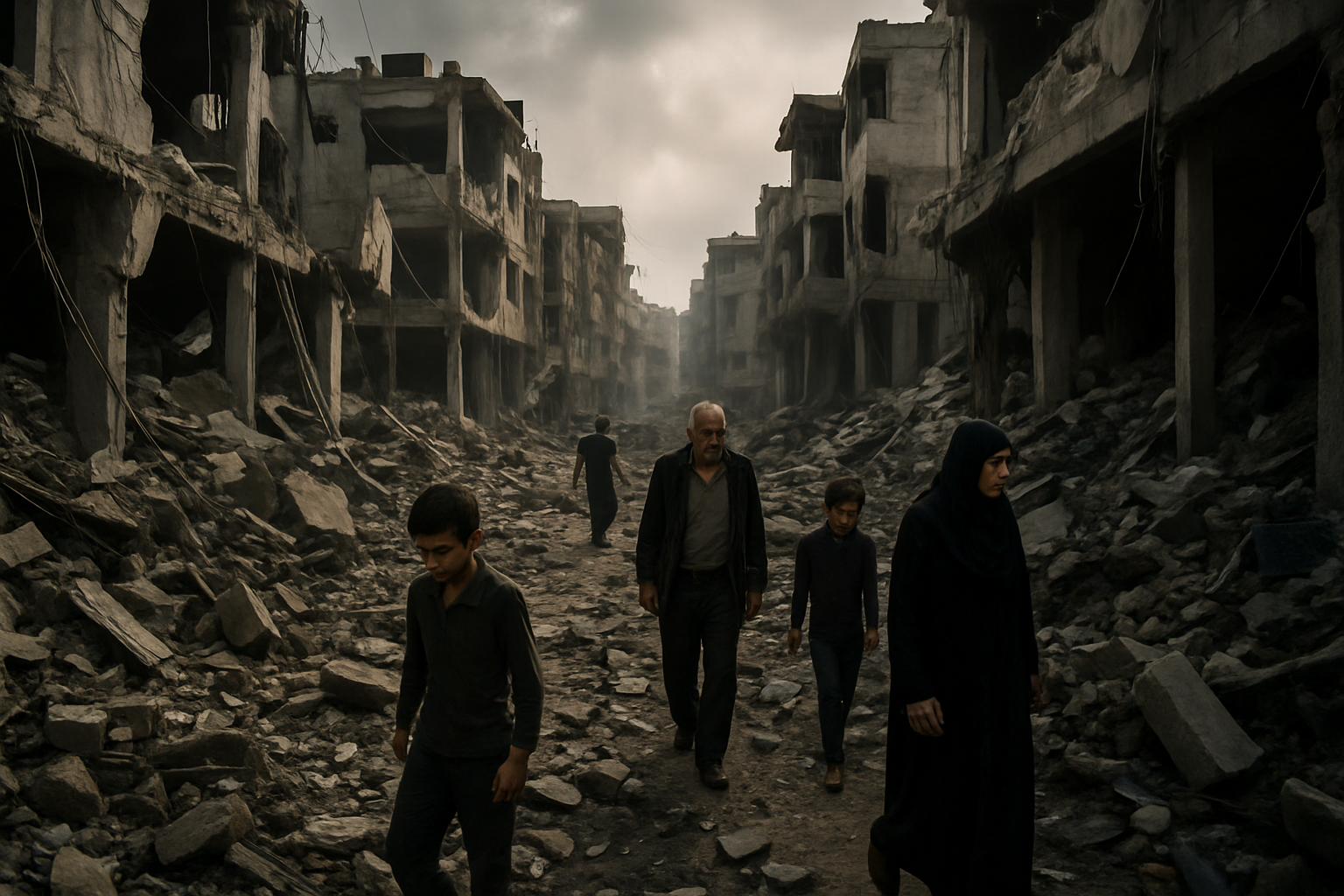
Eight Palestinians have been killed in renewed Israeli military operations across Gaza, including seven civilians in a drone strike near Khan Younis and one woman who succumbed to injuries sustained in previous Israeli attacks, according to Palestinian health authorities documenting what they describe as systematic ceasefire violations.
The latest casualties, reported Tuesday by the Palestinian Health Ministry, bring the total death toll to over 680 Palestinians killed during what was supposed to be a peace period under ceasefire agreements established in October 2025. The ministry has documented more than 1,600 systematic violations since the truce began, raising fundamental questions about the viability of negotiated agreements in the absence of robust enforcement mechanisms.
Latest Casualties Amid Ongoing Operations
Among the dead, identified by Palestinian sources, was Khamis al-Qassas, killed in a drone strike near the Sheikh Nasser neighborhood in Khan Younis. The attack occurred in broad daylight, marking another instance of what Palestinian officials characterize as the deliberate targeting of civilians in violation of international humanitarian law.
Additionally, Heba Jamal Abu Khater died from wounds sustained in previous Israeli military actions, highlighting the ongoing medical crisis that has left thousands of Palestinians struggling to access adequate healthcare. A 16-year-old boy, Mohammed Majdi al-Jaabari, was also killed after being struck by a settler's vehicle in Beit Ainoun, north of Hebron in the West Bank, according to medical sources.
These incidents reflect a broader pattern of violence that has persisted despite international diplomatic efforts to establish lasting peace. The Palestinian Center for Media reported that Israeli forces continue operations across multiple sectors, with particular intensity in areas previously designated as civilian protection zones.
Systematic Ceasefire Violations
According to comprehensive documentation by the Gaza Health Ministry and civil society organizations, Israeli forces have conducted over 1,600 documented violations of ceasefire agreements since October 2025. This systematic pattern includes targeted killings, restrictions on movement, artillery bombardments, and the destruction of civilian infrastructure.
"Where is the ceasefire?" asks Dr. Mohamed Abu Selmiya, Director of Al-Shifa Hospital, a question that has become emblematic of Palestinian frustrations with the continued military operations despite international agreements.
— Dr. Mohamed Abu Selmiya, Al-Shifa Hospital Director
The Gaza Civil Defense has completely shut down due to fuel shortages, severely hampering emergency response capabilities during critical incidents. This has left rescue teams unable to reach victims trapped under rubble or provide essential emergency services to the 2.3 million Palestinians living in the besieged territory.
Humanitarian Access Restrictions
The Rafah crossing, Gaza's only non-Israeli controlled access point, remains severely restricted with only 27 Palestinians able to cross daily versus the agreed quota of 200. Hamas officials condemn what they describe as "systematic harassment" by Israeli security forces, which has resulted in the denial of crossing permits for 38 of 50 planned returnees in recent operations.
More than 20,000 Palestinians await medical evacuation for treatment abroad, with Health Ministry Director Zaher al-Wahidi reporting that between 6-10 critically ill patients die daily due to blocked medical corridors. This medical crisis has been exacerbated by systematic restrictions on humanitarian aid and medical supplies.
International Response and Condemnation
The systematic nature of ceasefire violations has prompted unprecedented international condemnation from 85 UN member states, representing the most comprehensive diplomatic opposition since the 1967 occupation began. Eight Arab nations, including countries with normalized relations with Israel such as the UAE and Saudi Arabia, have issued joint condemnations calling the violations breaches of international law.
UN Secretary-General António Guterres has described the regional situation as "the greatest test of multilateral cooperation in the modern era," while the European Union has characterized Israeli actions as steps in the wrong direction, emphasizing that territorial expansion violates international law.
More than 400 EU diplomats have demanded increased pressure on Israel to comply with ceasefire agreements, while a European Left Coalition petition against EU-Israel partnerships has exceeded 400,000 signatures, demonstrating significant grassroots opposition to continued violations.
Regional Diplomatic Concerns
The systematic violations have also threatened major diplomatic initiatives, including the Trump administration's $17 billion Gaza reconstruction pledge announced in February 2026. The Board of Peace summit, which secured commitments from 27 nations for the largest international Gaza financial pledge in history, faces fundamental implementation obstacles due to ongoing security deterioration.
Regional mediators including Qatar and Egypt continue dialogue efforts, but systematic violations are undermining confidence in negotiated solutions. The continuation of military operations during supposed peace periods has raised questions about the effectiveness of traditional diplomatic frameworks in addressing deep-rooted political and security challenges.
Broader Context of Regional Crisis
These Gaza violations occur within the context of broader Middle East instability, including the complete collapse of the November 2024 US-French brokered Israel-Hezbollah ceasefire in Lebanon. That agreement, which had held for over a year, broke down in March 2026 when Hezbollah chose "Iranian solidarity over Lebanese sovereignty" following regional escalations.
The Lebanon crisis has resulted in 1.2 million displaced persons, representing 25% of the population, and over 2,000 civilian deaths. Systematic targeting of medical personnel in Lebanon has resulted in 26 paramedics killed and 51 wounded since March 2026, with the deadliest attack on the Burj Qalaouiyah healthcare center killing 12 medical workers in what constitute potential Geneva Conventions violations.
Global Economic Impact
The broader regional crisis has created global disruptions including over 18,000 cancelled flights worldwide, oil prices exceeding $100 per barrel for the first time since 2014, and threats to the Strait of Hormuz affecting 40% of global oil transit. The International Energy Agency has initiated its largest strategic reserve release of 400 million barrels in its 50-year history to stabilize energy markets.
Legal and Humanitarian Implications
International legal experts cite systematic violations of UN Security Council resolutions and Geneva Conventions governing occupied territories. The pattern of violations extends beyond isolated military incidents to include comprehensive restrictions on civilian movement, systematic denial of medical access, and what human rights organizations describe as collective punishment of the Palestinian population.
The targeting of medical facilities and personnel, restrictions on humanitarian aid, and systematic control of civilian movement meet international legal definitions of serious breaches of humanitarian law requiring international investigation and accountability measures.
"This represents a systematic pattern of violations rather than isolated incidents, demonstrating fundamental challenges in maintaining negotiated peace without addressing underlying political and security issues."
— International Legal Experts
Template-Setting Precedent
The crisis is being viewed by international observers as a template-setting moment for 21st-century conflict resolution mechanisms. The success or failure of international responses to systematic ceasefire violations will influence territorial sovereignty disputes globally and set precedents for how the international community addresses violations in occupied territories worldwide.
Ongoing Challenges and Future Implications
The persistence of violence despite multiple ceasefire agreements highlights the fragility of negotiated solutions when underlying political tensions remain unresolved. Military analysts warn that continued systematic violations could undermine international mediation credibility and potentially trigger broader regional confrontations involving multiple actors.
The current pattern represents what observers describe as "systematic implementation failures" versus isolated ceasefire breaches, raising fundamental questions about enforcement mechanisms and the international community's capacity to ensure compliance with negotiated agreements.
As regional diplomatic initiatives continue, including ongoing mediation efforts and proposed peace talks, the systematic nature of ceasefire violations poses significant challenges to sustainable conflict resolution. The international community faces mounting pressure to develop more effective enforcement mechanisms to protect civilian populations and ensure compliance with international humanitarian law.
The coming weeks will be crucial in determining whether diplomatic interventions can achieve meaningful reversals of current trends or whether the systematic violations will continue to undermine the foundation for lasting peace in the region. The stakes extend far beyond the immediate humanitarian crisis, affecting regional stability, international law enforcement credibility, and global governance mechanisms for decades to come.