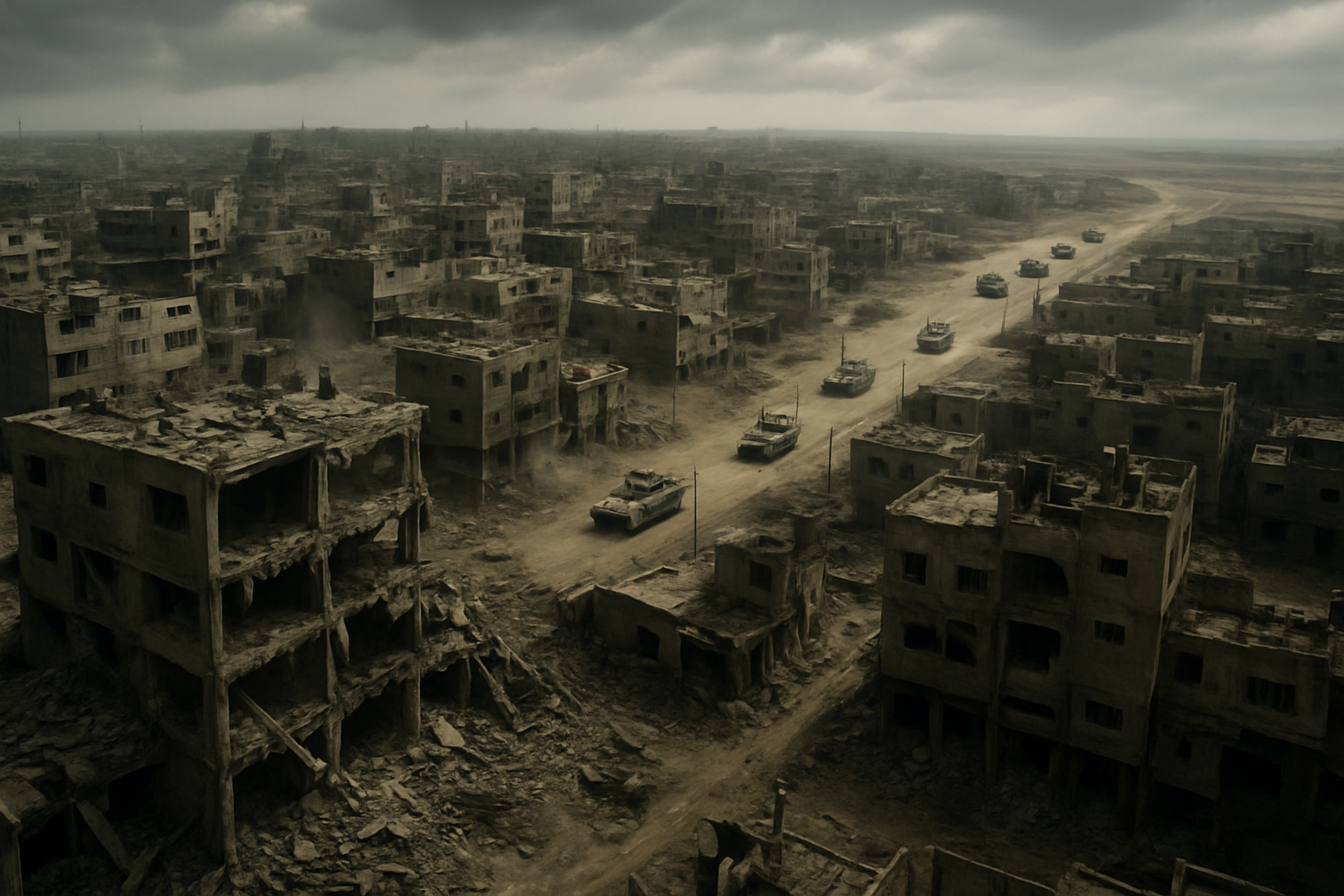
Israeli military operations continue across the Gaza Strip for the 121st consecutive day, marking unprecedented violations of the ceasefire agreement that began on October 10, 2025, according to Palestinian media sources and government officials.
Palestinian sources reported that Israeli occupation aircraft carried out a series of airstrikes on the cities of Rafah and Khan Younis in southern Gaza on February 8, 2026. Artillery forces also conducted intensive bombardment east of the al-Tuffah neighborhood in Gaza City, continuing a pattern of military operations that Palestinian officials characterize as systematic violations of the truce agreement.
The Gaza Government Media Office has documented over 1,520 ceasefire violations since the October agreement took effect, resulting in 556 Palestinian deaths during what was supposed to be a period of peace. The total death toll in Gaza has reached 71,800, underscoring the devastating human cost of the prolonged conflict.
Pattern of Systematic Violations
The ongoing military operations represent what international observers describe as "systematic implementation failures" rather than isolated incidents. Recent attacks have included intensive artillery shelling targeting civilian neighborhoods, airstrikes on residential areas, and what Palestinian medics describe as "double-tap" strikes - attacks that target first responders arriving at bombing sites.
On February 4, Israeli strikes killed at least 24 Palestinians, including seven children, among them a five-month-old infant and a medical worker killed in Khan Younis. The Gaza Civil Defense has been forced to shut down operations due to fuel shortages, hampering emergency response capabilities across the territory.
"Where is the ceasefire?"
— Mohamed Abu Selmiya, Al-Shifa Hospital Director
The question posed by Al-Shifa Medical Complex Director Mohamed Abu Selmiya captures the frustration of Gaza's 2.3 million residents who continue to face daily bombardment despite international agreements calling for an end to hostilities.
International Condemnation Grows
Eight Arab nations - Saudi Arabia, Jordan, Egypt, UAE, Qatar, Indonesia, Pakistan, and Turkey - issued a joint condemnation of Israeli ceasefire violations on February 1, 2026. The Organization of Islamic Cooperation (OIC) separately condemned what it termed "continuing massacres," citing violations that threaten both regional stability and international law.
European pressure is also mounting, with over 400 EU diplomats and officials calling for increased pressure on Israeli authorities. A European Left Coalition petition against the EU-Israel partnership has exceeded 400,000 signatures in just 18 days, reflecting growing public concern about European complicity in the violations.
Global protests erupted across European capitals including Berlin, Paris, and Rome, with demonstrators demanding arms export cessation and improved humanitarian access to Gaza. The coordinated international response represents the most significant diplomatic pressure on Israel since the ceasefire agreement began.
Humanitarian Crisis Deepens
The Rafah crossing between Gaza and Egypt, which reopened on February 2 after nearly two years of closure, continues to operate under severe restrictions. Only 27 Palestinians crossed on the opening day, far below the agreed quota of 200 daily crossings. Hamas has condemned what it calls "systematic harassment" by Israeli security forces, which denied passage to 38 of 50 planned returnees.
Approximately 20,000 Palestinians still await medical evacuation, while Gaza's Civil Defense remains shut down due to fuel shortages. Egypt has deployed 150 hospitals on alert with 300 ambulances ready, but the limited crossing operations prevent adequate medical assistance from reaching those in need.
Impact on Regional Diplomacy
The ongoing violations threaten broader diplomatic initiatives in the region. President Trump's "Board of Peace" initiative, scheduled for February 19, 2026, aims to secure over $1 billion in Gaza reconstruction commitments from 27 member nations. However, continued military operations undermine confidence in sustainable peace arrangements.
The violations also complicate efforts to implement UN Resolution 2803 and threaten the second phase of Trump's Gaza peace plan. Regional allies who have invested diplomatic capital in supporting ceasefire negotiations express growing concerns about Israel's commitment to agreed terms.
Military Operations vs. Diplomatic Agreements
Israeli military officials have claimed that some operations represent responses to security threats, including alleged gunfire that wounded Israeli personnel. However, the scale and frequency of operations - documented at over 1,520 incidents - far exceed what international observers consider proportional responses to isolated security concerns.
The pattern includes targeting of civilian infrastructure, residential buildings, medical facilities, and emergency responders. The use of artillery bombardment in densely populated areas like al-Tuffah neighborhood raises particular concerns about adherence to international humanitarian law.
Looking Forward
As ceasefire violations enter their fourth month, international pressure for enforcement mechanisms continues to build. The current situation demonstrates the challenges of implementing and maintaining ceasefire agreements without robust international monitoring and enforcement capabilities.
The Gaza Government Media Office continues to document violations, while international bodies assess the broader implications for regional stability and international law. The systematic nature of the violations suggests that fundamental changes to the enforcement mechanism may be necessary to achieve lasting peace in the region.
With Trump's Board of Peace meeting approaching and continued diplomatic efforts across the Middle East, the international community faces mounting pressure to address what many describe as the systematic erosion of ceasefire commitments through continued military operations.