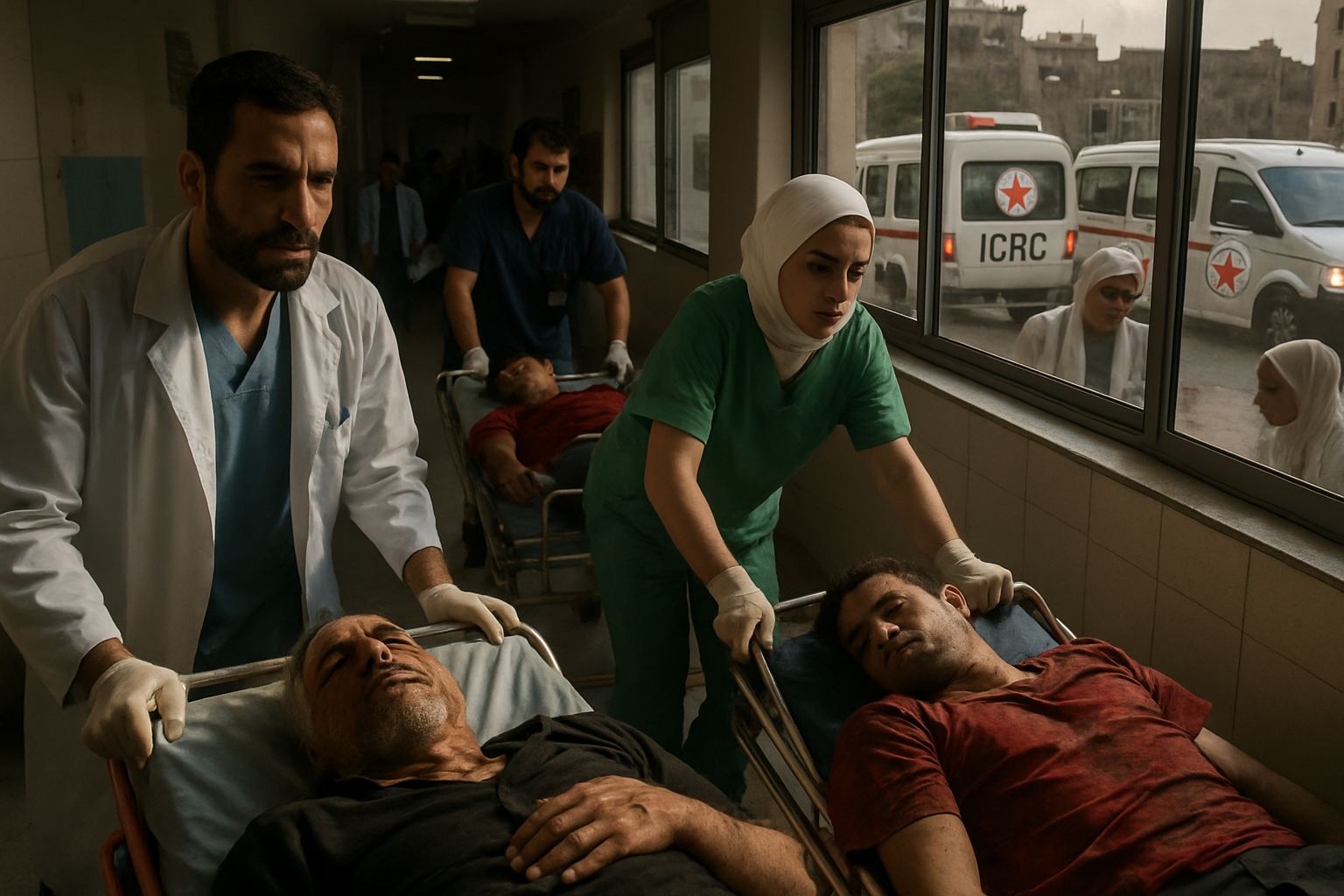
As bodies of Palestinians killed in Israeli strikes continue to arrive at Gaza hospitals, the reality on the ground starkly contrasts with ceasefire agreements that were supposed to bring peace to the war-torn territory. At least 556 Palestinians have been killed in Israeli attacks since a US-brokered truce came into effect in October, according to Gaza's health authorities.
"Where is the ceasefire? Where are the mediators?" asked Shifa Hospital director Mohamed Abu Selmiya on Facebook as his facility received the remains of two dozen Palestinians killed on Wednesday alone. This desperate question echoes across Gaza, where residents expected peace but continue to face deadly violence more than three months after the truce was announced.
Mounting Death Toll Despite International Agreements
The humanitarian crisis in Gaza has deepened significantly since the October ceasefire, with casualty figures revealing the extent of continued hostilities. According to Palestinian sources, 24 people were killed on Wednesday, bringing the total to 556 deaths since the US-mediated agreement took effect. The violence has particularly impacted vulnerable populations, with children and medical workers among the casualties.
Israeli occupation forces handed over the bodies of 54 Palestinians and 66 boxes containing human remains to the International Committee of the Red Cross on Wednesday evening, underscoring the ongoing loss of life. The bodies were transported to Al-Shifa Medical Complex in Gaza City, where overwhelmed medical staff struggle to process the continuous stream of casualties.
The situation in Khan Younis exemplifies the deteriorating security environment, where a Palestinian citizen was killed by Israeli forces on Thursday, marking yet another violation of ceasefire terms. These incidents have prompted Gaza's Civil Defense to warn of operational challenges due to fuel shortages that hamper emergency response capabilities.
Regional Powers Call for International Intervention
The persistence of violence has triggered a coordinated diplomatic response from regional powers demanding stronger international action. Turkish President Recep Tayyip Erdogan and Egyptian President Abdel Fattah al-Sisi held a joint press conference in Cairo on Wednesday, condemning recent ceasefire violations and urging full implementation of the US-backed peace plan.
"Turkey is working with Egypt on initiatives to make peace in Gaza possible and will continue these efforts," Erdogan declared during his official visit to Cairo. The Turkish president emphasized that the Palestinian cause topped their bilateral agenda as humanitarian tragedy continues to unfold in Gaza.
The Egypt-Turkey partnership represents a significant diplomatic alignment, with both nations coordinating on peace initiatives for Gaza while also addressing regional stability concerns in Libya. This cooperation demonstrates the growing international consensus that current ceasefire monitoring mechanisms require substantial reinforcement.
European Diplomatic Pressure Intensifies
European officials have launched unprecedented diplomatic initiatives targeting Israeli policies in response to the ongoing violations. More than 400 former EU ambassadors, senior officials from EU institutions, ministers from member states, and 19 German diplomats have called for increased diplomatic pressure on Israeli authorities.
The European diplomatic intervention highlights international frustration with the deteriorating situation in Gaza and occupied Palestinian territories. These officials stressed that failure to address the crisis could have broader implications for regional stability and international law.
"The dire situation in the Gaza Strip and the deteriorating conditions in the occupied territories require immediate and sustained international attention."
— Former EU Officials, Joint Statement
A petition by the European Left Coalition calling for suspension of the EU-Israel partnership agreement has gained significant momentum, surpassing 400,000 signatures within 18 days of its January launch. The initiative, officially recognized by the European Commission, reflects growing public pressure for policy changes regarding EU-Israel relations.
Humanitarian Corridors and Medical Evacuations
Egypt continues to play a crucial role in providing humanitarian assistance, maintaining its commitment to receiving and treating Palestinian wounded while facilitating the return of displaced persons through the Rafah border crossing. Egyptian authorities have established comprehensive medical response systems to address the ongoing crisis.
The coordination between Egyptian medical facilities and international organizations demonstrates the scale of humanitarian needs. Ambulances regularly transport injured Palestinians from Gaza to Egyptian hospitals, providing critical medical care unavailable in the territory due to damaged infrastructure and medical supply shortages.
This humanitarian corridor has become increasingly vital as Gaza's medical system faces severe strain from continuous casualties and resource limitations. The Egyptian initiative represents one of the few functioning mechanisms for addressing urgent medical needs despite broader political tensions.
International Community Response and Future Prospects
The international community faces mounting pressure to address the systematic violations of ceasefire agreements and restore meaningful peace to the region. The discrepancy between diplomatic announcements and ground realities has undermined confidence in existing peace mechanisms.
Current diplomatic efforts focus on strengthening monitoring capabilities and establishing clearer consequences for ceasefire violations. Regional powers are coordinating through multiple channels to create sustainable peace frameworks that address both immediate security concerns and longer-term political solutions.
The situation in Gaza serves as a critical test for international crisis management and conflict resolution mechanisms. The ability to effectively implement and monitor ceasefire agreements will have implications extending beyond the immediate region, affecting global approaches to conflict mediation and humanitarian protection.
Looking Ahead: Diplomatic Initiatives and Peace Prospects
Despite the ongoing violence, diplomatic efforts continue with renewed urgency from multiple stakeholders. The Turkey-Egypt partnership exemplifies regional leadership in peace initiatives, while European pressure campaigns demonstrate international civil society engagement with the crisis.
The effectiveness of these diplomatic initiatives will largely depend on the international community's willingness to enforce ceasefire terms and address underlying political grievances. Current trends suggest that symbolic agreements without robust implementation mechanisms remain insufficient to ensure lasting peace.
As the death toll continues to mount and humanitarian conditions deteriorate, the window for diplomatic solutions may be narrowing. The coming weeks will be crucial in determining whether international pressure can translate into meaningful policy changes and genuine ceasefire implementation, or whether the cycle of violence will continue despite repeated calls for peace.