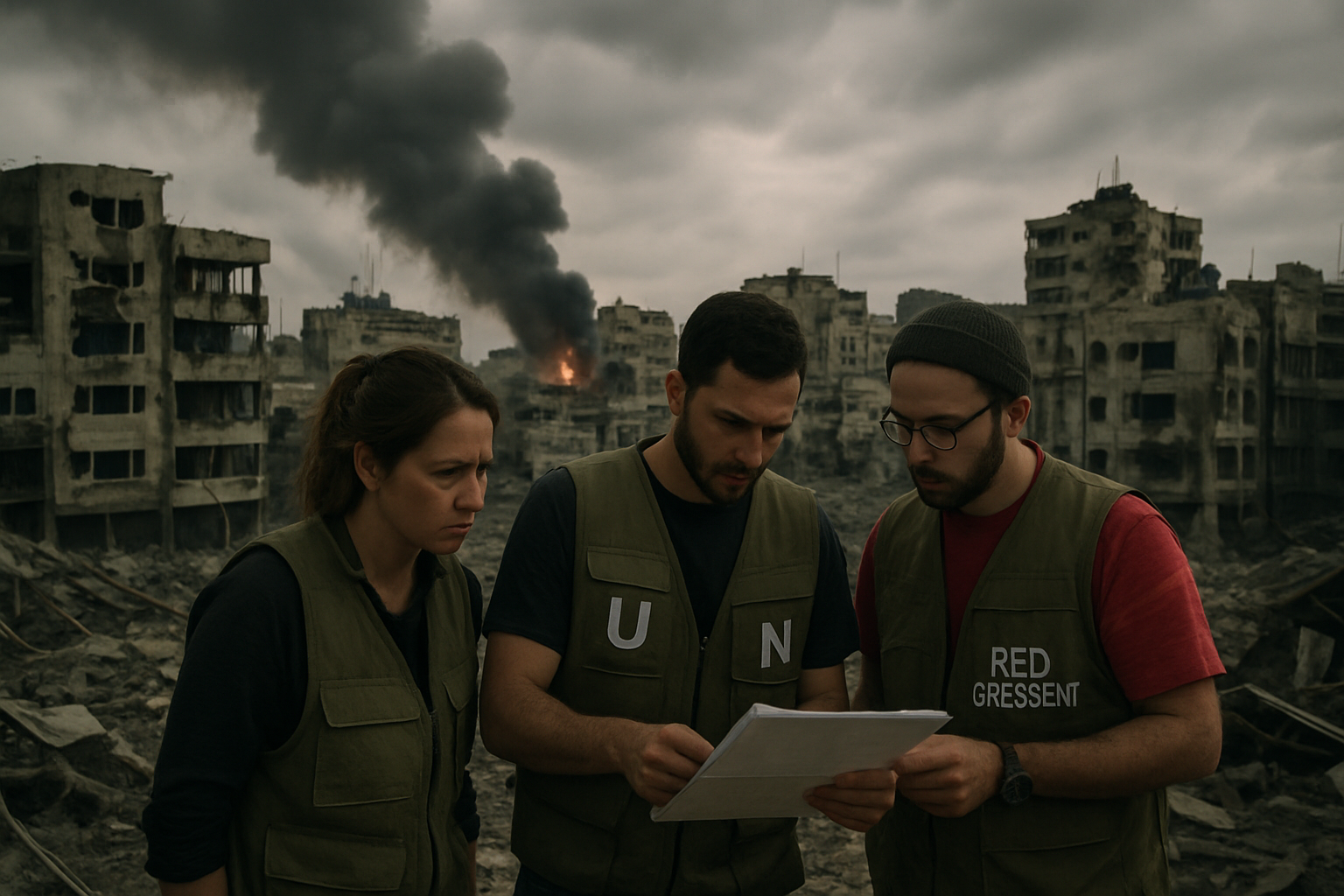
The fragile Gaza ceasefire agreement, established in October 2025, has effectively collapsed amid systematic violations that have claimed over 614 Palestinian lives since the supposed truce began, according to multiple international sources documenting the ongoing crisis.
The Gaza Government Media Office has documented over 1,600 systematic ceasefire violations since October 10, 2025, with Palestinian casualties mounting daily despite the international agreement. The death toll during this "peace period" has now reached 614, with an additional 1,553 injuries recorded, transforming what was intended as a humanitarian respite into a prolonged period of continued violence.
Latest Escalation Claims More Lives
According to sources from across the region, Israeli strikes killed three Palestinians on February 26, 2026, in the latest violation of the ceasefire terms. Among the casualties was a militant that Israeli Defense Forces (IDF) classified as a "threat," highlighting the ongoing military operations despite the truce agreement.
Health officials in Gaza report that the escalating Palestinian toll has prompted many residents to say it feels like the war has continued unabated. Dr. Mohamed Abu Selmiya, Director of Al-Shifa Hospital, has repeatedly questioned "Where is the ceasefire?" as medical facilities struggle to cope with the continuous stream of casualties.
Humanitarian Crisis Deepens
The humanitarian situation in Gaza has deteriorated significantly, with critical services facing unprecedented challenges. The Gaza Civil Defense has completely shut down due to fuel shortages, severely hampering emergency response capabilities during a period when such services are desperately needed.
The Rafah crossing, a vital lifeline for Gaza's 2.3 million residents, operates under severe restrictions. Only 27 Palestinians crossed on the reopening day compared to the planned quota of 200, with Hamas condemning what it describes as "systematic harassment" by Israeli security forces. Reports indicate that 38 of 50 planned returnees were denied passage, while approximately 20,000 Palestinians await medical evacuation.
Egypt has maintained a substantial medical response, keeping 150 hospitals on alert and deploying 300 ambulances to handle the influx of patients from Gaza. However, the crossing limitations severely constrain the effectiveness of these humanitarian efforts.
International Response and Condemnation
The systematic nature of these violations has prompted unprecedented international condemnation. Eight Arab and Muslim nations—Saudi Arabia, Jordan, Egypt, UAE, Qatar, Indonesia, Pakistan, and Turkey—issued a joint statement condemning the violations as breaches of international law "aimed at imposing unlawful Israeli sovereignty."
"These systematic violations represent implementation failures rather than isolated incidents and require fundamental changes to enforcement mechanisms."
— International Observer Report
The Organization of Islamic Cooperation (OIC) has condemned what it describes as "continuing massacres," citing the violations as a dangerous escalation that threatens regional stability. Over 400 European Union diplomats have called for increased pressure on Israeli authorities, while a European Left Coalition petition against EU-Israel partnerships has exceeded 400,000 signatures.
Pattern of Systematic Violations
The violations follow a consistent pattern that international observers describe as "systematic implementation failures" rather than isolated incidents. The Gaza Government Media Office has documented 560 gunfire incidents, targeted killings, building demolitions, and continued military operations across the territory.
Recent incidents include the targeting of displaced families in tent encampments, strikes on the Al-Bureij camp in central Gaza, and ongoing residential demolitions in Khan Younis. These actions have continued for 140 consecutive days, raising fundamental questions about the viability of the ceasefire framework.
Regional Diplomatic Implications
The ongoing violations are threatening multiple regional peace initiatives, including the Trump administration's Board of Peace summit scheduled for February 19, 2026, which aimed to secure over $5 billion in Gaza reconstruction commitments from 27 member nations.
Regional mediators, including Qatar and Egypt, continue dialogue efforts, but the systematic violations create significant obstacles to meaningful peace-building initiatives. The collapse of ceasefire compliance undermines confidence in negotiated solutions and raises questions about the effectiveness of international mediation.
Historical Context and Precedent
These developments occur against a backdrop of broader Israeli territorial expansion policies in the West Bank, where the government has approved the most comprehensive land registration since 1967. Finance Minister Bezalel Smotrich has explicitly stated that these policies will "continue to kill the idea of a Palestinian state," while Energy Minister Eli Cohen acknowledged implementing "factual sovereignty."
The combined Gaza violations and West Bank expansion have prompted condemnation from 85 UN member states, representing the most comprehensive international opposition since the 1967 occupation began. UN Secretary-General António Guterres has expressed "grave concern" about what he describes as a "dangerous escalation."
Prisoner Conditions and Human Rights
Adding to the crisis, Palestinian prisoners from Gaza held in Israeli facilities are reportedly facing increasingly harsh conditions. The Palestinian Prisoners' Media Office reported that inmates in Ramla and Negev prisons are experiencing "oppressive conditions amid ongoing tightened measures and restrictions."
A new report has revealed that Israeli forces fired over 900 bullets at Palestinian aid workers in March 2025, killing 15 medical personnel. This incident represents one of the most serious violations of medical neutrality documented during the conflict period.
International Law and Enforcement Challenges
Legal experts cite potential violations of UN Security Council resolutions and Geneva Conventions regarding the protection of civilians in occupied territories. The systematic nature of the violations raises questions about the adequacy of current international enforcement mechanisms.
The UN Office of the High Commissioner for Human Rights has issued its strongest warning to date, expressing "serious concerns over ethnic cleansing" in both Gaza and the West Bank. The report suggests that Israeli actions may be "aimed at permanent demographic shift" in the territories.
Looking Forward: Prospects for Peace
The ongoing violations represent a critical test of international law enforcement and conflict resolution mechanisms in the 21st century. The systematic breakdown of the ceasefire agreement demonstrates the challenges of maintaining peace without addressing underlying political and security issues.
As diplomatic efforts continue, the international community faces pressure to develop more effective conflict prevention mechanisms before the situation spirals into wider military confrontations with global implications. The success or failure of international responses to these systematic violations will likely influence territorial sovereignty disputes and conflict resolution efforts worldwide.
The current crisis underscores the urgent need for robust enforcement mechanisms in international agreements and raises fundamental questions about the viability of negotiated solutions when one party systematically violates agreed-upon terms. With casualties mounting daily and humanitarian conditions deteriorating, the window for meaningful intervention continues to narrow.