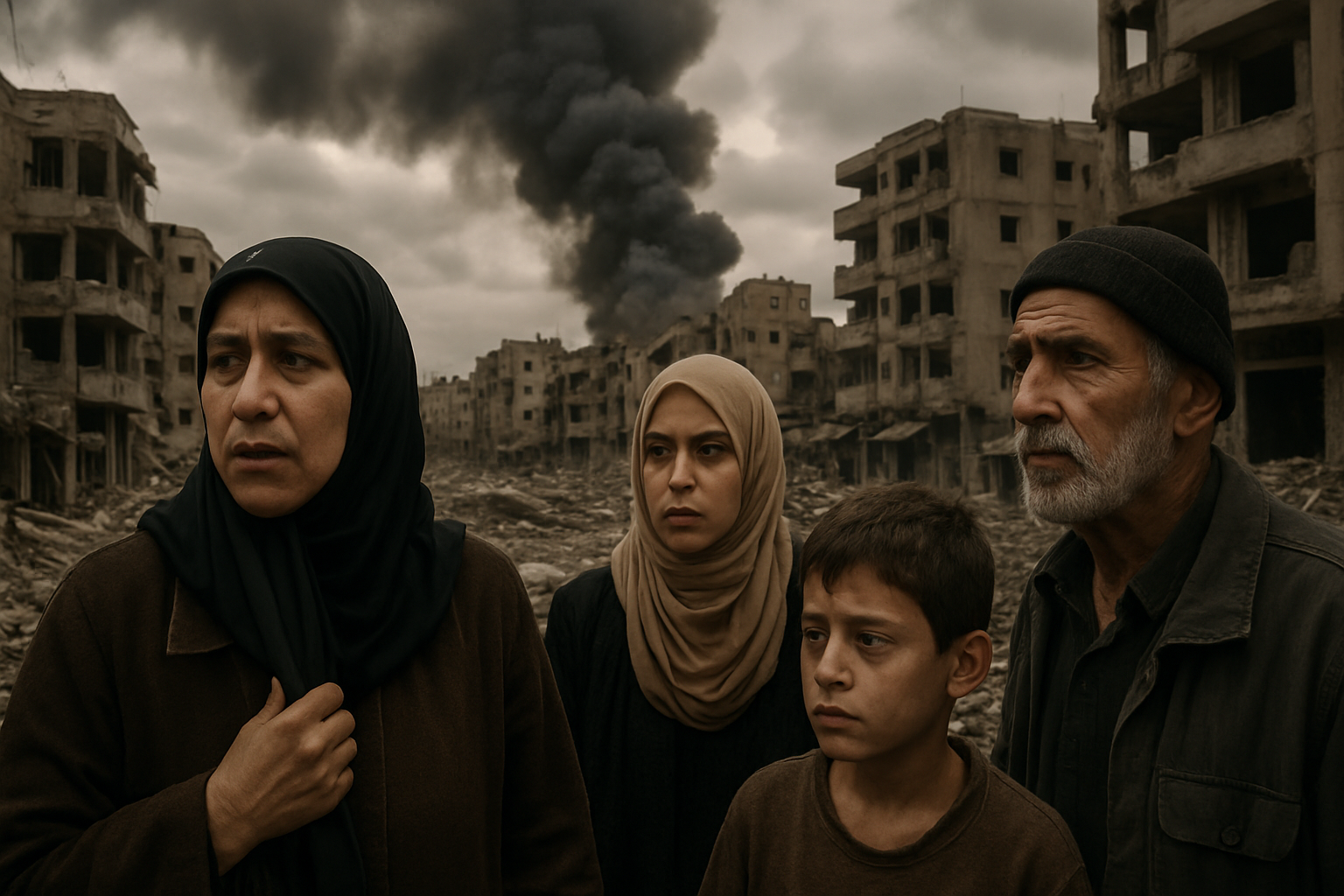
The Gaza ceasefire is effectively collapsing as Israeli and Palestinian forces resume deadly fighting, with Israeli airstrikes killing at least three Palestinians on Thursday in what Israeli military officials described as response to ceasefire violations, marking the latest in over 1,600 documented systematic breaches since the October 2025 truce.
Israeli forces conducted strikes across northern Gaza that killed two Palestinians, while military officials reported targeting a militant who allegedly violated ceasefire terms. The escalation comes amid mounting international pressure as the fragile peace agreement faces its most serious crisis since implementation.
According to Gaza Government Media Office documentation, systematic ceasefire violations have reached unprecedented levels since the October 10, 2025 agreement, resulting in over 614 Palestinian deaths during what was intended to be a peace period. The total Gaza death toll has now reached 71,800, with independent studies suggesting actual casualties may exceed 75,000.
Systematic Pattern of Violations Documented
The latest violence represents part of what international observers describe as "systematic implementation failures" rather than isolated incidents. Since the ceasefire began, over 1,600 violations have been documented by Palestinian authorities, including targeted killings, building demolitions, and restrictions on civilian movement.
Dr. Mohamed Abu Selmiya, Director of Al-Shifa Hospital, has repeatedly questioned "Where is the ceasefire?" as his medical facility continues to receive casualties from ongoing Israeli operations. Gaza's Civil Defense has been completely shut down due to fuel shortages, hampering emergency response capabilities during the crisis.
"The violations have become systematic rather than isolated incidents. This represents a fundamental challenge to ceasefire enforcement mechanisms."
— International Observer, speaking anonymously
Humanitarian Crisis Deepens
The Rafah crossing with Egypt, which reopened after nearly two years of closure, operates under severe restrictions that have created a humanitarian bottleneck. Only 27 Palestinians crossed on the opening day versus the planned 200 daily quota, with Hamas condemning what it describes as "systematic harassment" by Israeli security forces.
Israeli authorities have denied 38 of 50 planned returnees, while approximately 20,000 Palestinians await medical evacuation. Egypt has deployed 150 hospitals on alert with 300 ambulances ready, but crossing limitations severely constrain their effectiveness.
The humanitarian situation has been further complicated by the complete shutdown of Gaza's Civil Defense due to fuel shortages, affecting emergency services across the territory's 2.3 million residents.
International Condemnation Mounts
An unprecedented coalition of eight Arab and Muslim nations—Saudi Arabia, Jordan, Egypt, UAE, Qatar, Indonesia, Pakistan, and Turkey—has issued joint condemnation of Israeli actions, calling them violations of international law "aimed at imposing unlawful Israeli sovereignty."
The Organization of Islamic Cooperation (OIC) has condemned what it describes as "continuing massacres," while over 400 European Union diplomats have called for increased pressure on Israeli authorities. A European Left Coalition petition against EU-Israel partnerships has exceeded 400,000 signatures.
UN Secretary-General António Guterres has expressed "grave concern" about what he terms a "dangerous escalation," warning that the violations threaten the viability of any two-state solution.
Regional and International Implications
The escalating violations threaten multiple diplomatic initiatives, including the Trump administration's Board of Peace summit held February 19, 2026, which secured $17 billion in Gaza reconstruction pledges from 27 nations. However, implementation of reconstruction efforts faces severe obstacles due to the ongoing security deterioration.
Hamas leadership has categorically rejected disarmament demands, with political bureau leader Khaled Meshaal stating in Doha that armed resistance remains justified "while occupation exists." Israeli sources estimate Hamas maintains approximately 20,000 fighters despite ceasefire requirements.
West Bank Expansion Parallel Crisis
Simultaneously, the Israeli government has approved the most comprehensive West Bank land registration since 1967, targeting hundreds of thousands of dunams with focus on the strategically vital Jordan Valley. Finance Minister Bezalel Smotrich has declared the policies will "continue to kill the idea of a Palestinian state."
This territorial expansion has prompted condemnation from 85 UN member states, representing the most comprehensive international opposition since the 1967 occupation began. Energy Minister Eli Cohen has acknowledged the measures constitute "factual sovereignty" implementation.
Enforcement Mechanisms Under Question
The systematic nature of violations raises fundamental questions about the effectiveness of current ceasefire enforcement mechanisms. International experts cite potential violations of UN Security Council resolutions and Geneva Conventions on occupied territories.
The pattern of violations includes military operations, humanitarian access restrictions, civilian movement limitations, and ongoing demolitions, suggesting the ceasefire framework may be insufficient to maintain peace without addressing underlying political and security issues.
Looking Forward
As the situation continues to deteriorate, regional mediators including Qatar and Egypt are maintaining dialogue efforts, but systematic violations are undermining confidence in negotiated solutions. Medical facilities remain overwhelmed, with Doctors Without Borders having suspended operations in Khan Younis due to security concerns.
The crisis represents a critical test of international law enforcement and conflict resolution mechanisms in the 21st century. Success or failure of international opposition will influence territorial sovereignty disputes globally and set precedents for occupied territories worldwide.
The coming weeks will be decisive in determining whether diplomatic pressure can achieve meaningful ceasefire compliance or whether the situation will deteriorate further, potentially making a two-state solution technically unfeasible through systematic demographic and geographic alterations to the Palestinian territories.