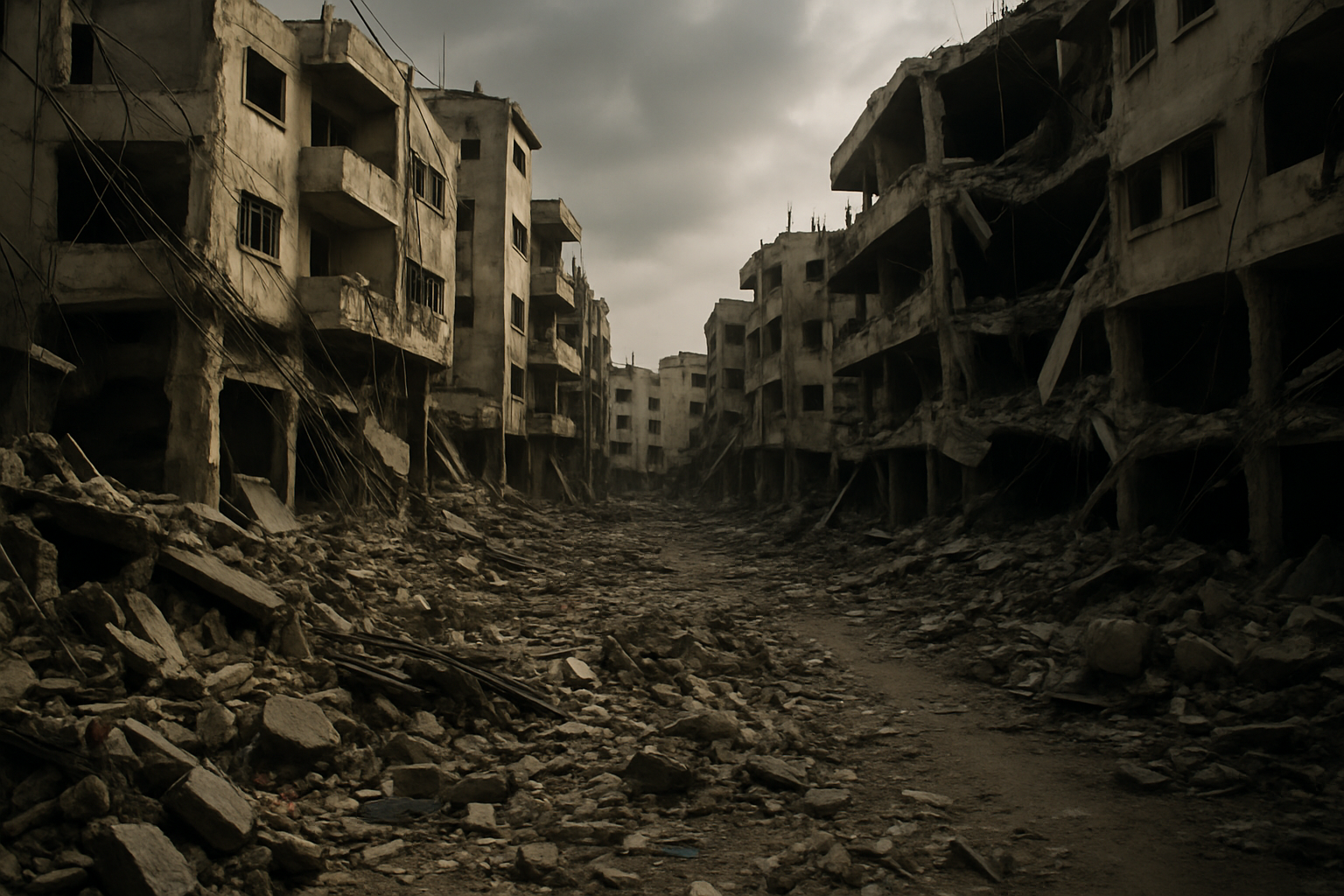
Israeli military operations across Gaza have resulted in at least 7-11 Palestinian deaths according to multiple sources, marking the latest escalation in a conflict that has seen systematic violations of ceasefire agreements since October 2025, with devastating civilian casualties mounting across the Palestinian territories.
According to Italian news agency ANSA, seven Palestinians were killed in an Israeli raid near a police station in the Al-Bureij refugee camp. Al Jazeera reported additional casualties from early morning strikes in the Bureij camp and drone attacks on tents in Khan Younis, while Palestinian media sources documented 11 martyrs and 26 wounded arriving at Gaza hospitals within a 48-hour period.
Systematic Ceasefire Violations Documented
The latest casualties occur against a backdrop of what Palestinian authorities describe as systematic violations of ceasefire agreements. According to extensive documentation reviewed by Planet News, over 1,600 ceasefire violations have been recorded since October 2025, resulting in more than 680 Palestinian deaths during what was supposed to be a peace period.
The Gaza Civil Defense has been forced to shut down operations due to fuel shortages, severely hampering emergency response capabilities. Meanwhile, the Rafah crossing remains severely restricted, with only 27 Palestinians able to cross daily compared to the planned quota of 200, in what Hamas officials describe as "systematic harassment" by Israeli security forces.
"Where is the ceasefire?"
— Dr. Mohamed Abu Selmiya, Director of Al-Shifa Hospital
Humanitarian Crisis Deepening
The humanitarian situation in Gaza continues to deteriorate dramatically. An estimated 20,000 Palestinians await medical evacuation that has been repeatedly blocked or delayed. According to Health Ministry Director Zaher al-Wahidi, 6-10 critically ill patients are dying daily due to the inability to access proper medical care.
The territory's 2.3 million residents face increasingly dire conditions, with emergency services compromised and basic infrastructure under severe strain. Recent reports indicate rat and insect infestations in displacement camps, raising serious concerns about disease outbreaks among the vulnerable population.
Regional Context and Broader Crisis
These latest casualties in Gaza occur within a broader Middle Eastern crisis that began with the death of Iran's Supreme Leader Ali Khamenei in March 2026. The regional conflict has dramatically expanded, affecting multiple countries and creating unprecedented global disruptions.
The November 2024 US-French brokered ceasefire between Israel and Hezbollah in Lebanon has completely collapsed, with over 800,000 Lebanese civilians displaced and casualties exceeding 1,200. Hezbollah made what officials described as an "impossible choice" between maintaining ceasefire agreements and responding to Iranian pressure for retaliation following Khamenei's death.
International Response and Legal Concerns
The systematic nature of ceasefire violations has prompted unprecedented international condemnation. Eight Arab nations, including traditional Israeli partners like the UAE and Saudi Arabia, have issued joint statements condemning what they describe as violations of international law aimed at "imposing unlawful Israeli sovereignty."
Over 400 European Union diplomats have demanded increased pressure on Israel, while European civil society organizations have collected more than 400,000 signatures on petitions calling for review of EU-Israel partnerships. UN Secretary-General António Guterres has described the current situation as "the greatest test of multilateral cooperation in the modern era."
Medical Targeting and Geneva Conventions
Of particular concern to international legal experts is the systematic targeting of medical personnel and facilities across the region. In Lebanon, 26 paramedics have been killed and 51 wounded since March, with the deadliest attack on the Burj Qalaouiyah healthcare center killing 12 medical workers, including doctors, nurses, and paramedics.
Israeli military spokespersons have threatened to strike ambulances and medical facilities, claiming they are being used by militant groups - allegations that have been categorically denied by the organizations involved. Such targeting of protected humanitarian assets constitutes potential violations of the Geneva Conventions.
Economic and Global Implications
The regional crisis has created unprecedented global disruptions. Over 18,000 flights have been cancelled worldwide - the most severe aviation crisis since COVID-19 - as eight Middle Eastern countries have closed their airspace simultaneously. Oil prices have surged past $100 per barrel as Iran has effectively closed the Strait of Hormuz, which handles 40% of global oil transit.
The International Energy Agency has been forced to conduct its largest strategic petroleum reserve release in 50 years, releasing 400 million barrels to stabilize global markets. Natural gas prices have increased by 24% in Europe and 78% in the United States, threatening energy security worldwide.
Diplomatic Initiatives Under Pressure
Various diplomatic initiatives are underway to address the crisis, including French President Macron's offer to host direct Israel-Lebanon talks in Paris - the first such negotiations since the ceasefire collapse. Pakistan has been facilitating indirect talks between the US and Iran through what officials call the "Islamabad Accord."
However, these diplomatic efforts face significant challenges. The fundamental disagreement over the scope of any potential agreement remains unchanged, with Iran demanding comprehensive regional solutions while other parties seek more limited arrangements.
Historical Context and Death Toll Verification
According to peer-reviewed research published in The Lancet Global Health in February 2026, Gaza's actual death toll may be significantly higher than officially reported figures. The landmark study found that the death toll has been systematically undercounted by approximately 35%, with actual casualties likely exceeding 75,000 people - representing 3-4% of Gaza's entire population.
This independent verification, which employed multiple data sources including hospital records, burial registrations, and demographic analysis, represents the most comprehensive assessment of casualty data since the conflict's escalation. The research methodology is being studied globally as a template for improving casualty documentation in other active conflict zones.
Current Security Environment
The security environment across the Palestinian territories remains highly volatile. In the West Bank, Israeli authorities have approved the most comprehensive land registration program since 1967, targeting hundreds of thousands of dunams with a particular focus on the strategic Jordan Valley area.
Finance Minister Bezalel Smotrich has openly declared that these policies are designed to "kill the idea of a Palestinian state," while Energy Minister Eli Cohen has acknowledged the implementation of "factual sovereignty" that creates "a reality on the ground where there is no Palestinian state."
International Humanitarian Law at Stake
The current crisis represents what legal experts describe as a template-setting moment for 21st-century conflict resolution and international humanitarian law enforcement. The systematic nature of ceasefire violations, combined with targeting of civilian infrastructure and medical facilities, raises fundamental questions about the effectiveness of international legal frameworks.
The World Health Organization has launched a $30.3 million emergency appeal to support health systems in five Middle Eastern countries, warning that healthcare facilities are "under severe strain" and that "attacks on healthcare are attacks on humanity itself."
Looking Ahead
As the situation continues to evolve, the coming days and weeks will be crucial in determining whether diplomatic intervention can prevent broader regional warfare affecting millions more civilians. The current trajectory suggests a continued military escalation that could fundamentally reshape Middle Eastern geopolitics for decades to come.
The systematic breakdown of ceasefire agreements, combined with unprecedented regional instability, demonstrates the fragility of conflict resolution mechanisms in an increasingly multipolar world. Success or failure in containing this crisis will likely set precedents for how similar conflicts are managed in the 21st century.
For the Palestinian civilians caught in this escalating conflict, the immediate priority remains access to basic humanitarian services, medical care, and protection under international law. The international community faces a critical test of its commitment to upholding the post-World War II order and protecting vulnerable populations in active conflict zones.