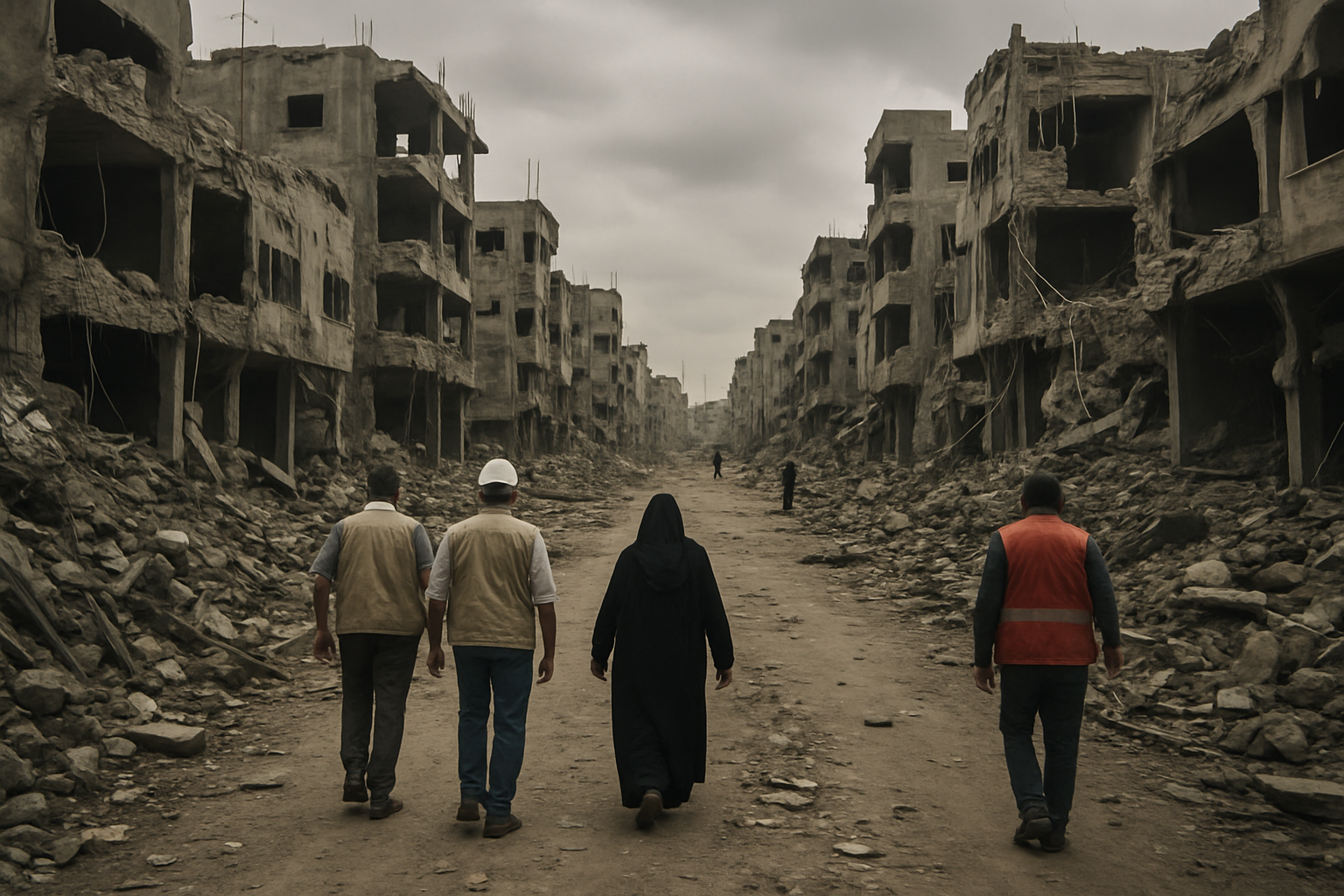
Israeli forces killed 12 Palestinians, including six police officers, in multiple attacks across Gaza on Friday as ceasefire violations continued for the 198th consecutive day, according to Palestinian sources. The deaths add to mounting casualties despite ongoing diplomatic efforts to establish lasting peace.
The escalation comes amid a systematic pattern of violations documented since the October 2025 ceasefire agreement, with over 1,600 incidents resulting in more than 680 Palestinian deaths during what was supposed to be a period of peace. The latest casualties were reported by the Palestinian Media Center and Al Jazeera, highlighting the continued breakdown of international agreements.
Systematic Pattern of Ceasefire Violations
According to Palestinian authorities, Israeli forces have conducted extensive operations including house demolitions and destruction of residential facilities across various areas of Gaza. The Gaza Ministry of Interior condemned what it described as "heinous massacres" against civilians and police personnel, calling on mediators and ceasefire guarantors to take urgent action to halt the attacks.
The ministry emphasized that Israeli forces deliberately targeted police officers and personnel while performing their duties, with the latest incident occurring in the Sheikh Radwan neighborhood of Gaza City. The systematic targeting of security personnel represents a significant escalation in the nature of violations.
Dr. Mohamed Abu Selmiya, director of Al-Shifa Hospital, has repeatedly questioned "Where is the ceasefire?" as violations continue unabated. The Gaza Civil Defense has been completely shut down due to fuel shortages, severely hampering emergency response capabilities and rescue operations.
Humanitarian Crisis Deepens
The humanitarian situation in Gaza has deteriorated dramatically, affecting 2.3 million residents. The Rafah crossing, Gaza's only non-Israeli controlled access point, remains severely restricted with only 27 people able to cross daily versus the agreed quota of 200. Palestinian officials describe this as "systematic harassment" that effectively isolates Gaza from the outside world.
Over 20,000 Palestinians await medical evacuation for treatment abroad, with Gaza Health Ministry Director Zaher al-Wahidi reporting that 6-10 critically ill patients die daily while waiting. An estimated 1,400 patients out of 20,000 have died since May 2024 when Israeli forces occupied the Rafah crossing.
The World Health Organization has issued a $30.3 million emergency appeal to support healthcare systems across five Middle Eastern countries that are "under severe strain." The organization has been forced to suspend some medical evacuation operations after aid workers were killed, marking the first time such operations have been halted due to security incidents.
Regional Context and Diplomatic Efforts
The Gaza crisis occurs within the broader context of the most serious Middle East conflict since the Cold War. The November 2024 US-French brokered Israel-Hezbollah ceasefire completely collapsed in March 2026 when Hezbollah chose "Iranian solidarity over Lebanese sovereignty" following the death of Iran's Supreme Leader Ali Khamenei.
This has created a dangerous loophole in regional peace efforts. Israeli Prime Minister Benjamin Netanyahu explicitly excluded Lebanon from the Pakistan-mediated "Islamabad Accord" US-Iran ceasefire, creating what US Vice President Vance acknowledged as a "legitimate misunderstanding" from Iran's perspective. Iran has threatened to withdraw from regional talks unless comprehensive enforcement is applied across all fronts.
Historic Israel-Lebanon peace talks were scheduled for April 15, 2026, at the US State Department - the first direct diplomatic engagement in over 30 years. However, these efforts face significant challenges as Hezbollah has categorically rejected the negotiations, with Secretary-General Naim Qassem calling them "pointless" and demanding Lebanon withdraw.
International Response and Legal Implications
The international community has issued unprecedented condemnation of the systematic violations. Eighty-five UN member states have issued a joint statement - the most comprehensive since 1967 - while eight Arab nations, including traditionally Israel-aligned countries like the UAE and Saudi Arabia, have condemned the violations as breaches of international law.
Over 400 EU diplomats have petitioned for increased pressure on Israel, while a European civil society petition against EU-Israel partnerships has exceeded 400,000 signatures. UN Secretary-General António Guterres has called the situation "the greatest test of multilateral cooperation in the modern era."
International legal experts cite violations of UN Security Council resolutions and Geneva Conventions, particularly regarding the systematic targeting of medical personnel and humanitarian infrastructure. The pattern has been described as "systematic implementation failures" rather than isolated incidents.
Impact on Peace Initiatives
The ongoing violations threaten major reconstruction efforts, including the Trump administration's "Board of Peace" initiative that secured $17 billion in Gaza reconstruction commitments from 27 nations in February 2026 - the largest international financial pledge in Gaza's history. However, implementation faces severe obstacles from continued violence and Hamas's categorical rejection of disarmament demands.
Hamas maintains an estimated 20,000 fighters and continues to reject disarmament while territories remain under occupation, citing international law provisions regarding resistance under occupation. This stance complicates traditional post-conflict reconstruction models that typically require demilitarization.
Broader Regional Implications
The crisis has had massive global implications, with over 18,000 flights cancelled worldwide - a disruption on the scale of COVID-19. Oil prices have surged past $100 per barrel for the first time since 2014, while the closure of the Strait of Hormuz affects 40% of global oil transit. The International Energy Agency has announced its largest strategic reserve release in 50 years - 400 million barrels.
Meanwhile, Lebanon faces its own humanitarian catastrophe with 1.2 million people displaced (25% of the population) and systematic targeting of medical personnel, including 26 paramedics killed and 51 wounded since March 2026. The deadliest attack occurred at the Burj Qalaouiyah healthcare center, where 12 medical workers were killed in what may constitute Geneva Conventions violations.
Looking Forward
As the conflict enters its 198th day of ceasefire violations, the situation represents what experts call a "template-setting moment" for 21st-century conflict resolution. The success or failure of diplomatic interventions will influence approaches to territorial sovereignty disputes, international law enforcement, and civilian protection mechanisms for decades to come.
The Euro-Mediterranean Human Rights Observatory has accused Israel of exploiting international attention focused on the Iran crisis to intensify policies affecting Gaza's 2.3 million residents. With municipal services approaching "comprehensive collapse" due to fuel shortages and restricted access, the humanitarian situation threatens to become a historic catastrophe without immediate coordinated international intervention.
The pattern of systematic violations, combined with the breakdown of regional diplomatic frameworks, demonstrates the challenges of maintaining negotiated peace agreements when underlying political and security issues remain unresolved. The coming weeks will be crucial in determining whether diplomatic innovation can prevent broader regional warfare or if the current military escalation trajectory will continue affecting millions of civilians across the Middle East.