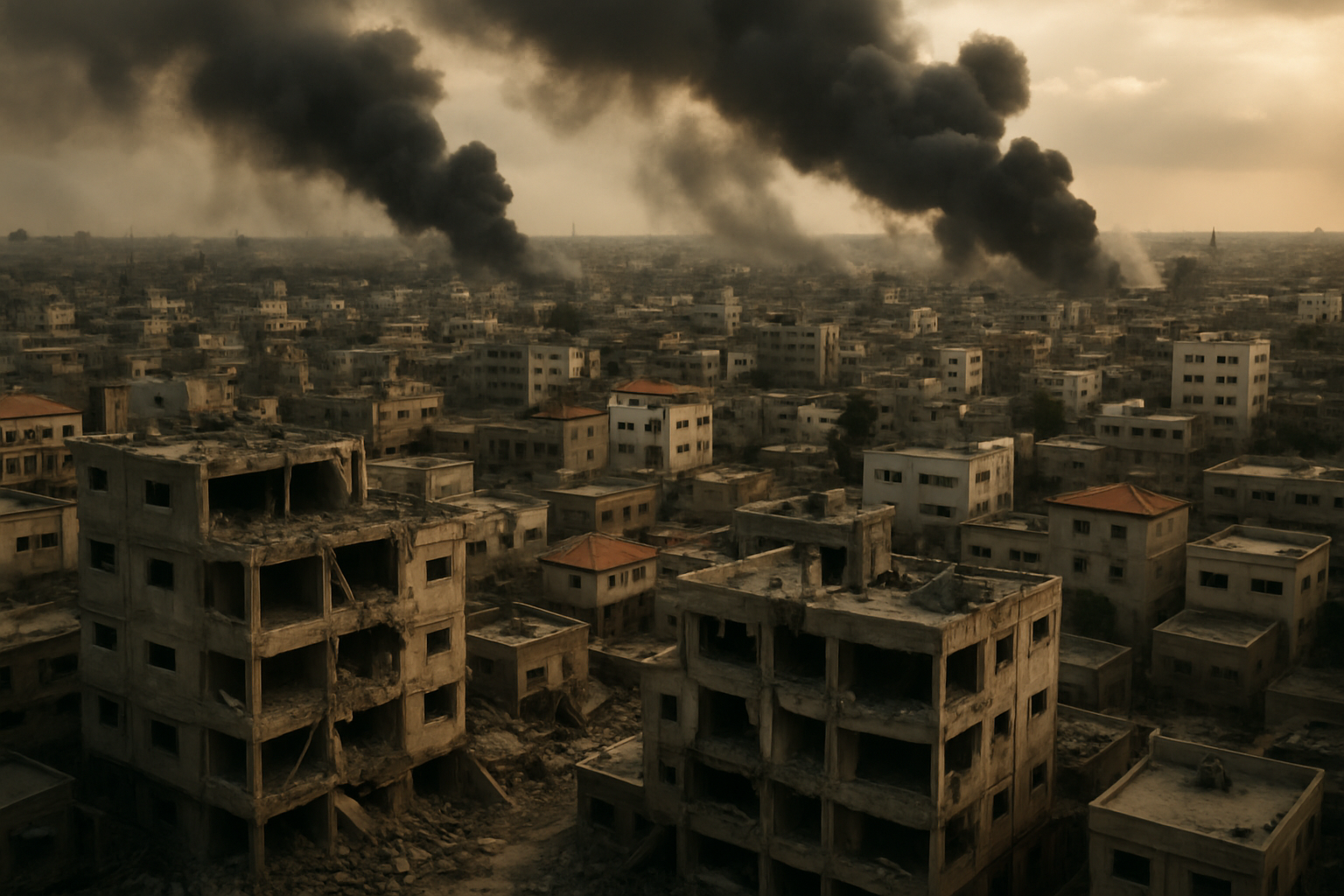
Israeli airstrikes killed at least 10 Palestinians in Gaza Strip on Sunday, according to Palestinian civil defense and health officials, marking the latest in a pattern of alleged ceasefire violations that have persisted for more than four months.
The deadliest strikes occurred in two separate locations: four Palestinians were killed in an Israeli airstrike on a tent encampment housing displaced families in northern Gaza, while five others died in Khan Younis in the southern part of the territory, according to Palestinian medical sources. An additional casualty was reported in al-Faluja in northern Gaza.
Military Justifications and Territorial Disputes
Israeli military officials defended the strikes as "precise" operations targeting Hamas "terrorists" in response to what they described as "a violation on Saturday in Beit Hanoun where terrorists emerged from a tunnel east of the yellow line." The Israeli Defense Forces claimed the operations were conducted "in line with international law."
The reference to the "yellow line" pertains to demarcation boundaries established under the October 2025 ceasefire agreement to separate Israeli and Hamas-controlled areas within Gaza. Israeli officials accused Hamas of committing "more than six violations" of the ceasefire, including deploying forces east of this agreed boundary.
However, Palestinian sources and international observers present a starkly different assessment. The Gaza Government Media Office has documented over 1,600 systematic ceasefire violations since the October 10, 2025 truce began, resulting in 601 Palestinian deaths during what was supposed to be a period of peace.
Escalating Death Toll Despite Ceasefire
Sunday's casualties add to a mounting death toll that has continued to rise despite the ceasefire agreement. Multiple sources report the total number of Palestinians killed since the October truce has now exceeded 600, with varying counts ranging from 556 to 601 deaths.
"Where is the ceasefire?" questioned Dr. Mohamed Abu Selmiya, Director of Al-Shifa Hospital, reflecting widespread Palestinian frustration with the implementation of the truce agreement.
— Dr. Mohamed Abu Selmiya, Al-Shifa Hospital Director
The systematic nature of these violations has drawn international attention and condemnation. Eight Arab and Muslim nations—Saudi Arabia, Jordan, Egypt, UAE, Qatar, Indonesia, Pakistan, and Turkey—issued a joint statement condemning what they termed Israel's systematic violations of international law.
Humanitarian Crisis Deepens
The ongoing violence has exacerbated an already dire humanitarian situation in Gaza. The Gaza Civil Defense has been forced to shut down operations due to severe fuel shortages, hampering emergency response capabilities when civilians need help most.
Medical evacuations through the Rafah crossing remain severely restricted, with only 27 Palestinians able to cross on the border's opening day in February, far below the agreed quota of 200 daily crossings. Hamas officials have condemned what they describe as "systematic harassment" by Israeli security forces, with 38 of 50 planned returnees denied passage.
Approximately 20,000 Palestinians still await medical evacuation for critical care outside Gaza, highlighting the gap between ceasefire provisions and ground reality.
International Response and Diplomatic Pressure
The continued violations have prompted unprecedented diplomatic pressure from the international community. More than 400 European Union diplomats and officials have called for increased pressure on Israeli authorities to comply with ceasefire terms.
The European Left Coalition has organized a petition against EU-Israel partnerships that has surpassed 400,000 signatures, reflecting growing public frustration with the situation. The Organization of Islamic Cooperation has also condemned what it terms "continuing massacres" and called for urgent international intervention.
These violations threaten broader regional peace initiatives, including the Trump administration's Gaza peace plan and UN Resolution 2803 implementation. The escalating situation also poses challenges for upcoming diplomatic efforts, including the Board of Peace summit scheduled for February 19, which was expected to address Gaza reconstruction with over $1 billion in international commitments.
Pattern of Systematic Violations
International observers describe the situation not as isolated incidents but as "systematic implementation failures" of the ceasefire agreement. The pattern includes not only direct military actions but also restrictions on humanitarian access, limitations on civilian movement, and ongoing demolitions in sensitive areas.
The context of these violations is particularly concerning given the broader regional situation. Israel has simultaneously been implementing what critics describe as de facto annexation policies in the West Bank, drawing condemnation from the same international partners now expressing concern about Gaza ceasefire compliance.
Egypt has maintained 150 hospitals on alert with 300 ambulances deployed to assist with potential medical evacuees from Gaza, demonstrating the regional implications of the crisis. However, the severe restrictions on border crossings have limited the effectiveness of these humanitarian preparations.
Implications for Regional Stability
The persistent violations raise serious questions about the viability of current ceasefire mechanisms and international enforcement capabilities. With documented violations now exceeding 1,600 incidents over just four months, the current framework appears insufficient to prevent ongoing civilian casualties.
The situation threatens to undermine broader Middle East peace initiatives and international law enforcement credibility. Regional observers warn that failure to address these systematic violations could encourage similar disregard for international agreements elsewhere.
As diplomatic efforts continue, including potential high-level talks involving multiple international parties, the gap between ceasefire commitments and ground reality in Gaza remains a critical challenge requiring immediate international attention and innovative enforcement mechanisms.
The international community faces mounting pressure to develop more effective tools for ensuring compliance with ceasefire agreements and protecting civilian populations caught in the crossfire of ongoing territorial and political disputes in the region.