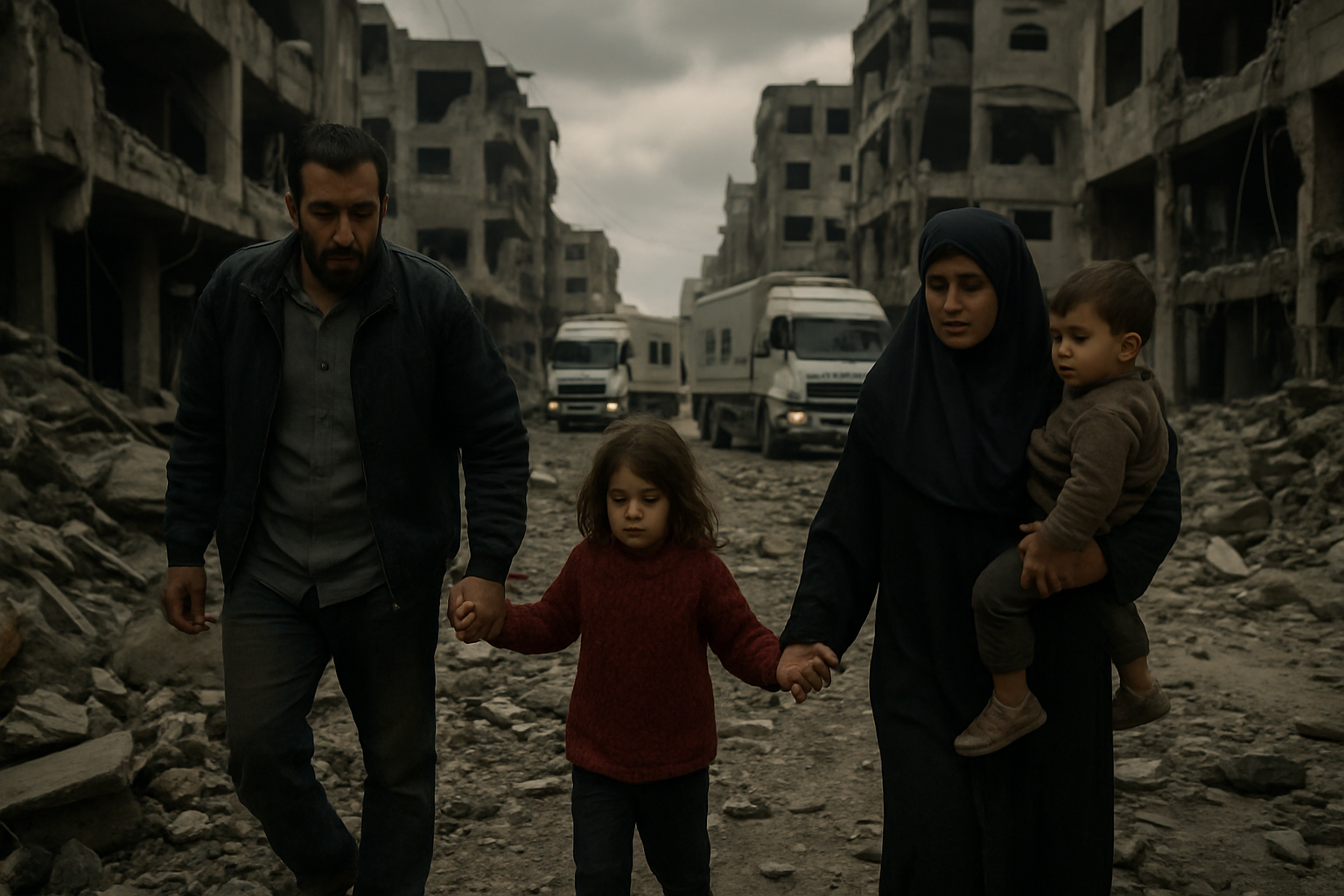
Palestinian health authorities in Gaza reported 633 fatalities since the ceasefire declaration in October 2025, while new births reached 3,044 in February alone, highlighting the stark juxtaposition of death and life in the besieged territory as humanitarian conditions continue to deteriorate despite international peace efforts.
The latest casualty figures, released by Gaza's Ministry of Health on Wednesday, underscore the ongoing crisis in the Palestinian enclave, where systematic ceasefire violations have created a humanitarian emergency that international observers describe as one of the worst since the conflict's escalation in October 2023.
Infrastructure Crisis and Aid Restrictions
Critical infrastructure continues to collapse across Gaza, with the General Authority for Petroleum warning of "catastrophic and dangerous consequences" from the continued suspension of cooking gas supplies. The crisis affects more than two million residents under "exceptional circumstances," severely impacting basic living conditions and cooking capabilities for Palestinian families.
Aid deliveries have partially resumed through the Rafah border crossing, with more than 100 United Nations trucks, including UNICEF supplies, entering Gaza on Tuesday after a three-day closure. However, these deliveries fall far short of meeting the territory's massive humanitarian needs. Israeli authorities closed all crossings into Gaza on Saturday following a joint military operation with the United States against Iran, before agreeing to reopen the Kerem Shalom crossing for "gradual entry of humanitarian aid."

Systematic Ceasefire Violations Continue
International monitoring groups have documented over 1,600 systematic ceasefire violations since the October 2025 agreement, resulting in more than 600 Palestinian deaths during what was supposed to be a period of peace. The violations have created what Palestinian officials describe as a pattern of "systematic implementation failures" rather than isolated incidents.
"Where is the ceasefire?" asks Dr. Mohamed Abu Selmiya, Director of Al-Shifa Hospital, whose repeated questioning has become a symbol of Palestinian frustration with the ongoing violations.
— Dr. Mohamed Abu Selmiya, Al-Shifa Hospital Director
The violations include 560 gunfire incidents, targeted killings, and building demolitions documented across Gaza. International experts have cited serious violations of UN Security Council resolutions and the Geneva Conventions, with the systematic nature of these breaches challenging current international enforcement mechanisms.
International Response and Reconstruction Efforts
The humanitarian crisis threatens major international reconstruction initiatives, including President Trump's Board of Peace summit, which secured $17 billion in pledges from 27 nations - the largest international financial commitment in Gaza's history. However, implementation faces severe obstacles from ongoing security violations and Hamas's categorical rejection of disarmament demands.
Eight Arab nations - including Saudi Arabia, Jordan, Egypt, UAE, Qatar, Indonesia, Pakistan, and Turkey - have issued unprecedented joint condemnations calling Israeli actions violations of international law. Over 400 European Union diplomats have demanded increased pressure, while a European Left Coalition petition against EU-Israel partnerships has exceeded 400,000 signatures.
Medical and Emergency Services Crisis
Gaza's Civil Defense has been completely shut down due to fuel shortages, hampering emergency response capabilities during a period when they are most needed. The Rafah crossing operates at severely limited capacity - only 27 Palestinians crossed versus the planned 200 daily quota, with Hamas condemning what it calls "systematic harassment" by Israeli security forces who denied 38 of 50 planned returnees.
Approximately 20,000 Palestinians await medical evacuation, while Egypt maintains 150 hospitals on alert with 300 ambulances deployed to handle the potential influx of patients. However, crossing limitations severely constrain the effectiveness of these emergency measures.
Demographic and Social Impact
Despite the ongoing crisis, Gaza recorded 3,044 new births in February 2026, demonstrating the resilience of Palestinian families and the continuing cycle of life amid destruction. This demographic data highlights both the territory's young population and the long-term implications of the current crisis for future generations.
The total death toll in Gaza has reached an estimated 75,000 people according to a landmark study published in The Lancet Global Health, which found that previous casualty figures were systematically undercounted by approximately 35%. This peer-reviewed research represents the most comprehensive independent verification of Gaza casualty data and has been incorporated into WHO and UN situational assessments.
Regional and Global Implications
The Gaza crisis occurs alongside broader Middle Eastern tensions, including recent escalations in Lebanon where Israeli airstrikes killed Hezbollah operatives, threatening the November 2024 ceasefire agreement between Israel and Hezbollah. These developments complicate regional diplomatic initiatives and demonstrate the interconnected nature of Middle Eastern conflicts.
International legal experts warn that the systematic violations in Gaza could set dangerous precedents for territorial sovereignty disputes globally. The crisis represents a critical test of 21st-century international law enforcement and conflict resolution mechanisms, with implications extending far beyond the Middle East.
Humanitarian Aid and Civil Society Response
Despite restrictions, humanitarian organizations continue efforts to provide essential services. UNRWA has collected 5,000 tons of solid waste across the Gaza Strip, highlighting the environmental crisis alongside the humanitarian emergency. Local radio stations have returned after a two-year hiatus, providing crucial communication links despite equipment shortages and intermittent attacks.
The international community faces mounting pressure to develop more effective conflict prevention mechanisms and enforcement tools for negotiated agreements. The current crisis demonstrates the challenges of maintaining peace without addressing underlying political and security issues that drive conflict.
As Gaza enters its sixth month since the ceasefire declaration, the territory remains caught between hope for reconstruction and the harsh reality of ongoing violations. The February birth statistics offer a reminder that life continues amid destruction, but sustainable peace will require more than humanitarian aid - it demands genuine commitment to international law and negotiated agreements by all parties.