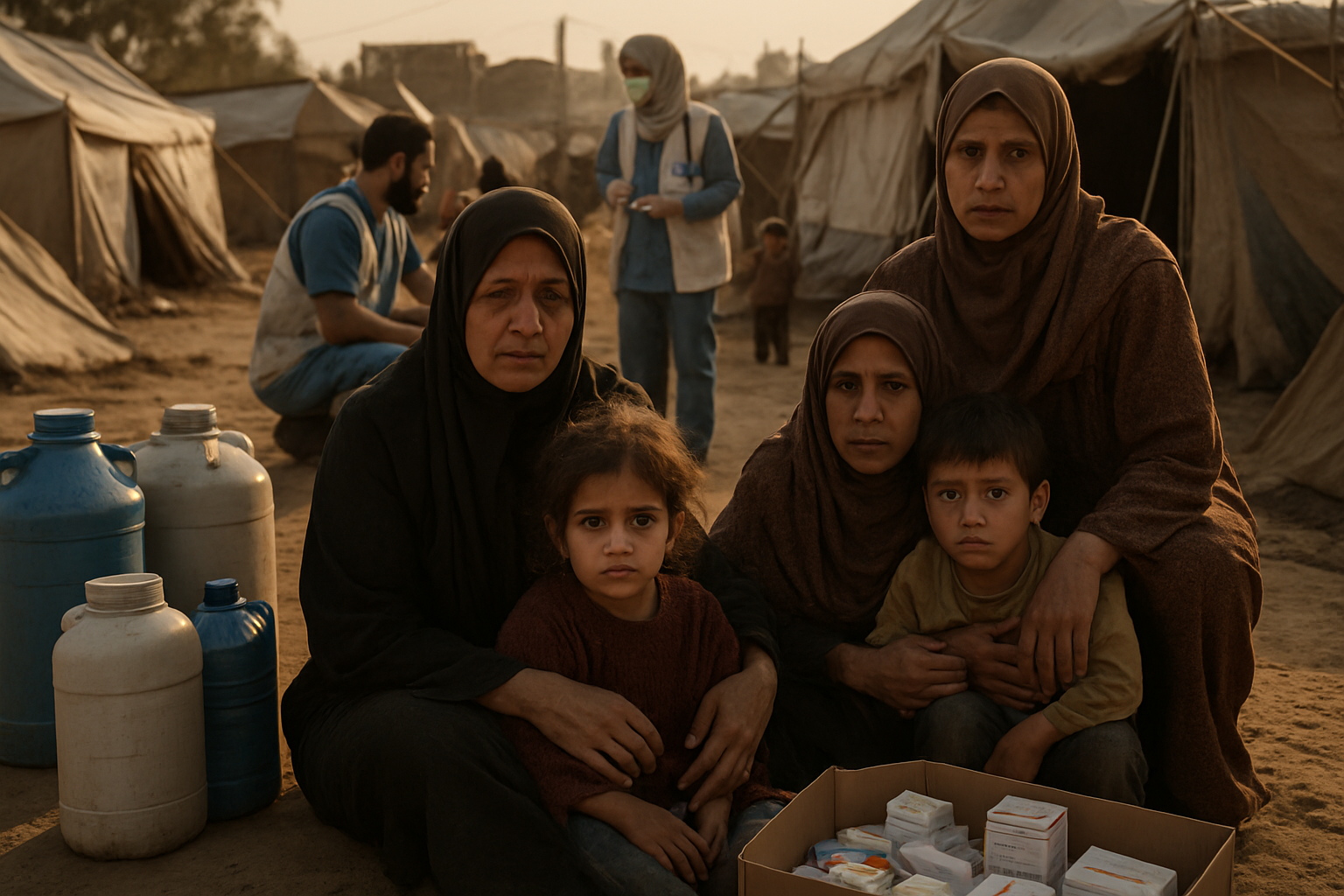
Gaza residents are experiencing unprecedented suffering as water shortages reach crisis levels in displacement areas like al-Mawasi, while the Palestinian Health Ministry reports continued casualties from ongoing violence despite ceasefire agreements established in October 2025.
The humanitarian situation in Gaza has deteriorated to catastrophic levels, with families in the al-Mawasi coastal area describing "dying of thirst" as clean drinking water becomes increasingly scarce. The crisis represents a convergence of infrastructure collapse, systematic ceasefire violations, and environmental degradation affecting the territory's 2.3 million residents.
Water Crisis Reaches Breaking Point
In Gaza's al-Mawasi displacement zone, families are struggling with severe water shortages that have left thousands desperate for clean drinking water. The coastal area, which has housed hundreds of thousands of displaced Palestinians since the conflict escalation, now faces a water emergency that threatens public health on an unprecedented scale.
Traditional water sources including wells and underground channels are under severe strain from years of drought, declining rainfall, rapid population growth, and the return of displaced families from other areas. The situation has been exacerbated by damage to water infrastructure and the ongoing blockade restrictions that limit repair capabilities.
Palestinian NGO Network President Amjad al-Shawa has warned of an environmental and public health emergency developing across Gaza's displacement camps. Rising temperatures, waste accumulation, and untreated wastewater are creating conditions ripe for disease outbreaks affecting hundreds of thousands living in overcrowded conditions with minimal sanitation facilities.
Healthcare System on the Brink of Collapse
The Gaza Health Ministry has reported a staggering toll from continued violence, with casualty figures highlighting the systematic breakdown of medical infrastructure. According to ministry data, over 72,000 Palestinians have been killed and more than 172,000 injured since the conflict escalation began in October 2023, including 21,524 children.
Gaza Health Ministry Director Zaher al-Wahidi reports that 6-10 critically ill patients are dying daily while waiting for medical evacuation abroad. Of the 20,000+ Palestinians awaiting medical treatment outside Gaza, approximately 1,400 have died since May 2024 when Israeli forces occupied the Rafah crossing – Gaza's primary gateway to external medical care.
"The healthcare system has entered a phase of complete collapse. We are witnessing systematic violations of all international humanitarian laws."
— Gaza Health Ministry Statement
The crisis has been compounded by the complete shutdown of Gaza's Civil Defense due to fuel shortages, hampering emergency response capabilities when they are most needed. Emergency medical services are struggling to operate effectively while treating mounting casualties and managing public health emergencies.
Systematic Ceasefire Violations Continue
Despite the ceasefire agreement established in October 2025, international observers have documented over 1,600 systematic violations resulting in more than 680 Palestinian deaths during what was supposed to be a peace period. The pattern of violations has been described by international legal experts as "systematic implementation failures" rather than isolated incidents.
Recent violence has included targeted strikes on residential areas and refugee camps. Palestinian sources report that Israeli forces recently killed 10 Palestinians near the Maghazi refugee camp, an area housing displaced families who sought shelter in what should have been protected civilian areas.
The Rafah crossing, Gaza's only access point not controlled by Israel, remains severely restricted with only 27 people crossing daily versus the agreed quota of 200. Hamas officials have condemned what they describe as "systematic harassment" by Israeli security forces, with reports indicating that 38 out of 50 planned returnees were denied passage on recent days.
International Response and Legal Concerns
The crisis has prompted unprecedented international condemnation, with 85 UN member states issuing joint statements calling for immediate action. Eight Arab and Muslim nations, including traditionally moderate countries like the UAE and Saudi Arabia, have condemned the systematic violations of international law.
Over 400 European Union diplomats have signed petitions demanding increased pressure to address the humanitarian catastrophe, while a European Left Coalition initiative has gathered more than 400,000 signatures opposing EU-Israel partnerships until the crisis is resolved.
UN Secretary-General António Guterres has characterized the situation as "the greatest test of multilateral cooperation in the modern era," highlighting the international community's struggle to respond effectively to the crisis. The Euro-Mediterranean Human Rights Observatory has accused authorities of exploiting international attention focused on other regional conflicts to intensify civilian punishment policies.
Medical Infrastructure Under Attack
The targeting of medical facilities and personnel has raised serious concerns about violations of the Geneva Conventions. Recent incidents include attacks on healthcare centers that resulted in the deaths of multiple medical workers, including doctors, nurses, and paramedics performing their humanitarian duties.
Al-Shifa Hospital, Gaza's largest medical facility, has faced particular challenges. Hospital Director Dr. Mohamed Abu Selmiya has repeatedly questioned "Where is the ceasefire?" as medical staff continue to work under extremely dangerous conditions while treating mounting casualties.
The World Health Organization has suspended critical medical evacuation operations following security incidents involving humanitarian workers, representing a catastrophic blow to Gaza's healthcare system that was already operating beyond capacity.
Environmental and Public Health Emergency
Beyond the immediate violence, Gaza faces a comprehensive environmental crisis that threatens long-term public health. Displacement camps are experiencing rat and insect infestations, while waste management systems have collapsed under the strain of housing hundreds of thousands of displaced persons.
Water and sanitation infrastructure, already damaged by years of conflict and blockade, cannot cope with current demands. The combination of overcrowding, inadequate sanitation, and rising temperatures creates ideal conditions for disease outbreaks that could affect the entire population.
Agricultural production has been severely disrupted, with many farms damaged or inaccessible. This has contributed to food insecurity and increased dependence on humanitarian aid that is itself severely constrained by access restrictions and funding shortfalls.
Historical Context and Escalating Crisis
The current crisis represents an escalation of longstanding humanitarian challenges in Gaza. A landmark study published in The Lancet Global Health revealed that Gaza's actual death toll has been systematically undercounted by approximately 35%, with actual casualties exceeding 75,000 people – representing 3-4% of Gaza's total population.
This research, which underwent rigorous peer review, identified systematic factors contributing to undercounting: bodies trapped under rubble, deaths outside formal medical facilities, identification challenges during mass casualty events, and disrupted civil registration systems due to infrastructure damage.
Broader Regional Implications
The Gaza crisis is unfolding within a broader context of Middle Eastern instability that includes conflicts in Lebanon, where over 800,000 people have been displaced, and ongoing tensions in the region. This has stretched international humanitarian resources and diverted diplomatic attention from Gaza's specific needs.
The crisis also coincides with global climate challenges, with recent months marking the 18th consecutive period of temperatures exceeding 1.5°C above pre-industrial levels. These environmental factors exacerbate displacement camp conditions and increase health risks for vulnerable populations.
Calls for International Action
Human rights organizations and international legal experts argue that the systematic nature of the crisis requires immediate intervention to protect civilian populations. The pattern of restrictions on movement, medical care, and basic services has been characterized as collective punishment prohibited under international humanitarian law.
French President Emmanuel Macron has offered to host direct talks between relevant parties, representing one of the few remaining diplomatic initiatives as the crisis deepens. However, the success of such efforts remains uncertain given the systematic nature of the violations and the broader regional context.
The situation has become a critical test for 21st-century international law enforcement mechanisms and civilian protection frameworks. Success or failure in addressing the Gaza crisis will influence how similar conflicts are managed globally and set precedents for occupied territories worldwide.
Urgent Need for Comprehensive Response
As the humanitarian catastrophe deepens, international observers stress that only a comprehensive response addressing immediate needs and underlying political issues can prevent further deterioration. The convergence of water shortages, healthcare system collapse, and environmental degradation creates conditions that could lead to an even more severe humanitarian disaster.
For Gaza's 2.3 million residents, the crisis represents a daily struggle for survival amid collapsing infrastructure and restricted access to basic necessities. The international community faces mounting pressure to move beyond diplomatic statements toward concrete actions that can address both immediate humanitarian needs and the systematic violations that continue to exacerbate the crisis.
The coming weeks will be critical in determining whether international intervention can prevent further deterioration or if the humanitarian catastrophe will continue to deepen, setting dangerous precedents for civilian protection in conflict zones worldwide.