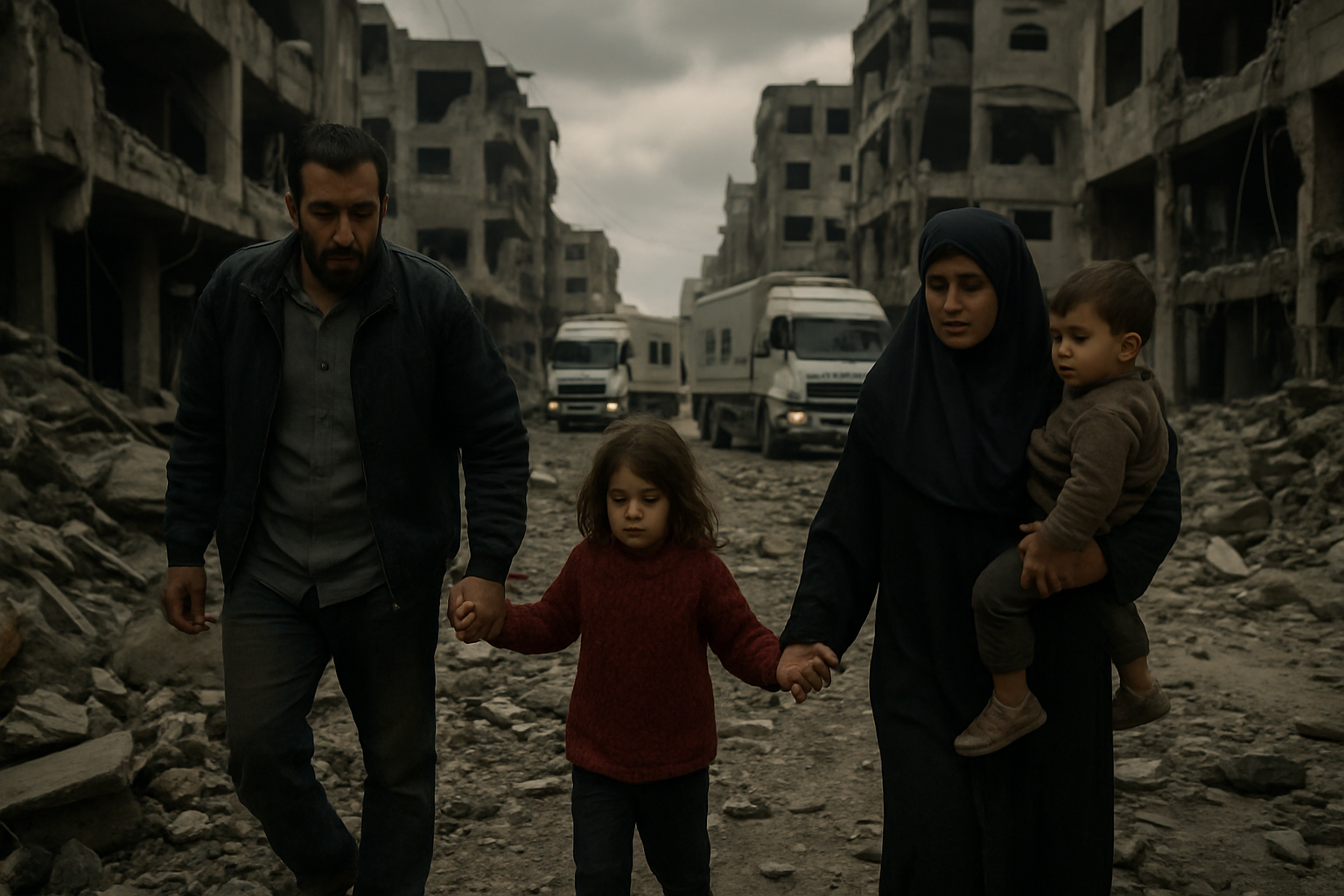
Palestinian health authorities in Gaza report that between 6 to 10 critically ill patients die daily while waiting for permission to travel abroad for medical treatment, as systematic ceasefire violations continue to devastate the territory and international humanitarian law appears increasingly powerless to protect civilians.
According to Zaher al-Wahidi, Director of the Information Department at Gaza's Ministry of Health, approximately 1,400 patients out of 20,000 have died since May 7, 2024, when Israeli forces occupied the Rafah crossing. Speaking to Palestinian media on Monday, al-Wahidi emphasized the tragic human cost of restricted medical evacuations, stating that "daily, between 6 to 10 patients who are waiting to travel for treatment abroad pass away."
Systematic Ceasefire Violations Continue
The deteriorating medical situation occurs against a backdrop of continued military operations that Palestinian officials describe as systematic violations of the October 2025 ceasefire agreement. Israeli airstrikes killed at least 4 people and wounded 10 others in recent attacks on parts of the Gaza Strip, with international media outlets confirming that air raids continue in the region despite the supposed truce.
The Palestinian Ministry of Health stated that despite ceasefire commitments, military operations persist across Gaza, with civilians bearing the brunt of the ongoing violence. These latest casualties add to what Palestinian authorities document as over 1,600 systematic violations of the ceasefire agreement, resulting in more than 600 Palestinian deaths during what was supposed to be a period of peace.
Medical System in Crisis
The Gaza health system faces unprecedented challenges, with critical shortages affecting every aspect of medical care. Al-Wahidi revealed that the number of patients requiring urgent medical treatment abroad has reached alarming levels, but access remains severely restricted due to border closures and bureaucratic obstacles.
The situation has been exacerbated by the complete shutdown of Gaza's Civil Defense services due to fuel shortages, hampering emergency response capabilities throughout the territory. This operational collapse comes at a critical time when emergency medical services are desperately needed to respond to ongoing attacks and treat civilian casualties.
Shocking Allegations of Child Torture
Perhaps most disturbing are recent allegations emerging from Gaza regarding the treatment of civilians, including children, during military operations. According to Palestinian sources, a shocking incident involved a two-year-old child who was allegedly used as leverage during a military interrogation, with reports claiming that cigarettes were extinguished on the child's body and a nail was inserted into his leg.
These allegations, if verified, would constitute grave violations of international humanitarian law and the Geneva Conventions, which provide special protections for children in conflict zones. The incident highlights the extreme vulnerability of Gaza's civilian population, particularly its youngest residents, amid the ongoing crisis.
Border Restrictions Tighten
The Rafah crossing, Gaza's primary gateway to the outside world, continues to operate at severely restricted capacity. While officials initially set a quota of 200 people per day, only 27 Palestinians have been able to cross in recent periods, according to Palestinian sources who describe "systematic harassment" by security forces.
This bottleneck has created a humanitarian catastrophe for the estimated 20,000 Palestinians awaiting medical evacuation. Many are suffering from conditions that cannot be treated within Gaza's compromised medical system, including cancer patients, those requiring specialized surgeries, and individuals with chronic conditions requiring advanced care not available in the territory.
International Investigations Call for Justice
Recent international investigations have raised serious questions about systematic targeting of first responders in Gaza. According to analysis by the advocacy group Avaaz, there is "substantial evidence" of double-tap strikes - attacks that target emergency responders who rush to help victims of initial strikes. The organization's timeline analysis suggests these tactics represent a deliberate strategy to eliminate first responders, a practice that constitutes a war crime under international law.
The case of Hind Rajab, a Palestinian child whose death has become emblematic of the broader humanitarian crisis, has drawn particular international attention. The systematic targeting of emergency medical personnel violates fundamental principles of international humanitarian law that protect medical workers and first responders in conflict zones.
"These violations of ceasefire agreements are not isolated incidents but part of a systematic pattern that undermines international law and threatens regional stability."
— Dr. Mohamed Abu Selmiya, Director of Al-Shifa Hospital
Regional and International Response
The ongoing crisis has drawn unprecedented condemnation from the international community. Eight Arab and Muslim nations, including Saudi Arabia, Jordan, Egypt, the UAE, Qatar, Indonesia, Pakistan, and Turkey, have issued joint statements condemning what they describe as systematic violations of international law. The Organization of Islamic Cooperation has characterized the situation as "continuing massacres."
Over 400 European Union diplomats have demanded increased pressure on Israeli authorities to ensure compliance with ceasefire agreements, while a European petition against EU-Israel partnerships has exceeded 400,000 signatures, reflecting growing public concern about the humanitarian situation.
Historical Context and Broader Implications
The current crisis represents the continuation of a pattern that has persisted since the October 2025 ceasefire agreement. Despite international mediation efforts, including the Trump Board of Peace initiative that secured $17 billion in reconstruction pledges from 27 nations, implementation has been severely hampered by ongoing violations and fundamental disagreements over security arrangements.
Recent independent research published in The Lancet Global Health revealed that Gaza's death toll has been systematically undercounted by approximately 35%, with actual casualties exceeding 75,000 people - representing 3-4% of Gaza's total population. This landmark study, conducted by an international research team using multiple data sources including hospital records, burial registrations, and demographic analysis, provides the most comprehensive independent verification of casualty data since the conflict escalation began.
Medical Infrastructure Under Siege
The targeting of medical infrastructure has become a particular concern for international humanitarian organizations. Reports indicate systematic attacks on ambulances, medical facilities, and healthcare workers, with at least 26 paramedics killed and 51 wounded since early March 2026. The attack on the Burj Qalaouiyah healthcare center, which killed 12 medical workers including doctors, nurses, and paramedics, exemplifies the broader pattern of targeting protected medical assets.
These attacks violate fundamental provisions of the Geneva Conventions that provide special protections for medical personnel, facilities, and vehicles marked with the Red Cross or Red Crescent. The systematic nature of these attacks suggests they may constitute war crimes requiring investigation by international judicial bodies.
Looking Forward: Challenges and Prospects
As the humanitarian crisis deepens, international observers question whether current diplomatic frameworks are adequate to address the scale of violations and civilian suffering. The systematic breakdown of ceasefire agreements demonstrates the challenges of maintaining negotiated peace without addressing underlying political and security issues that drive conflict.
The success or failure of international responses to the Gaza crisis will likely influence approaches to territorial sovereignty disputes and conflict resolution mechanisms globally, setting precedents for how the international community responds to systematic violations in occupied territories worldwide.
For the 2.3 million Palestinians in Gaza, the immediate priority remains survival amid collapsing infrastructure, restricted medical access, and ongoing military operations. The daily deaths of patients awaiting medical evacuation serve as a stark reminder of the human cost when international law fails to protect the most vulnerable populations in conflict zones.
The current situation in Gaza represents a critical test of 21st-century international law enforcement and conflict resolution mechanisms, with implications extending far beyond the territory's borders to fundamental questions about civilian protection, humanitarian access, and the effectiveness of international institutions in preventing atrocity crimes.