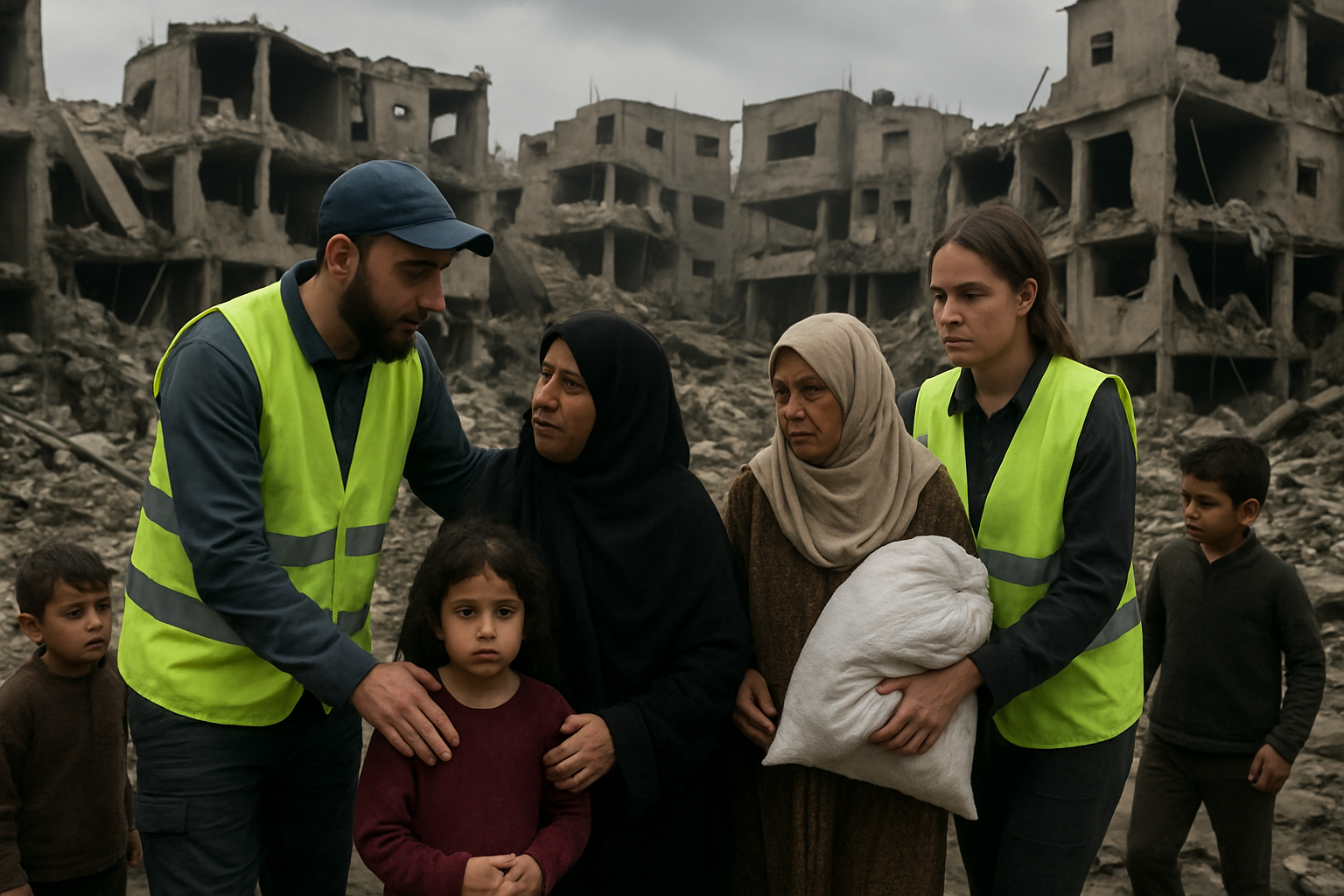
At least seven Palestinians were killed in Israeli airstrikes on the Al-Maghazi refugee camp in central Gaza on Monday evening, marking another deadly escalation in what humanitarian organizations describe as the most severe crisis in the territory's modern history, with healthcare and waste management systems on the brink of total collapse.
The latest casualties occurred when Israeli aircraft targeted a gathering of civilians in Al-Maghazi camp, according to local sources who reported dozens of additional injuries. The strike represents part of a systematic pattern of violence that has persisted despite ceasefire agreements, with over 1,600 documented violations since October 2025 resulting in more than 680 Palestinian deaths during what was intended to be a peace period.
Healthcare System in Critical Collapse
The Al-Maghazi massacre comes as Gaza's medical infrastructure faces unprecedented strain. The Palestinian Red Crescent has been forced to suspend medical evacuation operations after Israeli authorities reimposed closure of the Rafah crossing, blocking critical patients from receiving treatment abroad. Over 20,000 Palestinians currently await medical evacuation, with 6-10 critically ill patients dying daily according to Gaza Health Ministry Director Zaher al-Wahidi.
The situation has deteriorated dramatically since May 2024, when Israeli forces occupied the Rafah crossing. Since then, 1,400 patients out of 20,000 awaiting evacuation have died waiting for treatment that could only be obtained outside Gaza's compromised medical system.
"The closure of the Rafah crossing has created a death trap for our most vulnerable patients. We are witnessing a systematic denial of the right to life through medical neglect,"
— Dr. Zaher al-Wahidi, Gaza Health Ministry Director
Environmental and Sanitation Crisis Escalates
Beyond the immediate violence, Gaza faces an environmental catastrophe that threatens to create a public health emergency of unprecedented scale. Amjad al-Shawa, president of the Palestinian NGO Network in Gaza, has issued urgent warnings about the territory's collapsing waste management and water treatment systems.
The accumulation of solid waste, construction debris, and untreated wastewater has created conditions ripe for disease outbreaks, particularly as temperatures begin to rise with the approaching summer months. The situation is most critical in displacement camps and tent cities, where hundreds of thousands of Palestinians live in overcrowded conditions with minimal sanitation infrastructure.
Al-Shawa emphasized that these environmental factors, combined with the ongoing blockade preventing the import of essential equipment and materials, create a "perfect storm" threatening the health and survival of Gaza's 2.3 million residents, with particular risks for children and elderly populations in displacement centers.
Systematic Violation of Ceasefire Agreements
The killing of seven civilians in Al-Maghazi adds to a disturbing pattern of ceasefire violations that international observers say demonstrates the systematic failure of negotiated peace agreements. Since the October 2025 truce was announced, documented violations have exceeded 1,600 incidents, making it one of the most systematically breached ceasefires in recent history.
These violations have coincided with what human rights organizations describe as a deliberate strategy to exploit international attention focused on other global crises, particularly the ongoing Iran-Israel conflict that has dominated headlines since March 2026. The Euro-Mediterranean Human Rights Observatory has accused Israeli forces of using this distraction to intensify policies that amount to collective punishment of Gaza's civilian population.
Rafah Crossing: Lifeline Severed
The reimposition of restrictions on the Rafah crossing represents a particularly devastating blow to Gaza's survival prospects. The crossing, which serves as the territory's only access point to the outside world not controlled by Israeli forces, has seen its daily capacity reduced from 200 to just 27 people, with Hamas officials condemning what they describe as "systematic harassment" of Palestinians attempting to leave for medical treatment.
This restriction comes at a time when Gaza's Civil Defense services have been completely shut down due to fuel shortages, hampering emergency response capabilities when they are needed most. The combination of restricted movement, compromised emergency services, and ongoing military operations creates what humanitarian experts describe as a "death trap" for civilians.
International Community Response
The deteriorating situation has drawn unprecedented international condemnation, with 85 UN member states issuing a joint statement calling for immediate action to protect Palestinian civilians. Eight Arab and Muslim nations, including traditional allies of Israel such as the UAE and Saudi Arabia, have issued their own joint condemnation describing the situation as systematic violations of international law.
UN Secretary-General António Guterres has characterized the crisis as representing "the greatest test of multilateral cooperation in the modern era," while over 400 EU diplomats have signed petitions demanding increased pressure to halt what they describe as systematic targeting of civilian infrastructure.
The Broader Context of Regional Crisis
Gaza's humanitarian catastrophe is unfolding against the backdrop of broader Middle Eastern instability, with the Iran-Israel conflict that began in March 2026 consuming much of the international community's diplomatic attention and resources. This has created what Palestinian officials describe as a deliberate strategy to intensify restrictions while global focus is diverted elsewhere.
The crisis in Gaza represents part of what international observers have termed the most serious Middle Eastern humanitarian emergency since the Cold War, affecting over 15 million people across multiple countries. However, unlike other regional crises, Gaza's situation is characterized by the systematic nature of restrictions on movement, medical care, and basic services that amount to what legal experts describe as collective punishment prohibited under international humanitarian law.
Looking Forward: Critical Intervention Needed
As Gaza enters what may be its most critical phase since the 2023 escalation, humanitarian organizations stress that immediate international intervention is required to prevent a complete collapse of basic services that would affect all 2.3 million residents. The combination of ongoing violence, healthcare system breakdown, environmental crisis, and restricted access to the outside world creates conditions that experts warn could lead to a humanitarian catastrophe of historic proportions.
The international community faces a crucial test of its commitment to civilian protection and humanitarian principles. The systematic nature of the violations, combined with the environmental and health crises, demands coordinated international action that goes beyond diplomatic statements to include concrete measures to restore basic services and protect civilian life.
Without immediate intervention to address the healthcare crisis, restore essential services, and ensure humanitarian access, Gaza faces what may be its darkest period in decades, with consequences that will extend far beyond the territory's borders and test the foundations of international humanitarian law and civilian protection in the 21st century.