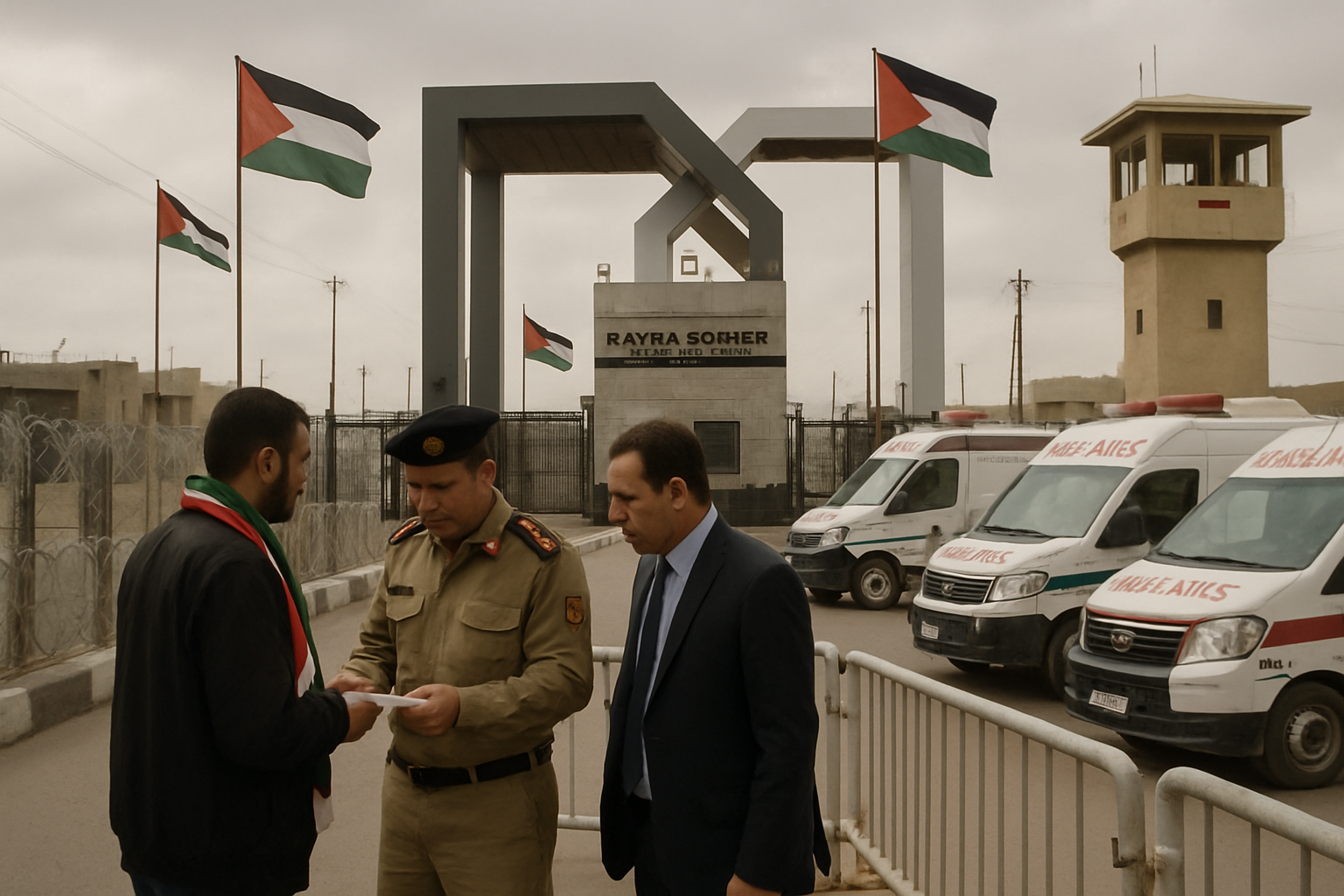
Gaza's vital Rafah border crossing with Egypt has reopened for the first time in nearly two years, allowing wounded Palestinians and patients to cross for medical treatment as part of ongoing ceasefire implementation efforts.
The crossing, closed since May 2024, began operations on Monday with strict limitations, permitting only 50 Palestinians to cross in each direction on the first day, according to Egyptian and Israeli officials. The reopening represents a significant development in the fragile ceasefire process, offering hope for Gaza's 2.3 million residents who have been largely cut off from the outside world.
Medical Evacuations Begin
The first Palestinians to cross were wounded patients and their companions, transported in Egyptian ambulances. Egyptian health officials confirmed that three ambulances carrying injured individuals and patients arrived at the Egyptian side of the crossing on Monday afternoon.
"The sick and wounded were examined immediately upon arrival to determine which hospitals they should be sent to"
— Egyptian Medical Official, AFP
Among the first to cross were 50 patients along with their accompanying family members, representing a critical lifeline for Palestinians requiring specialized medical care unavailable in Gaza's devastated healthcare system. The crossing is expected to facilitate treatment for some of the estimated 20,000 Palestinians awaiting medical evacuation.
Regional Medical Corridors Expand
The Rafah reopening coincides with continued humanitarian efforts through other channels. Jordan's Armed Forces evacuated the 23rd batch of sick children from Gaza on Monday, consisting of 18 children accompanied by 38 family members as part of the "Jordanian Medical Corridor" initiative launched under royal directives in March 2024.
These parallel medical evacuation efforts underscore the critical healthcare needs in Gaza, where the medical system has been severely compromised by ongoing conflict. The Jordanian initiative has provided crucial treatment for Palestinian children in Jordanian hospitals as part of sustained humanitarian and medical support efforts.
Strict Security Protocols
The reopening operates under stringent security arrangements, with both Israel and Egypt conducting thorough vetting procedures for all travelers. Israeli security officials confirmed that the number of travelers is expected to increase gradually if the initial limited operations prove successful.
The crossing will operate with restricted hours and capacity, focusing primarily on humanitarian cases including medical patients, wounded individuals, and their necessary companions. The arrangement represents a carefully negotiated compromise within the broader ceasefire framework.
Historical Context and Significance
The Rafah crossing has historically served as Gaza's primary gateway to the outside world, providing the only alternative to crossings controlled directly by Israel. Its closure in May 2024 effectively sealed Gaza's borders, preventing most civilian movement and humanitarian evacuations.
The last significant Palestinian medical evacuations through Rafah occurred in February 2025, highlighting the extended period of isolation that Gaza's population has endured. The crossing's reopening, while limited, offers the first formal pathway for civilian movement in nearly two years.
Ceasefire Implementation Challenges
The border reopening occurs against a backdrop of ongoing tensions and challenges in ceasefire implementation. Recent reports indicate continued violence in some areas, with Gaza's Health Ministry documenting casualties even during the supposed ceasefire period. Five Palestinians were killed in the past 24 hours, bringing the total death toll since the conflict began to 71,800, according to Palestinian health authorities.
Despite these challenges, international observers view the Rafah reopening as a positive step toward broader ceasefire compliance and eventual normalization of civilian movement.
Identity Verification Process
In parallel developments, Gaza's Health Ministry has activated identification rooms to verify the identities of 15 martyrs received from Israeli authorities on January 30. The Special Committee for Missing Persons and Unknown Bodies announced the activation of identification procedures to complete legal processes and proper burial arrangements.
This process represents part of broader prisoner and body exchange mechanisms included in ceasefire negotiations, though specific details of these arrangements remain largely confidential.
International Monitoring
The reopening involves multiple parties including Palestinian staff, European Union monitoring personnel, and Israeli security officials. This multi-party coordination reflects the complex diplomatic arrangements necessary to facilitate even limited civilian movement across Gaza's borders.
French media reports indicate that the initial operations will focus on foot traffic only, with no provision for goods transport or full commercial operations. The emphasis remains on humanitarian cases, particularly medical evacuations for critical patients.
Looking Forward
While the reopening represents a significant milestone, its limited scope underscores the ongoing challenges facing Gaza's population. The restriction to 50 crossings per day in each direction falls far short of addressing the estimated 20,000 Palestinians requiring medical treatment abroad.
Egyptian authorities have indicated that expanded operations may be possible if initial security and logistical arrangements prove successful. However, any significant expansion will likely depend on broader progress in ceasefire implementation and regional diplomatic efforts.
The Rafah crossing reopening marks a cautious but important step toward restoring civilian movement and humanitarian access for Gaza's besieged population, offering hope for expanded medical evacuations and eventual normalization of cross-border movement as ceasefire implementation continues.