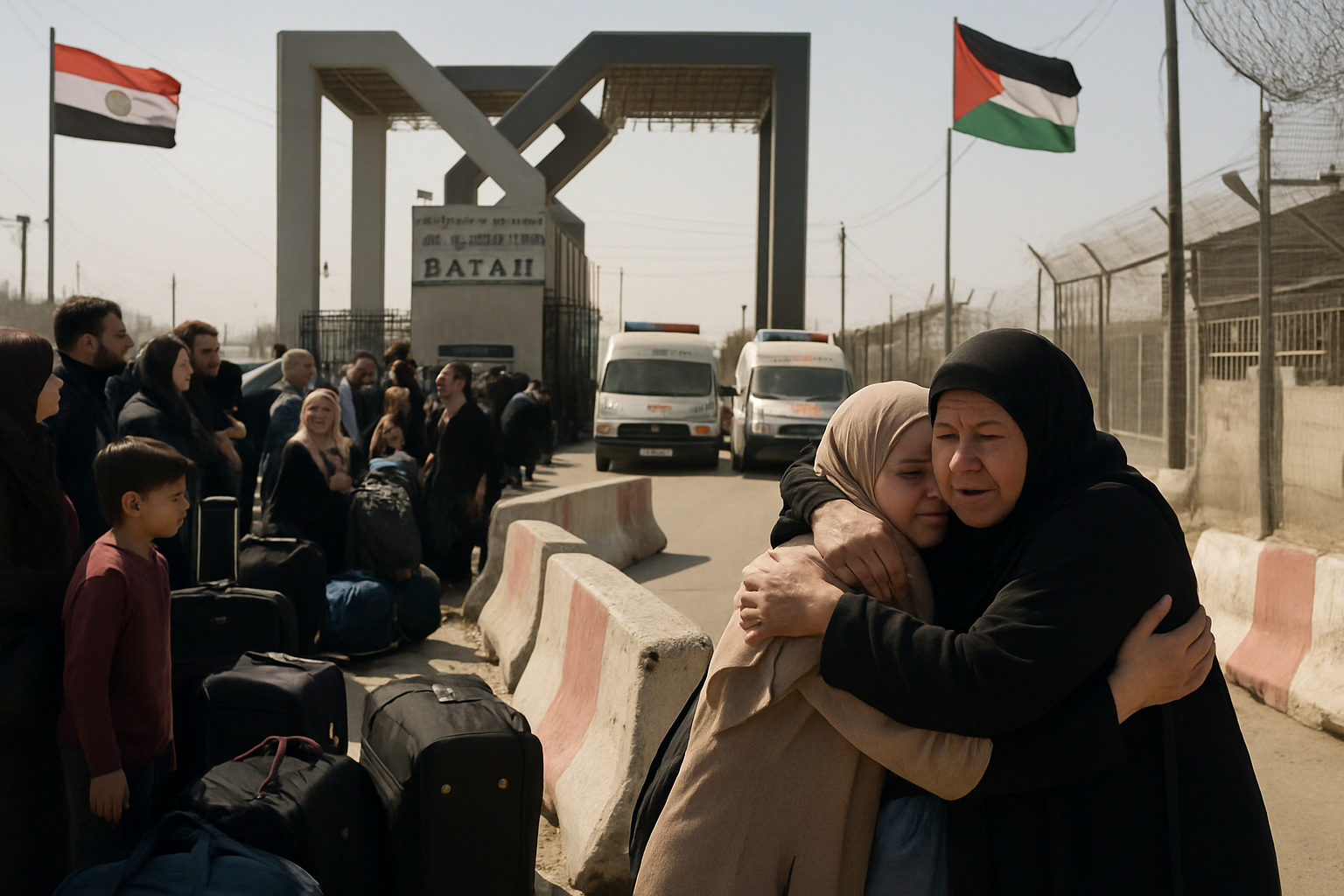
Gaza's vital Rafah border crossing with Egypt officially reopened on February 2, 2026, after nearly two years of closure, but severe restrictions have allowed only a handful of Palestinians to cross despite thousands awaiting medical evacuation.
On the first day of operations, only 27 Palestinians were able to cross through the strategic border point according to Indonesian media reports, far below the promised daily quota of 150 people. Al Jazeera confirmed that just five patients were permitted to leave Gaza for medical treatment via the crossing on Monday, forcing hundreds if not thousands of others to continue waiting.
The crossing, which serves as the sole route in or out for nearly all of Gaza's 2.3 million residents, had been largely shut since May 2024 when Israeli forces took control of the Palestinian side during military operations in Rafah.
Limited First Day Operations
Palestinian media reported that the first bus carrying 12 returnees arrived in Gaza through the Rafah crossing Monday evening, reaching the Nasser Medical Complex in Khan Younis in southern Gaza. The returnees were part of an extremely limited pilot program that prioritized medical cases and wounded patients.
Egyptian authorities had mobilized a massive healthcare response in preparation for the reopening, placing 150 hospitals on high alert and deploying 300 ambulances to handle potential medical evacuations. However, the reality on the ground proved far more restrictive than anticipated.
According to Gaza's Health Ministry, approximately 20,000 Palestinians currently need medical evacuation for treatment abroad, highlighting the enormous gap between demand and the crossing's current limited capacity.
International Response and UN Welcome
The United Nations welcomed the reopening through spokesperson Stephane Dujarric, who emphasized the importance of allowing civilians to leave and return to Gaza voluntarily and safely in accordance with international law. The UN has consistently called for unimpeded humanitarian access to Gaza's population.
"The United Nations welcomes the reopening of Gaza's Rafah border with Egypt and emphasizes the necessity of allowing civilians to leave and return to Gaza voluntarily and safely."
— Stephane Dujarric, UN Spokesperson
The crossing's reopening represents part of the broader ceasefire implementation between Israel and Hamas, though Israeli security protocols maintain strict control over all movement through the border point.
Humanitarian Aid Preparations
Reports from Egypt's Rafah indicate that aid trucks have been moving toward the border crossing, suggesting preparations for expanded humanitarian operations. However, current protocols limit the crossing to pedestrian traffic only, with no provisions yet for goods transport or large-scale aid deliveries.
The crossing operates under stringent Israel-Egypt security arrangements that involve Palestinian staff, European Union monitoring, and Israeli security coordination. Daily quotas currently allow 150 people to exit Gaza and 50 to enter during restricted 6-hour operational windows.
Broader Regional Context
The Rafah crossing's reopening comes amid broader diplomatic developments in the region. Eight Arab and Muslim nations, including Saudi Arabia, Jordan, Egypt, UAE, Qatar, Indonesia, Pakistan, and Turkey, recently issued a joint condemnation of alleged Israeli ceasefire violations, reporting over 1,000 Palestinian casualties from Israeli strikes since the ceasefire began.
Meanwhile, Jordan continues to operate a separate medical corridor, having recently evacuated its 23rd batch of patients, including 18 children and 38 companions, demonstrating alternative routes for medical evacuations.
Historical Significance and Future Prospects
The Rafah crossing has long served as Gaza's primary gateway to the outside world. The last major Palestinian medical evacuations through Rafah occurred in February 2025, making Monday's reopening particularly significant for families separated for nearly two years.
Gaza's official death toll has reached 71,800 according to the territory's Health Ministry, with the humanitarian crisis deepening during the crossing's extended closure. The ministry has also activated identification rooms for 15 individuals returned from Israeli authorities on January 30.
Egyptian Health Minister Khaled Abdel Ghaffar has coordinated the medical response from Egypt's New Administrative Capital, ensuring that Egyptian hospitals are prepared to receive Palestinian patients requiring urgent care.
Ongoing Challenges
Despite the symbolic importance of the reopening, significant challenges remain. The current daily quotas represent only a fraction of the humanitarian need, with medical professionals estimating that the restricted movement will do little to address the massive backlog of patients requiring treatment abroad.
Operations are expected to expand gradually if the initial phase proves successful, but this remains contingent on continued security cooperation between all parties and adherence to ceasefire agreements.
The reopening represents a critical humanitarian milestone for Gaza's 2.3 million residents, though the severe restrictions underscore the complex political and security challenges that continue to limit meaningful access for Palestinians seeking medical care, family reunification, or basic freedom of movement.
As aid organizations and families watch developments closely, the coming days will determine whether this limited reopening can evolve into a more substantial humanitarian corridor for Gaza's isolated population.