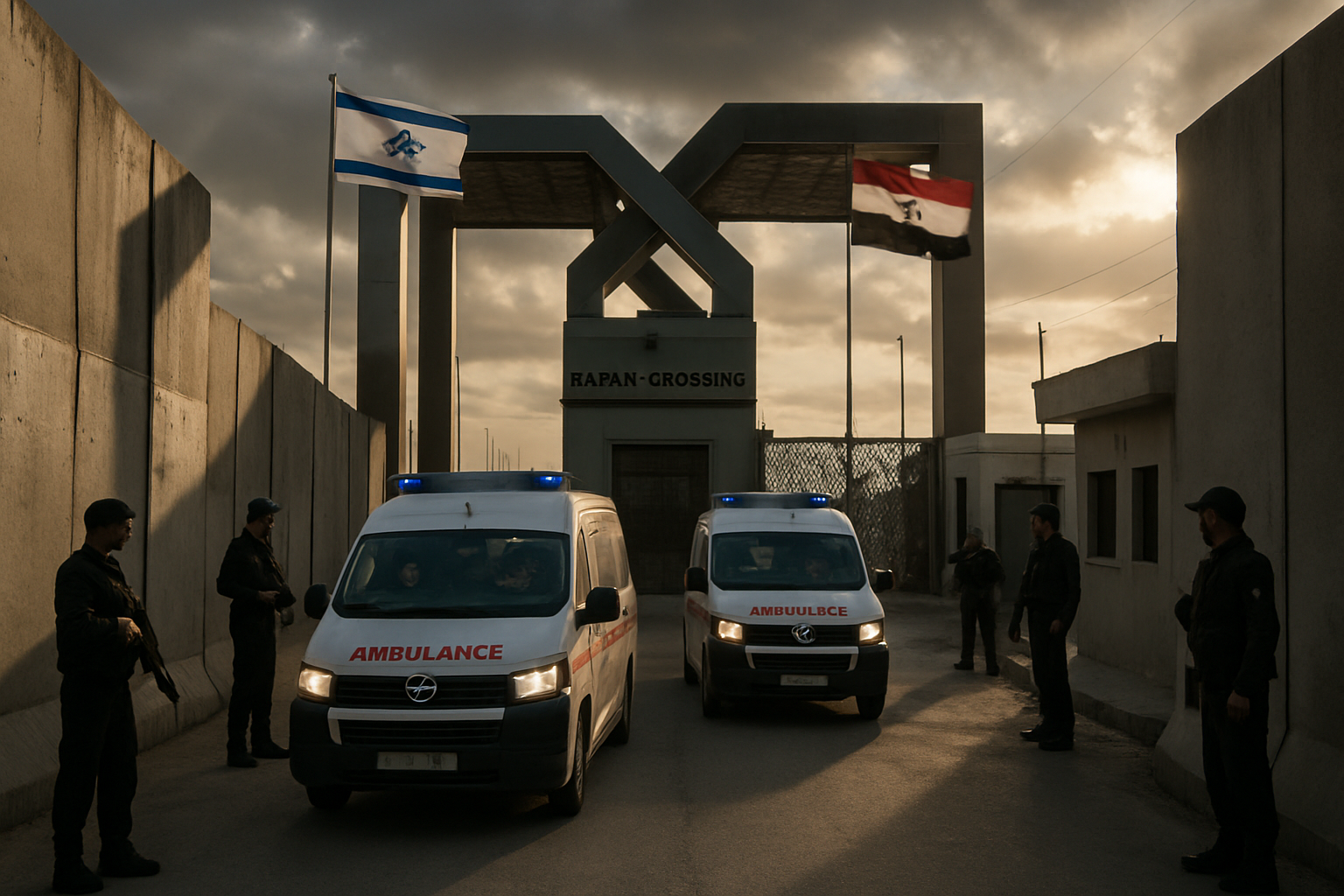
Gaza's critical Rafah border crossing with Egypt has officially reopened, marking the first medical evacuations in nearly two years as wounded Palestinians cross into Egyptian territory amid ongoing ceasefire negotiations between Israel and Hamas.
The historic reopening on February 3, 2026, represents a significant humanitarian milestone after the crossing remained sealed since May 2024 during Israeli military operations. Initial reports confirm that the first medical evacuees have successfully crossed the border, with Egyptian ambulances transporting patients to hospitals as part of a carefully coordinated international effort.
Limited Operations Begin After Nearly Two-Year Closure
The reopening follows months of negotiations as part of the broader Israel-Hamas ceasefire implementation. Operations remain severely restricted, with sources indicating only limited numbers of Palestinians have been permitted to cross during the initial phase.
According to recent intelligence reports, approximately 20,000 Palestinians are currently waiting for medical evacuation from Gaza, highlighting the immense humanitarian need that has built up during the crossing's closure. The Gaza Health Ministry has confirmed that the death toll in the territory has reached 71,800, underscoring the urgent medical crisis facing the enclave's 2.3 million residents.
Egypt has mobilized an extensive healthcare response to handle the incoming patients, with 150 hospitals placed on high alert and 300 ambulances deployed across the country. Egyptian Health Minister Khaled Abdel Ghaffar has been coordinating the massive logistical operation from Egypt's New Administrative Capital.
Strict Security Protocols Govern Crossing Operations
The reopening operates under stringent Israeli-Egyptian security protocols, with the crossing remaining under full Israeli control on the Palestinian side. Daily quotas have been established limiting movement to 150 Palestinians exiting Gaza and 50 entering during restricted six-hour operational windows.
Current operations permit only pedestrian traffic, with no goods transport or humanitarian aid convoys yet approved. European Union monitoring teams have been deployed to oversee the process, while Palestinian staff manage day-to-day operations under Israeli security oversight.
"This represents a critical humanitarian milestone despite the severe restrictions that limit meaningful access for Gaza's 2.3 million residents,"
— UN Spokesperson Stephane Dujarric
The crossing closure since May 2024 had completely severed Gaza's primary gateway to the outside world, with the last major Palestinian medical evacuations occurring in February 2025.
International Diplomatic Context
The Rafah reopening comes amid complex regional diplomatic developments. Eight Arab and Muslim nations, including Saudi Arabia, Jordan, Egypt, UAE, Qatar, Indonesia, Pakistan, and Turkey, recently issued joint condemnations of alleged Israeli ceasefire violations, reporting over 1,000 Palestinian casualties from Israeli strikes since the ceasefire began.
Meanwhile, Israeli Prime Minister Benjamin Netanyahu's office has rejected any role for the Palestinian Authority in Gaza's administration, stating that "Israel will not accept use of Palestinian Authority's symbol, and the PA will not be a partner in the administration of Gaza." This position complicates efforts to establish sustainable governance arrangements for the territory.
Jordan continues operating a separate medical corridor initiative, having recently completed its 23rd evacuation batch involving 18 children and 38 companions, demonstrating alternative pathways for emergency medical cases.
Humanitarian Impact and Future Prospects
The crossing's reopening, while symbolically significant, faces substantial operational limitations that restrict its immediate humanitarian impact. The daily quotas allow for only a fraction of the medical evacuations needed, with approximately 20,000 Palestinians requiring treatment abroad.
International observers have welcomed the development while expressing concerns about the severe restrictions that prevent the crossing from serving as an effective humanitarian corridor. Operations are expected to expand gradually if initial phases prove successful and security conditions remain stable.
The reopening represents a crucial test of the broader ceasefire implementation between Israel and Hamas, with both sides under international pressure to maintain the fragile peace agreement. Success at Rafah could potentially pave the way for expanded humanitarian access and eventual reconstruction efforts in Gaza.
As medical evacuations resume for the first time since early 2025, the international community continues monitoring whether this limited reopening will evolve into more comprehensive humanitarian access for Gaza's population, who have endured nearly two years of complete isolation from the outside world.