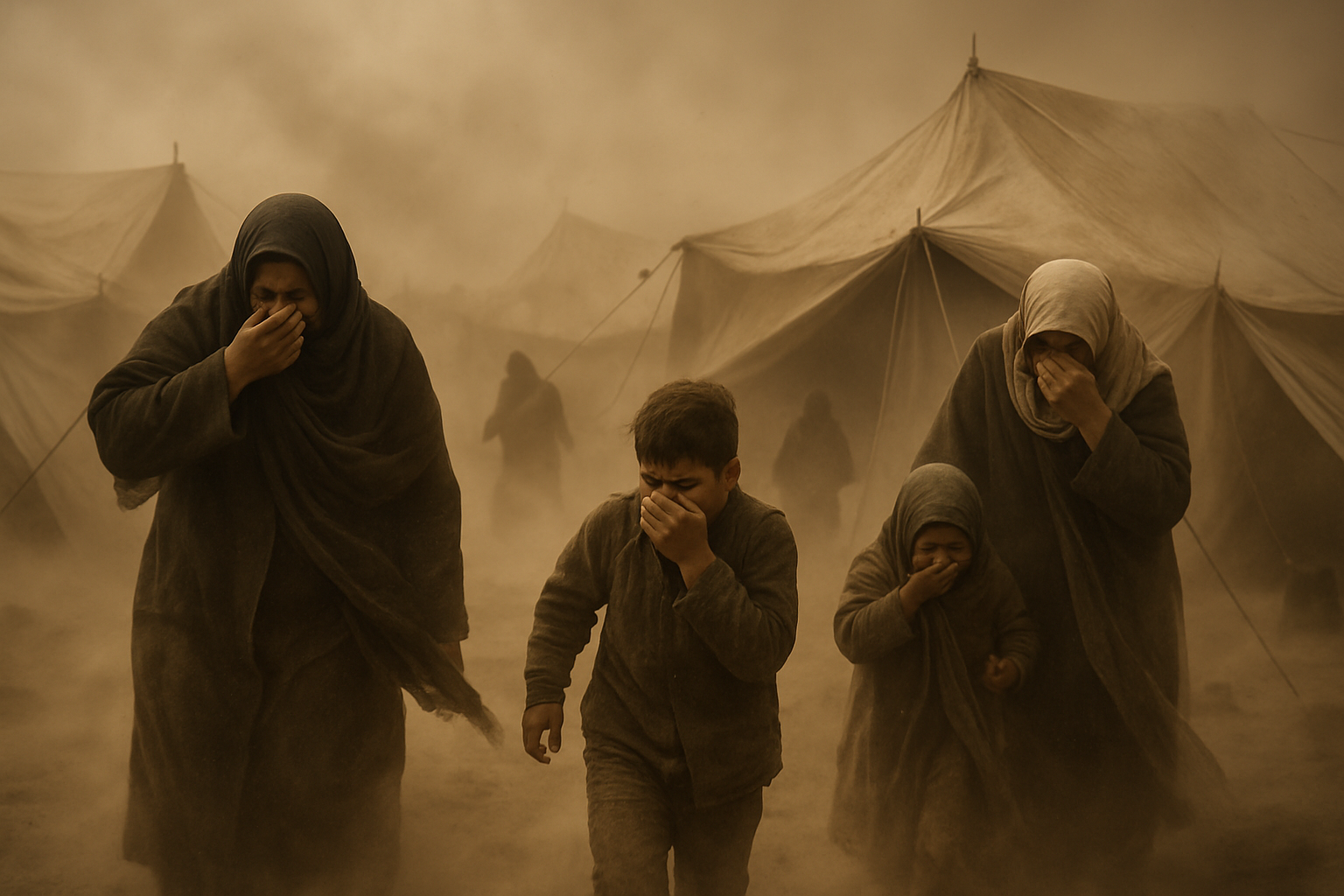
A powerful sandstorm has struck Gaza, significantly worsening conditions for displaced Palestinian families living in vulnerable temporary shelters, while across Europe, severe weather warnings are forcing transportation disruptions and emergency responses during the 20th consecutive month of record-breaking global temperatures.
Gaza Sandstorm Compounds Humanitarian Crisis
The Palestinian Civil Defense Directorate in Gaza has issued urgent safety warnings as a massive dust-laden air mass sweeps across the region, creating hazardous conditions for the hundreds of thousands of Palestinians displaced and living in inadequate tent accommodations.
According to reports from Palestinian media sources, the sandstorm has brought dangerous levels of airborne dust and sand that pose serious respiratory health risks, particularly to vulnerable populations already struggling with limited access to proper shelter and medical care.
The Civil Defense authority urged residents to avoid leaving their homes, shelters, or tents except for absolute emergencies, as the dusty air mass creates visibility problems and breathing difficulties. The warning comes at a critical time when many displaced families are living in temporary structures that provide minimal protection from extreme weather conditions.
European Weather Alerts Disrupt Transportation
Simultaneously, multiple European countries are grappling with their own severe weather challenges. Slovakia is bracing for a destructive storm system with winds reaching 125 km/h, capable of damaging roofs and uprooting trees, according to meteorological warnings from local authorities.
The Netherlands faces a complex weekend weather pattern mixing rain, snow, and intermittent sunshine, with conditions varying dramatically by region. Weather forecasters warn of stormy showers and potential snow accumulation in Limburg province, creating hazardous travel conditions across the country.
Transportation networks across Europe continue to strain under the pressure of extreme weather events, with authorities advising residents to avoid unnecessary travel and secure outdoor objects that could become projectiles in high winds.
Climate Context: 20th Month of Extreme Temperatures
These simultaneous weather disasters occur during what scientists confirm is the 20th consecutive month of global temperatures exceeding 1.5°C above pre-industrial levels – the longest sustained warming period in recorded human history.
"Current conditions represent a preview of what could become routine 2030s weather patterns without significant climate adaptation investment."
— Climate Research Analysis
The phenomenon demonstrates what researchers call the "climate volatility paradox," where sustained global warming enables both unprecedented heat records and devastating regional extreme weather events through disrupted atmospheric circulation patterns and polar vortex disturbances.
Infrastructure Vulnerabilities Exposed
Emergency services across affected regions are operating at or beyond capacity limits, with traditional mutual aid mechanisms strained by the simultaneity of disasters across multiple continents. Transportation networks, power grids, and communication systems designed for historical climate patterns are repeatedly exceeding their operational parameters.
The current crisis builds upon the devastating February 2026 European storm succession of Kristin-Leonardo-Marta-Nils-Pedro, which claimed over 35 lives across Portugal, Spain, and France, requiring Portugal's largest peacetime rescue operation with 26,500 personnel deployed.
Humanitarian Impact in Gaza
For Gaza's displaced population, the sandstorm represents an additional layer of hardship in an already desperate humanitarian situation. Families living in makeshift tents and temporary shelters face exposure to dangerous dust levels with limited access to proper respiratory protection or medical care.
The dusty conditions particularly threaten those with pre-existing respiratory conditions, elderly residents, and children, populations already vulnerable due to the broader humanitarian crisis and limited access to healthcare services.
Global Response and Adaptation Needs
Climate scientists emphasize that current weather patterns represent a watershed moment requiring fundamental shifts from reactive crisis management to proactive climate resilience building. The EU Civil Protection Mechanism has been repeatedly activated throughout 2026, with Sweden and Denmark providing €246 million in assistance – the largest coordinated European weather response on record.
However, traditional international aid frameworks designed for sequential regional emergencies prove inadequate when multiple continents face simultaneous extreme weather events. This reality demands new approaches to emergency response and climate adaptation that can handle compound disasters.
Economic and Social Consequences
The mounting extreme weather events continue to devastate agricultural sectors, disrupt tourism industries, and strain supply chains globally. Recovery timelines have shifted from weeks to months or years, representing a fundamental change in disaster response planning approaches.
Mental health services report increased demand as communities face repeated climate trauma, with families losing generational homes and businesses confronting potential extinction. The psychological toll of sustained extreme weather exposure adds another dimension to the crisis requiring long-term support systems.
Looking Forward: The Need for Transformation
Experts warn that the window for effective climate action continues to narrow as ecological systems approach critical thresholds that could trigger irreversible changes affecting global food security, climate stability, and human settlements.
The convergence of humanitarian crises like the Gaza sandstorm with broader European extreme weather patterns demonstrates the interconnected nature of climate impacts that transcend political boundaries and require unprecedented international cooperation.
As additional weather systems develop across Atlantic and Pacific regions, authorities maintain high alert levels globally, understanding that current crisis conditions may persist for weeks, establishing what scientists call the "new normal" of extreme weather frequency and intensity.
The choice between transformative infrastructure adaptation and increasingly expensive reactive crisis management becomes more critical with each passing month, as extreme weather events continue to exceed current response capabilities across multiple continents simultaneously.