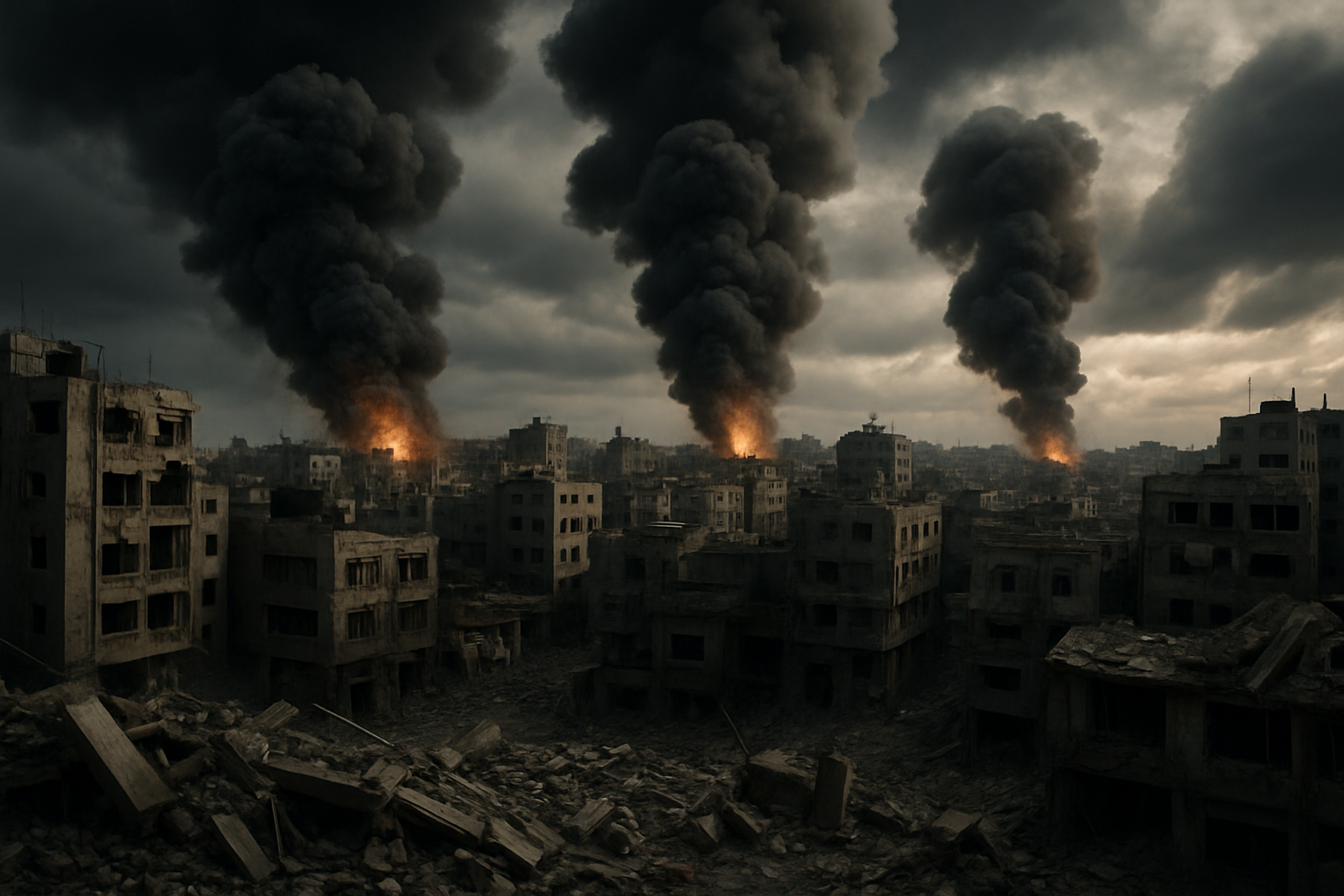
Fresh explosions rocked eastern Gaza City on February 13, 2026, while at least 54 Palestinians were wounded in coordinated attacks by Israeli settlers across the West Bank, marking a dangerous escalation in Middle East tensions amid ongoing diplomatic efforts.
The latest violence comes as the international community continues to grapple with implementing ceasefire agreements and addressing the humanitarian crisis that has gripped the region for months. Palestinian sources report that the explosions in eastern Gaza City occurred early morning, adding to a pattern of violations that has persisted since the October 2025 ceasefire began.
West Bank Settler Violence Intensifies
The most significant incident occurred in the town of Talfit, south of Nablus in the northern West Bank, where 25 Palestinians were injured during what local sources described as a coordinated settler attack. According to the Palestinian Red Crescent, at least one person suffered gunshot wounds and was transported to hospital, while two others were beaten during the assault.
Hamas condemned the attacks in a strongly-worded statement, describing them as "criminal aggression" and calling for immediate international intervention. The Islamic Resistance Movement accused Israeli settlers of carrying out the attacks alongside occupation forces, targeting properties, terrorizing residents, and opening fire with live ammunition.
"These attacks represent a clear criminal aggression against our people," a Hamas spokesperson declared, demanding "deterrent international action" against what they characterized as systematic violations of international law.
Gaza Ceasefire Violations Continue
The explosions in eastern Gaza mark another violation of the ceasefire agreement that has been in place since October 2025. According to extensive documentation from Palestinian authorities, over 1,620 systematic ceasefire violations have occurred over the past four months, resulting in 573 Palestinian deaths and 1,553 injuries.
The Gaza Government Media Office has meticulously documented these violations, which include 560 gunfire incidents, targeted killings, and building demolitions. The pattern represents what international observers describe as "systematic implementation failures" rather than isolated incidents.
"Where is the ceasefire?"
— Dr. Mohamed Abu Selmiya, Al-Shifa Hospital Director
The question posed by Al-Shifa Hospital Director Dr. Mohamed Abu Selmiya reflects the frustration of Gaza's medical professionals who continue to treat casualties despite the supposed truce. The total Gaza death toll has reached 71,800, with civilian infrastructure remaining under constant threat.
Al-Aqsa Mosque Gatherings Amid Restrictions
Despite the escalating violence, tens of thousands of Palestinians performed Friday prayers at the Al-Aqsa Mosque in the final Friday of the Islamic month of Sha'ban. The gatherings occurred despite stringent restrictions imposed by Israeli authorities, demonstrating the Palestinian people's determination to maintain their religious practices under difficult circumstances.
The prayers at Al-Aqsa represent a significant act of resilience, with Palestinian sources emphasizing the symbolic importance of maintaining access to the holy site during periods of heightened tension.
Gaza Civil Defense Operations Hampered
Gaza's Civil Defense teams announced they were proceeding to Al-Batsh Cemetery in eastern Gaza City to assess field conditions and evaluate damage following recent Israeli incursions in the area. The operation was coordinated with the International Committee of the Red Cross, highlighting the complex logistics required for basic emergency services in the besieged territory.
The Civil Defense has faced significant operational challenges due to fuel shortages, hampering emergency response capabilities when they are most needed. These logistical constraints have created additional humanitarian pressures on Gaza's already overwhelmed infrastructure.
Rafah Crossing: Limited Returns Continue
In a rare positive development, Palestinian cancer patient Mariam al-Najjar returned to Gaza through the Rafah crossing after being stranded in Egypt for two years. The al-Najjar family's reunion represents one of the few successful medical evacuations through the reopened border crossing.
However, operations at the Rafah crossing remain severely limited, with only 27 Palestinians crossing on the opening day compared to the planned quota of 200. Hamas has condemned what it describes as "systematic harassment" by Israeli security forces, which denied entry to 38 of 50 planned returnees.
US Gaza Policing Plans Face Challenges
According to reports from Washington, the Trump administration's plans for establishing a new police force in Gaza are encountering serious obstacles. Under the proposed ceasefire framework, Arab countries and the European Union are expected to train a new police force to maintain order in the Gaza Strip.
However, the ongoing violence and systematic ceasefire violations are complicating these reconstruction efforts. International partners have expressed concerns about deploying personnel and resources in an environment where security guarantees remain questionable.
International Response and Diplomatic Efforts
The escalating violence has drawn condemnation from multiple international actors. Eight Arab nations—Saudi Arabia, Jordan, Egypt, UAE, Qatar, Indonesia, Pakistan, and Turkey—have maintained their condemnation of ceasefire violations, warning that continued aggression threatens broader regional peace initiatives.
The Organization of Islamic Cooperation (OIC) has similarly condemned what it terms "continuing massacres," citing the recent casualties as evidence of a "dangerous escalation." These diplomatic responses reflect growing international impatience with the failure to implement ceasefire agreements effectively.
Over 400 European Union diplomats have called for increased pressure on Israeli authorities to respect ceasefire terms, while the European Left Coalition's petition against EU-Israel partnerships has exceeded 400,000 signatures, demonstrating significant public opposition to current policies.
Historical Context and Continuing Crisis
The current escalation occurs against the backdrop of Israel's comprehensive West Bank settlement expansion policies approved in recent weeks. These measures, described by Finance Minister Bezalel Smotrich as designed to "kill the idea of a Palestinian state," have drawn unprecedented international condemnation.
The systematic expansion of Israeli control over West Bank territories, combined with ongoing Gaza ceasefire violations, has created what international observers describe as a comprehensive challenge to Palestinian statehood and regional stability.
With approximately 20,000 Palestinians still awaiting medical evacuation and essential services severely compromised, the humanitarian crisis continues to deepen despite international diplomatic efforts and ceasefire agreements.
Looking Ahead
The pattern of violence documented on February 13 represents a continuation of systematic violations that have characterized the post-October 2025 period. International efforts to address these violations through diplomatic channels have yet to produce tangible improvements in security conditions for Palestinian civilians.
As regional tensions continue to escalate, the international community faces mounting pressure to develop more effective enforcement mechanisms for ceasefire agreements and protection of civilian populations. The current crisis tests not only regional stability but also the credibility of international law and conflict resolution frameworks in addressing systematic violations of humanitarian agreements.
The events of February 13 underscore the urgent need for comprehensive international intervention to protect civilian populations and restore meaningful implementation of ceasefire agreements that have been systematically violated for over four months.