Violence in Gaza and the West Bank continued to escalate during the holy month of Ramadan, with at least three Palestinians killed on Sunday, including a young woman in northern Gaza, while Israeli Prime Minister Benjamin Netanyahu announced plans to forge regional alliances against what he termed "radical Shia and Sunni axes" threatening Middle Eastern stability.
The latest casualties highlight the deteriorating security situation across Palestinian territories despite ongoing international diplomatic efforts. In the most serious incident, 27-year-old Basma Aram Banat was shot and killed by Israeli forces at Beit Lahiya Square in northern Gaza on Sunday morning, according to local Palestinian sources.
The Palestinian Ministry of Health in Gaza reported receiving two additional fatalities and three wounded over the past 24 hours, bringing the death toll during what was supposed to be a ceasefire period to over 600 Palestinians since October 2025. The ministry noted that several casualties may remain unaccounted for due to restricted access to certain areas.
Ramadan Observance Under Restriction
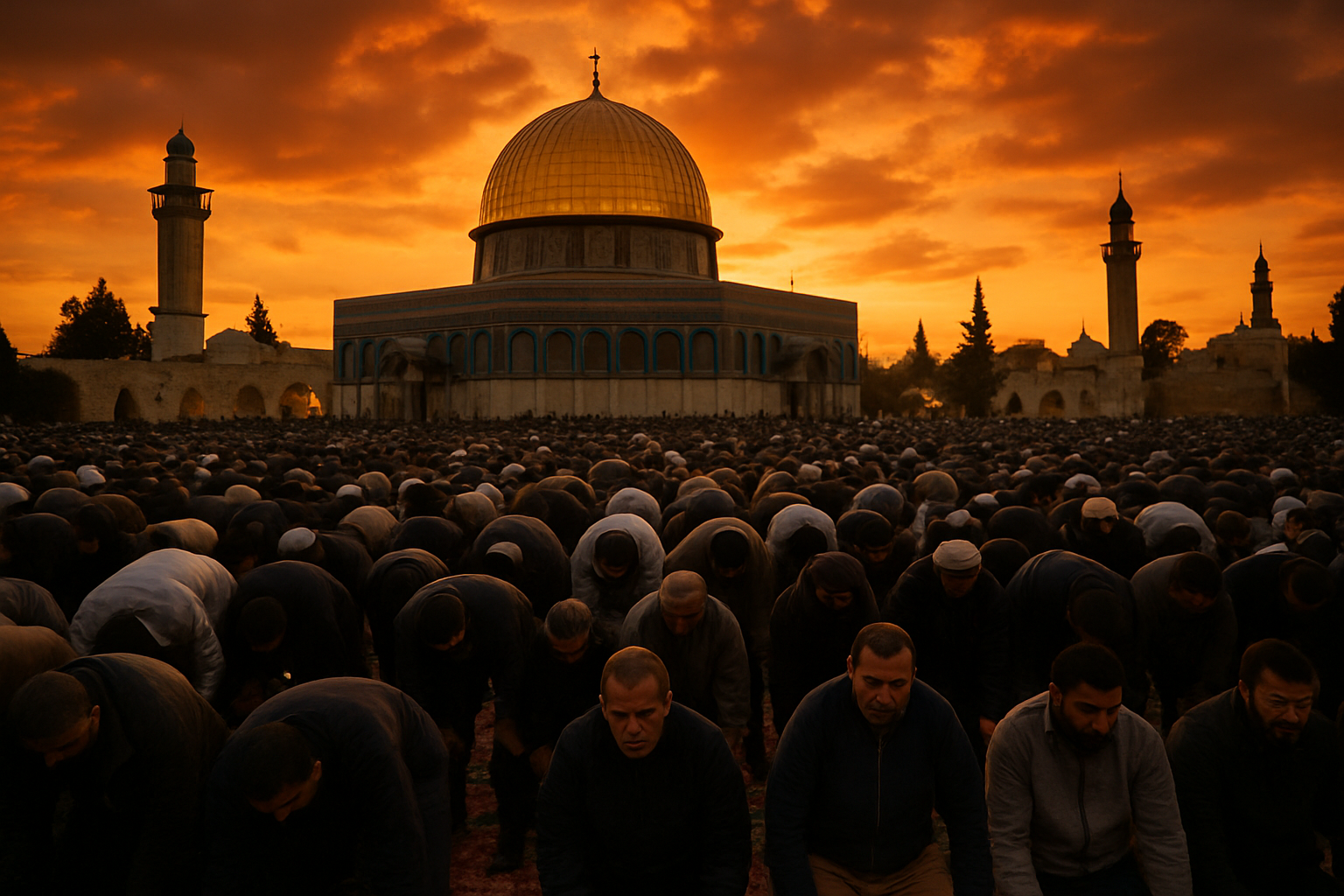
Despite Israeli security restrictions, approximately 50,000 Palestinian worshippers performed evening prayers at Al-Aqsa Mosque on the sixth night of Ramadan, according to the Jerusalem Governorate. The attendance occurred despite strict measures imposed by Israeli forces at entrances to the Old City and the mosque compound.
Saturday evening had seen even higher numbers, with around 60,000 worshippers participating in prayers at Islam's third holiest site. The restrictions have prevented the distribution of iftar meals in the mosque courtyards, a traditional practice during the holy month.
Meanwhile, Israeli military operations continued across Gaza on what marked the fifth consecutive day of Ramadan. At dawn, Israeli warplanes launched a series of raids targeting the city of Rafah in southern Gaza and eastern parts of Gaza City, accompanied by intensive artillery shelling and gunfire from military positions.
West Bank Violence and Displacement
In the occupied West Bank, a Palestinian youth was shot in the head with rubber-coated metal bullets during an Israeli military incursion into the Sath Marhaba neighborhood of Al-Bireh city on Sunday evening. The Palestinian Red Crescent Society confirmed treating the young man's head injury before transporting him to hospital for medical care.
The incident was part of broader Israeli military activities across the West Bank, where systematic violations of international law have intensified according to Palestinian sources. These operations coincide with what experts describe as the most comprehensive Israeli territorial expansion since the 1967 occupation began.
Netanyahu's Regional Alliance Strategy
Against this backdrop of escalating violence, Prime Minister Netanyahu outlined Israel's strategic response to regional threats during a television interview. He declared that Israel is working to counter what he characterized as both a "radical Shia axis" and an "emerging radical Sunni axis" in the Middle East.
"Israel will forge regional alliances to rival these radical axes," Netanyahu stated, without providing specific details about which countries might participate in such partnerships or the concrete measures such alliances would entail.
The announcement comes as Israel faces unprecedented international criticism for its policies in the occupied territories. Earlier this month, 85 UN member states issued a joint condemnation of Israeli plans to register extensive areas of West Bank land as "Israeli territory" for the first time since 1967.
Diplomatic Isolation and Internal Tensions
The Israeli government's hardline approach has created significant diplomatic challenges. Finance Minister Bezalel Smotrich has openly stated that current policies are designed to "kill the idea of a Palestinian state," while Energy Minister Eli Cohen acknowledged that recent measures constitute "factual sovereignty" implementation.
These statements have drawn sharp rebukes from traditional allies. Eight Arab nations, including countries that have normalized relations with Israel such as the UAE and Saudi Arabia, issued a joint condemnation calling Israeli actions violations of international law "aimed at imposing unlawful Israeli sovereignty."
Internal Israeli tensions also surfaced with reports of an Israeli Border Guard recruit being killed by gunfire from a fellow soldier in what authorities described as a domestic incident, highlighting broader social pressures within Israeli society.
Humanitarian Crisis Deepens
The ongoing violence has created severe humanitarian challenges across Palestinian territories. The Rafah crossing between Gaza and Egypt remains severely limited, with only 27 Palestinians crossing on the first day of operations compared to the planned quota of 200 daily crossings.
Hamas officials condemned what they described as "systematic harassment" by Israeli security forces, which denied entry to 38 of 50 Palestinians scheduled to return through the crossing. An estimated 20,000 Palestinians remain on waiting lists for medical evacuation.
The Gaza Civil Defense service has been forced to shut down operations due to fuel shortages, severely hampering emergency response capabilities during a period when such services are critically needed.
"The international community must act decisively to end these systematic violations of international law and protect Palestinian civilians during this holy month."
— Palestinian Authority spokesperson
International Response and Peace Initiatives
The escalating violence threatens several international peace initiatives, including the Trump administration's "Board of Peace" project, which secured commitments of over $5 billion for Gaza reconstruction from 27 nations during a February summit in Washington.
However, implementation of reconstruction plans faces severe obstacles due to ongoing security violations and Hamas's categorical rejection of disarmament demands. The militant group maintains that armed resistance is justified "while occupation exists," according to statements by political leader Khaled Meshaal.
Over 400 European Union diplomats have called for increased pressure on Israeli authorities, while a European Left Coalition petition against EU-Israel partnerships has exceeded 400,000 signatures, demonstrating growing international concern about the trajectory of Israeli policies.
Freedom Flotilla Movement
In response to the continued closure and restrictions at border crossings, international activists have announced the launch of a "historic and extraordinary" maritime fleet planned to sail toward Palestine. Saif Abu Kishk, spokesperson for the Freedom Flotilla movement, described the initiative as a global protest against ongoing closure of the Rafah crossing and Israeli control over Palestinian movement.
The announcement of this new flotilla effort represents the latest in a series of international solidarity actions aimed at drawing attention to restrictions on Palestinian mobility and access to essential services.
Regional Implications and Future Outlook
The current escalation occurs within a broader context of Middle Eastern instability, with multiple conflicts testing traditional diplomatic frameworks. The combination of ongoing violence, territorial expansion, and religious restrictions during Ramadan has created what observers describe as a comprehensive challenge to Palestinian statehood and regional stability.
Netanyahu's talk of regional alliances appears aimed at countering Iranian influence while managing relationships with Arab states that have grown increasingly critical of Israeli policies. However, the effectiveness of such a strategy remains unclear given the unprecedented level of international opposition to recent Israeli actions.
As the holy month of Ramadan continues, the international community faces mounting pressure to develop effective mechanisms for protecting Palestinian civilians and upholding international law. The coming weeks will be critical in determining whether diplomatic intervention can prevent further escalation or if the region is heading toward broader conflict.
The pattern of violence during what should be a period of spiritual reflection and peace underscores the urgent need for comprehensive solutions addressing the underlying causes of the Israeli-Palestinian conflict, rather than temporary measures that fail to address systematic violations of international humanitarian law.