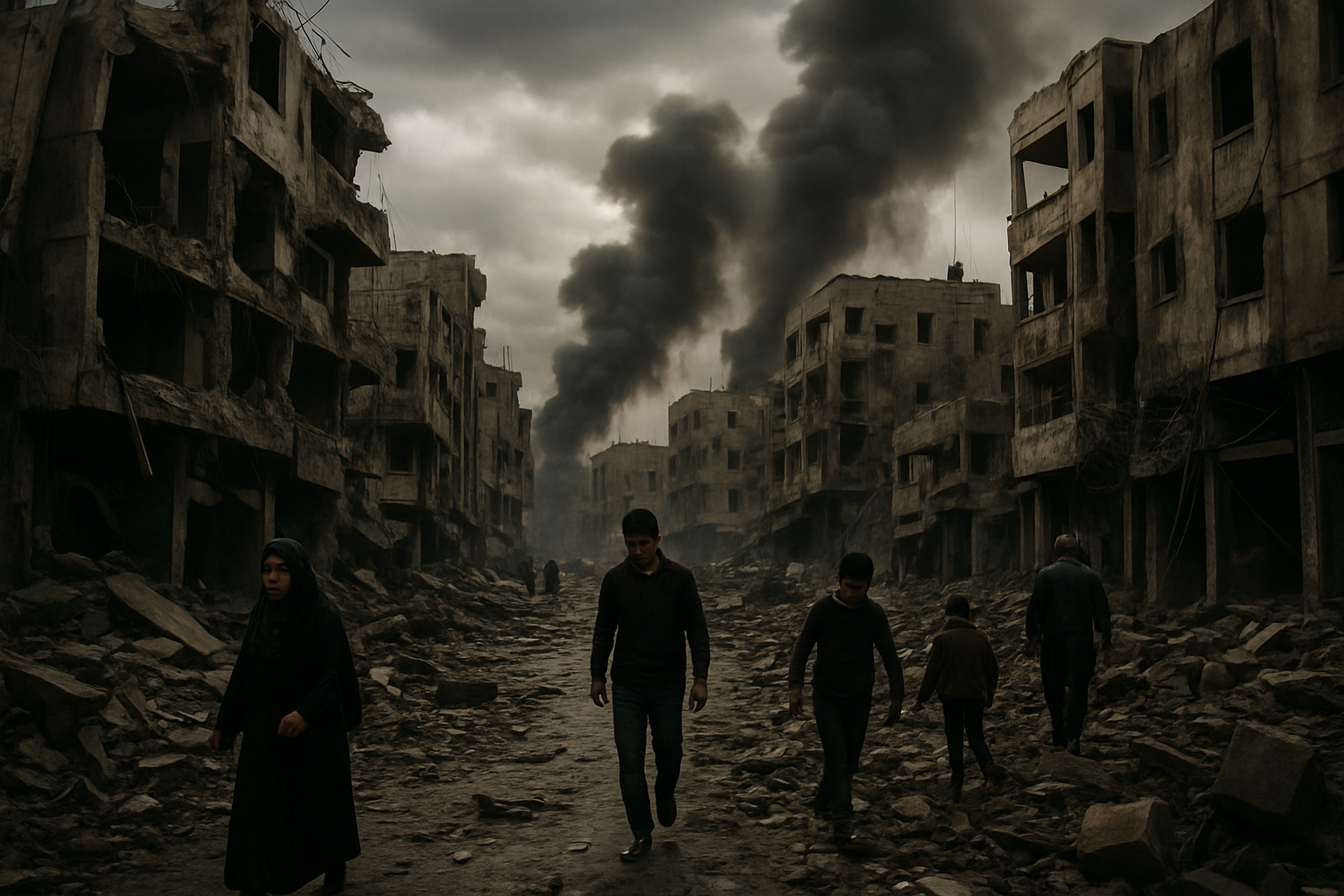
Israeli military operations in Gaza have intensified with Sunday's deadly strike on Al-Nuseirat refugee camp killing three Palestinians and injuring ten others, marking another violation of ceasefire agreements as regional violence spreads to Lebanon where casualties exceed 1,000.
The Al-Awda Medical Complex in Al-Nuseirat confirmed receiving the bodies and wounded from the latest Israeli drone strike that directly targeted a vehicle at the Abu Sarrar intersection in central Gaza. Palestinian news agency WAFA reported that Israeli reconnaissance aircraft conducted the precise attack during evening hours Sunday, adding to a mounting toll of systematic ceasefire violations.
Systematic Ceasefire Breakdown
This latest incident represents part of a documented pattern of over 1,600 ceasefire violations since the October 10, 2025 truce agreement, resulting in more than 680 Palestinian deaths during what was intended to be a peace period. The Gaza Government Media Office has meticulously documented these violations, with Dr. Mohamed Abu Selmiya of Al-Shifa Hospital repeatedly questioning "Where is the ceasefire?"
Earlier Sunday, additional Israeli strikes in Gaza City killed one Palestinian and wounded several others, following a systematic pattern of operations that humanitarian organizations describe as "implementation failures" rather than isolated incidents. The targeting has included civilian infrastructure, with Gaza's Civil Defense completely shut down due to fuel shortages.
Regional Escalation and International Casualties
The violence has expanded dramatically beyond Gaza's borders, with Lebanon's Health Ministry confirming 1,029 deaths and 2,786 injuries from Israeli military operations that began March 2, 2026. The Lebanese casualties include significant civilian populations, with systematic targeting of medical personnel resulting in 26 paramedics killed and 51 wounded since early March.
"These numbers reflect a dangerous deterioration in humanitarian conditions due to continued Israeli bombardment targeting various areas, particularly in southern Lebanon."
— Lebanese Health Ministry Statement
The November 2024 ceasefire agreement between Israel and Hezbollah, which had held for over a year, completely collapsed when Hezbollah joined the conflict following the death of Iranian Supreme Leader Ali Khamenei on March 1. This expansion has created multiple simultaneous crises affecting regional stability.
Humanitarian Crisis Deepens
The humanitarian situation in Gaza continues to deteriorate with severe restrictions on movement and aid access. The Rafah crossing remains severely limited, with only 27 Palestinians crossing daily versus the agreed quota of 200, while Israeli security forces have been accused of "systematic harassment" by denying 38 of 50 approved returnees.
Over 20,000 Palestinians await urgent medical evacuation, unable to access treatment due to the ongoing restrictions. The closure of Gaza's Civil Defense due to fuel shortages has crippled emergency response capabilities, leaving civilians vulnerable during continuing military operations.
International Context and Displacement
These developments occur within the broader context of the Iran-Israel war that began March 1, 2026, following Operation Epic Fury. The regional conflict has created unprecedented displacement, with over 832,000 Lebanese civilians forced from their homes as Israeli ground operations expanded into southern Lebanon.
The timing of Gaza's escalation alongside the broader Middle East crisis has drawn criticism from the Euro-Mediterranean Human Rights Observatory, which accuses Israel of exploiting international attention focused on Iran to intensify civilian starvation policies in Gaza.

International Response and Violations
The systematic nature of ceasefire violations has prompted unprecedented international condemnation. Eight Arab nations—Saudi Arabia, Jordan, Egypt, UAE, Qatar, Indonesia, Pakistan, and Turkey—issued a joint statement condemning the violations as breaches of international law "aimed at imposing unlawful Israeli sovereignty."
The European Union has described the escalation as a "step in the wrong direction," with over 400 EU diplomats calling for increased pressure on Israeli authorities. A European Left Coalition petition demanding suspension of EU-Israel partnerships has exceeded 400,000 signatures.
Medical System Under Attack
The targeting of medical infrastructure has become a particular concern, with systematic attacks on healthcare facilities, ambulances, and medical personnel violating fundamental international humanitarian law. In Lebanon, the Israeli military spokesman threatened strikes against ambulances and medical facilities, claiming Hezbollah usage without providing evidence—allegations Hezbollah categorically denies.
The Burj Qalaouiyah healthcare center attack, which killed 12 medical workers including doctors, nurses, and paramedics, represents potential Geneva Conventions violations requiring international investigation.
Economic and Social Impact
Beyond the immediate casualties, the conflict has devastated Gaza's already fragile economy. Essential services including electricity, water, and telecommunications have been severely damaged in southern Lebanon and Gaza alike. Transportation networks remain paralyzed, and agricultural production falls far short of national requirements.
The broader regional conflict has created global economic disruption, with oil prices surging past $100 per barrel and the closure of the Strait of Hormuz affecting 40% of global oil transit, creating supply chain vulnerabilities that extend far beyond the Middle East.
Looking Forward
As violence continues to escalate on multiple fronts, diplomatic initiatives have struggled to gain traction. French President Emmanuel Macron has offered to host direct Israel-Lebanon talks in Paris—the first such negotiations since the ceasefire collapse—while UN Secretary-General António Guterres has called the overall regional situation "the greatest test of multilateral cooperation in the modern era."
The systematic breakdown of negotiated peace agreements demonstrates the challenges of maintaining stability without addressing underlying political and security issues. The success or failure of international efforts to contain the current escalation will influence territorial sovereignty disputes globally and set precedents for occupied territories worldwide.
With over 680 Palestinians killed since October's ceasefire and more than 1,000 Lebanese casualties in recent weeks, the human cost continues to mount as the international community struggles to find diplomatic solutions to an increasingly complex regional crisis that shows no signs of abating.