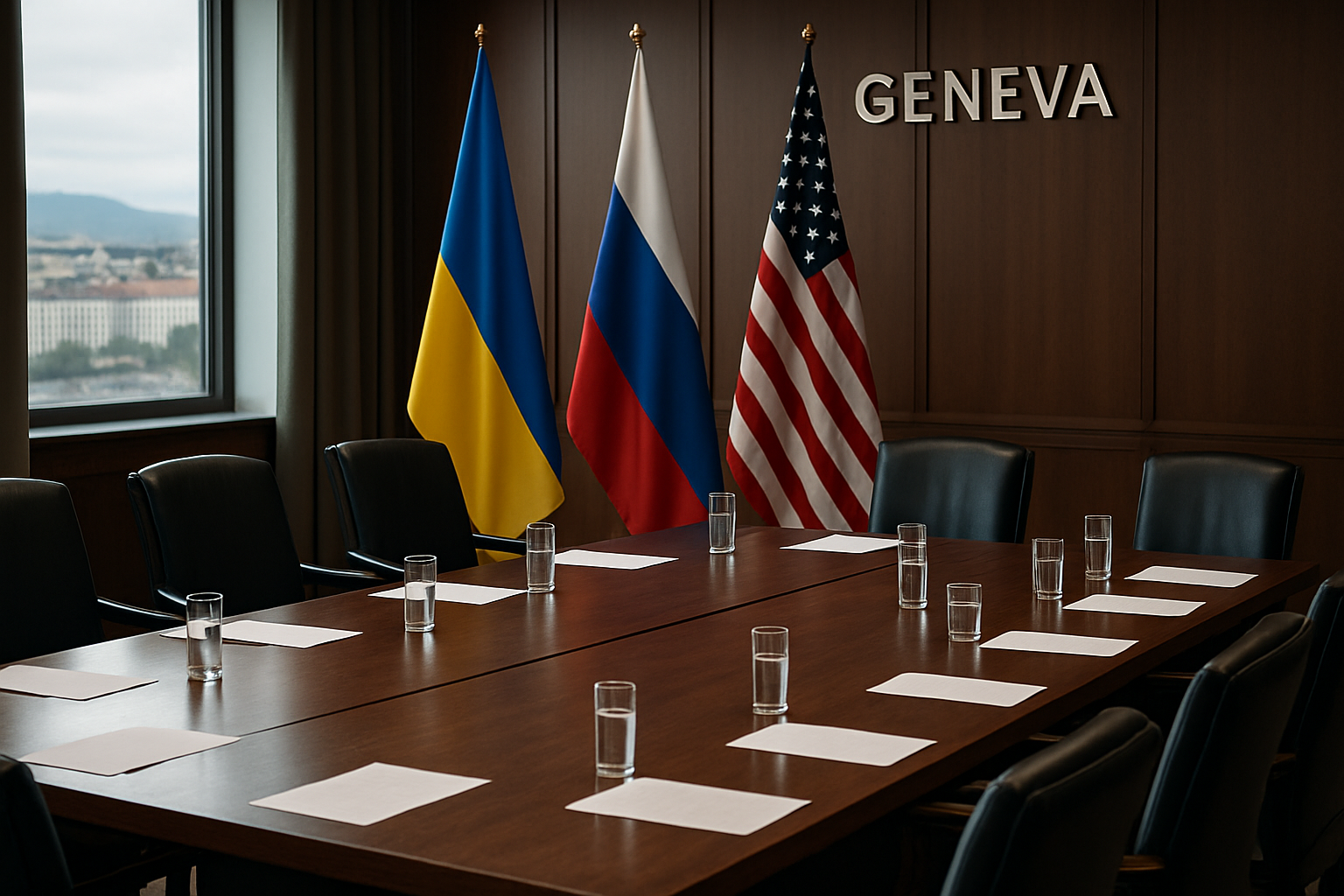
The first day of trilateral peace negotiations between Ukraine, Russia, and the United States concluded Tuesday evening in Geneva, Switzerland, with sources close to the Russian delegation describing the atmosphere as "very tense" as President Trump continues to publicly pressure Ukraine for a swift resolution to the nearly four-year conflict.
The talks, representing an evolution from the successful Abu Dhabi framework to European neutral territory, brought together Ukrainian Defense Minister Rustem Umerov, Russian delegation head Vladimir Medinsky (a close advisor to President Putin), and US Special Envoy Steve Witkoff in what observers describe as the most significant diplomatic opportunity since the conflict began in February 2022.
Trump's Public Pressure Campaign
President Trump escalated his rhetoric aboard Air Force One, declaring that "Ukraine better come to the table for talks and quickly. We are in a position where we want them to come to the table for negotiations." The comments came as the Geneva talks were already underway, adding external pressure to an already complex diplomatic environment.
The Trump administration has established a June 2026 deadline for a comprehensive peace agreement, with talks potentially moving to Washington for presidential-level involvement. This timeline creates unprecedented pressure for territorial compromise solutions that have eluded negotiators for years.
Geneva Framework Builds on Abu Dhabi Success
The Geneva negotiations build on remarkable momentum from February's Abu Dhabi trilateral talks, which achieved a historic 314-prisoner exchange—the first in five months—and restored US-Russia military communications after a four-year suspension. These breakthroughs established Pentagon deconfliction protocols covering global operations in Syria, the Arctic, and Africa.
"The talks were substantial and productive, with detailed discussions on ceasefire monitoring and implementation methods."
— Rustem Umerov, Ukrainian Defense Minister
The restoration of US-Russia military communications represents the most significant military agreement between the superpowers since the conflict began, providing crucial channels for preventing miscalculation as both nations control over 80% of the world's nuclear weapons.
Nuclear Crisis Backdrop Adds Urgency
The Geneva talks occur against the backdrop of an unprecedented nuclear governance crisis. The New START treaty between the US and Russia expired on February 5, 2026—the first time in over 50 years without bilateral nuclear constraints between the superpowers. UN Secretary-General António Guterres called this a "grave turning point," warning that nuclear weapon risks are "higher than at any time in decades."
This nuclear vacuum adds extraordinary urgency to the diplomatic process, as military communications represent the only remaining major channel between the nuclear superpowers amid broader strategic competition.
Military Escalation Continues During Diplomacy
Despite diplomatic progress, the conflict's military dimension continues to intensify. Russian forces captured 481 square kilometers in January 2026, compared to 260 square kilometers in December 2025, showing accelerated territorial gains that potentially strengthen Moscow's bargaining position.
Hours before the Geneva talks resumed, Russia bombarded 12 regions of Ukraine, particularly targeting energy infrastructure to leave civilians without heating and running water during harsh winter conditions. This "winter warfare" strategy demonstrates the calculated use of humanitarian pressure during negotiations.
The systematic targeting of civilian infrastructure during life-threatening winter conditions represents violations of the Geneva Conventions' civilian protection provisions, adding moral urgency to the peace process.
International Support Remains Historic
The talks proceed with unprecedented international backing for Ukraine. The European Union approved a historic €90 billion loan package—the largest ever for a single nation—though Slovakia, Czech Republic, and Hungary refused participation, showing persistent divisions within the European bloc.
Additional support includes Sweden-Denmark's €246 million air defense package featuring advanced Tridon Mk2 systems, Germany's provision of 35 Patriot missiles, and World Bank funding for energy restoration efforts. Over 17.8 million Ukrainians are currently accessing winter support programs due to infrastructure damage.
Territorial Control Remains Core Obstacle
The fundamental sticking point remains the fate of eastern Ukrainian territories currently under Russian control. Russia demands territorial recognition and insists that any Putin-Zelensky summit must occur in Moscow, while Ukraine maintains its territorial integrity position and seeks comprehensive long-term security guarantees.
President Zelensky has stated that Ukrainian people would reject any peace agreement at a referendum if it envisaged "handing over" Donbas to Russia, though they might be more receptive to freezing current front lines. This domestic political constraint limits Ukraine's negotiating flexibility.
European Diplomatic Divisions
European allies remain divided on engagement strategies. Germany opposes direct talks with Putin, citing "maximalist demands," while France and Italy support broader engagement. NATO Secretary-General Mark Rutte made a surprise visit to Kyiv, condemning attacks as sending a "bad signal" during diplomatic efforts.
The division reflects broader alliance tensions about balancing deterrence with diplomatic openings, a challenge that has persisted throughout the conflict's evolution.
Ukraine's Internal Delegation Tensions
Swedish sources report that Ukraine's new presidential advisor Kyrylo Budanov, described as more pragmatic than his predecessor, has created internal tensions within the Ukrainian delegation. His willingness to reach a swift peace agreement reportedly "splits" the negotiating team between those favoring rapid resolution and those insisting on comprehensive security guarantees.
This internal division reflects the broader Ukrainian dilemma between ending the human cost of conflict and ensuring lasting security against future Russian aggression.
Broader Strategic Context
The Geneva talks coincide with multiple global diplomatic initiatives, including US-Iran nuclear negotiations and broader Middle Eastern security arrangements. This confluence suggests the Trump administration's systematic approach to reshaping international order through direct leader-to-leader diplomacy.
The talks also occur as European nations discuss unprecedented strategic autonomy measures, including expanded nuclear deterrent cooperation between France and other European partners—the first such discussions since the Cold War's end.
Stakes for European Security Architecture
Success in Geneva could end Europe's deadliest conflict since World War II and provide a template for 21st-century conflict resolution combining military pressure, diplomatic engagement, and international law enforcement. However, failure might intensify military operations globally and undermine diplomatic credibility for resolving territorial disputes.
The implications extend beyond Ukraine and Russia, affecting European security architecture, international sovereignty enforcement mechanisms, and the credibility of diplomatic solutions in an era of rising authoritarian challenges to the post-1945 international order.
Looking Ahead to Day Two
As negotiations resume Wednesday, all sides face the fundamental challenge of bridging unchanged positions through innovative diplomatic solutions. The Ukrainian delegation seeks to maintain territorial integrity while securing meaningful security guarantees, while Russia aims to legitimize territorial gains through negotiated recognition.
The United States, meanwhile, seeks to demonstrate effective diplomatic leadership while managing domestic political pressures and alliance coordination challenges. The June deadline creates artificial urgency that could either facilitate compromise or force premature conclusions to complex issues.
The coming day will test whether the humanitarian breakthroughs achieved in Abu Dhabi can translate into progress on the territorial disputes that remain at the conflict's core. With millions of lives affected by ongoing military operations and winter humanitarian crises, the stakes for diplomatic innovation have rarely been higher in post-Cold War European history.