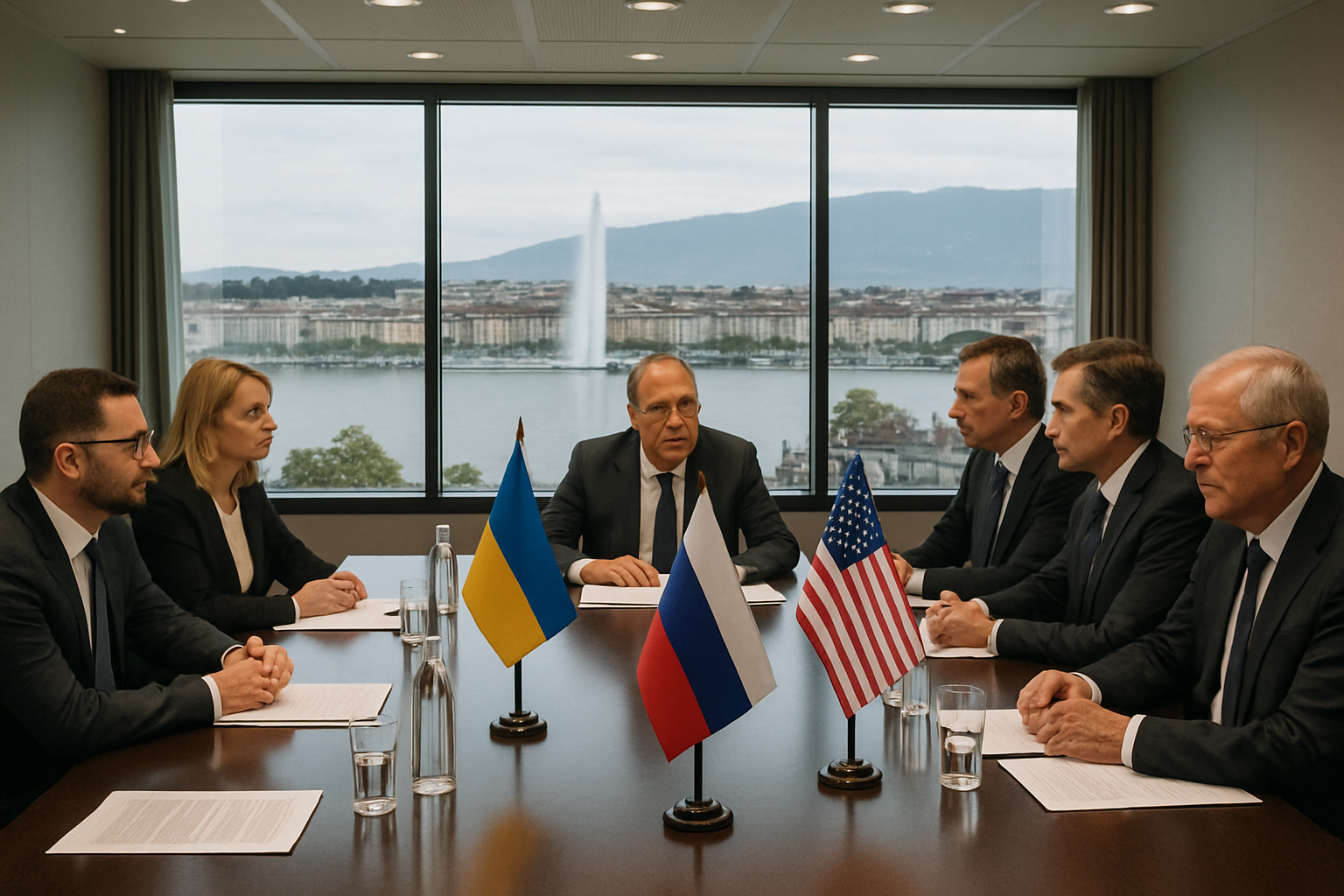
Ukraine, Russia, and the United States will convene for critical trilateral peace negotiations in Geneva on February 17-18, marking a significant evolution in diplomatic efforts to resolve Europe's deadliest conflict since World War II. The talks build on breakthrough momentum from Abu Dhabi negotiations that achieved a historic 314-prisoner exchange and restoration of US-Russia military communications after a four-year suspension.
President Volodymyr Zelensky addressed the 62nd Munich Security Conference, expressing conditional readiness for peace while critiquing Western diplomatic approaches. Speaking to global leaders, Zelensky accused the United States of "too often asking Ukraine, not Russia, for concessions," highlighting persistent tensions in the negotiation framework despite diplomatic progress.
Abu Dhabi Breakthrough Sets Foundation
The Geneva talks represent an evolution from the February 5 Abu Dhabi negotiations, which produced the most significant diplomatic breakthrough since Russia's February 2022 invasion began. The previous round, led by Ukrainian Defense Minister Rustem Umerov, US Special Envoy Steve Witkoff, and Russian military intelligence director Igor Kostyukov, achieved concrete humanitarian results amid ongoing military operations.
The prisoner exchange involved 157 military personnel from each side plus three Russian civilians from the Kursk region, marking the first such swap in five months. Simultaneously, the Pentagon announced restoration of high-level military communications between US European Command and the Russian General Staff, establishing deconfliction protocols and incident prevention measures with global implications for Syria, Arctic, and African operations.
"The talks were substantial and productive, covering detailed methods for implementing ceasefire and monitoring cessation of hostilities."
— Rustem Umerov, Ukrainian Defense Minister
Nuclear Crisis Adds Urgency
The Geneva negotiations occur against the backdrop of unprecedented nuclear governance challenges. The New START treaty expired February 5, 2026, marking the first time in over 50 years without US-Russia nuclear arms control constraints. With Russia controlling approximately 4,380 warheads and the US maintaining 3,708 warheads—representing 80% of global nuclear weapons—the lapse creates what UN Secretary-General António Guterres called a "grave turning point" with nuclear risks "higher than decades."
The military communications restoration represents the only remaining major diplomatic channel between the nuclear superpowers, providing transparency mechanisms and reduced escalation protocols at a critical moment in global security architecture.
Military Escalation Continues Amid Diplomacy
Despite diplomatic progress, military operations have intensified significantly. Russian forces accelerated territorial gains, capturing 481 square kilometers in January 2026 compared to 260 square kilometers in December 2025, according to the Institute for Study of War. Over 10,000 Russian drones and bombs were launched in January alone, representing a dramatic escalation in strike frequency.
The "winter weapon" strategy targeting civilian energy infrastructure has left over 1,170 buildings in Kyiv without heating during minus-30°C temperatures. Ukrainian nuclear plants were forced to halt electricity production for the first time in the conflict following Russian grid attacks, creating what Foreign Minister Dmytro Kuleba warned puts "all Europe at risk of nuclear incident."
Systematic civilian targeting has produced tragic results, including a February 11 Russian drone strike on Bohodukhiv that killed four civilians—three young children aged one and two years, plus their 34-year-old father. This represented the second deadly attack on the same town within three days, demonstrating what international observers describe as systematic violations of Geneva Conventions civilian protections.
Territorial Disputes Remain Central Challenge
The fundamental sticking point—eastern Ukrainian territories under Russian control—remains unchanged despite humanitarian diplomatic breakthroughs. Russia has consistently demanded territorial recognition and insisted that any Putin-Zelensky talks must occur in Moscow. Ukraine maintains its territorial integrity position, with Zelensky indicating future high-level talks would "most likely" occur in the United States.
The Institute for the Study of War reports that Russia is promoting what it calls a "territorial peace scenario" without comprehensive security guarantees for Ukraine, attempting to convince the Trump administration that territorial concessions represent the only viable path forward while excluding broader security arrangements.
International Support and Divisions
European nations have provided unprecedented support while revealing persistent divisions over engagement strategies. The European Parliament approved a historic €90 billion loan package for Ukraine—the largest EU assistance package ever for a single nation—though Slovakia, Czech Republic, and Hungary refused participation, demonstrating ongoing European splits.
Military assistance continues expanding with Sweden and Denmark contributing €246 million in air defense systems, including advanced Tridon Mk2 technology. Germany provided 35 Patriot missiles through the Ramstein coordination group, while NATO Secretary-General Mark Rutte made a surprise Kyiv visit condemning energy attacks as sending a "bad signal" during diplomatic engagement.
However, European diplomatic divisions persist. Germany maintains opposition to direct Putin talks citing "maximalist demands," while France and Italy support broader engagement channels. This divergence reflects broader tensions over how to balance deterrence with diplomatic openings.
June Deadline Creates Pressure
The Trump administration has established a June 2026 deadline for comprehensive peace agreement, with Washington venue talks potentially involving presidential-level participation. This timeline creates unprecedented pressure for innovative territorial compromise solutions while maintaining international legal principles.
President Zelensky confirmed American officials are "proposing parties end war by beginning of summer, will pressure both sides according to this timeline." The evolution from Abu Dhabi to Geneva to potential Washington talks suggests a deliberate diplomatic escalation designed to achieve breakthrough results.
"We are ready for an agreement that will bring real peace. We believe this war can be ended. This war can be ended with dignity."
— Volodymyr Zelensky, Ukrainian President
Humanitarian Crisis Deepens
The conflict's human toll continues mounting dramatically. President Zelensky disclosed that 55,000 Ukrainian soldiers have been officially confirmed killed, with a "large number" still classified as missing in action. International researchers estimate actual military casualties could be 2-3 times higher when including undocumented losses.
Over 17.8 million Ukrainians are accessing winter support programs as energy infrastructure attacks create life-threatening conditions during extreme cold. The systematic targeting of repair personnel—including 15 DTEK energy workers killed in previous attacks—demonstrates sophisticated calculation of civilian impact during diplomatic engagement periods.
Swiss Neutrality and Diplomatic Innovation
Switzerland's role as neutral host represents a strategic choice reflecting the talks' evolution toward more substantive political negotiations. The UAE's successful hosting of Abu Dhabi talks proved crucial for concrete results, with working groups by topic followed by joint position synchronization providing a tested methodology for complex conflict resolution.
The shift to Geneva signals growing diplomatic seriousness while maintaining neutral territory advantages. Swiss diplomatic traditions in international mediation provide institutional support for potentially sensitive territorial compromise discussions.
Global Stakes and Precedent Setting
The Geneva talks represent the most significant diplomatic opportunity since the conflict began, with implications extending far beyond Ukraine's borders. Success could end Europe's deadliest war since World War II while providing a template for 21st-century territorial conflict resolution combining military pressure, diplomatic engagement, and international law enforcement.
Failure could intensify military operations globally and undermine confidence in diplomatic solutions for territorial disputes, affecting international sovereignty enforcement mechanisms and regional security architectures from Eastern Europe to the South China Sea.
The restoration of US-Russia military communications provides a foundation for broader strategic stability discussions, potentially including China's expanding nuclear arsenal and emerging military technologies like hypersonic weapons that were not covered in Cold War-era treaties.
Election Pressure and Democratic Transition
Adding complexity to negotiations, the Trump administration is reportedly pressuring Ukraine to announce presidential elections by May 15, 2026, which would end the martial law period in place since February 2022. Ukrainian officials emphasize that elections are only possible "when there are all appropriate security guarantees" and a ceasefire is achieved.
This represents an unprecedented challenge of democratic transition during active conflict, requiring coordination between ceasefire implementation, security guarantees, and international oversight mechanisms. The May timeline must integrate with the June peace agreement requirements, creating additional pressure for rapid diplomatic progress.
Coming Phase Decisive
The February 17-18 Geneva negotiations will test whether humanitarian breakthroughs from Abu Dhabi can translate into progress on fundamental territorial disputes. The talks occur as military escalation continues accelerating, nuclear governance faces crisis, and international support systems strain under the conflict's prolonged duration.
Key indicators for success include movement beyond prisoner exchanges toward ceasefire monitoring mechanisms, innovative approaches to territorial sovereignty challenges, and establishment of security guarantee frameworks that address Ukrainian concerns while providing Russian face-saving measures.
The international community watches for diplomatic template development versus traditional limitations that have prevented resolution for nearly four years. Geneva's outcome will significantly influence whether the June Washington talks can achieve breakthrough territorial compromise or represent another cycle in the protracted conflict.
With Europe's security architecture, international law enforcement credibility, and democratic governance principles under extraordinary pressure, the stakes extend far beyond Ukraine's borders. The Geneva talks may determine whether diplomatic innovation can resolve modern territorial conflicts or whether military escalation remains the dominant paradigm for addressing territorial sovereignty disputes in the 21st century.