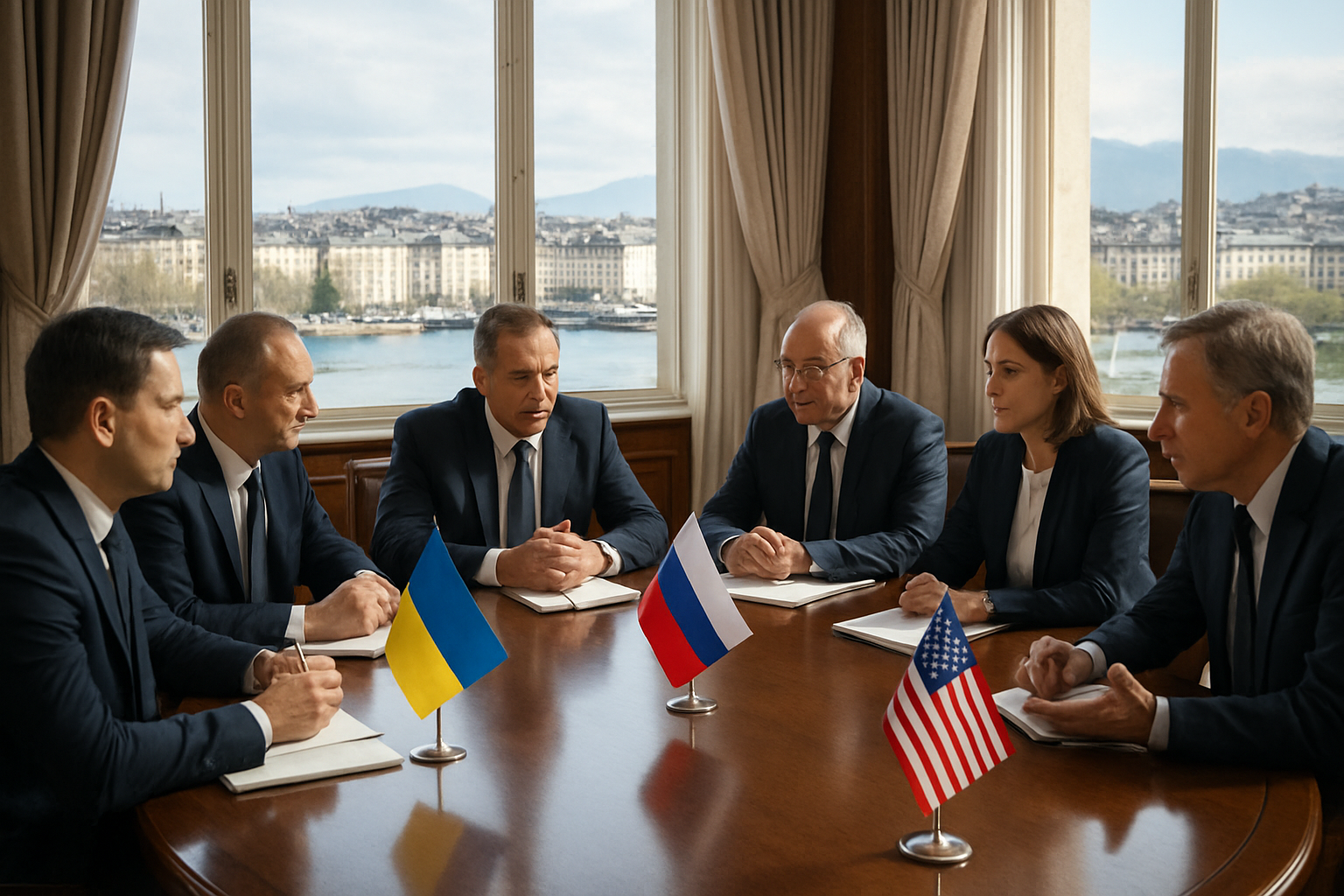
Peace negotiations between Ukraine and Russia in Geneva ended Wednesday without a breakthrough on territorial disputes, though US officials expressed cautious optimism about progress made in technical discussions on ceasefire monitoring mechanisms.
The two-day trilateral talks, mediated by the United States, represented the latest evolution from the successful Abu Dhabi framework that achieved a historic 314-prisoner exchange in February. However, fundamental disagreements over eastern Ukrainian territories under Russian control remain unchanged, casting doubt on prospects for a comprehensive resolution.
Limited Progress Amid Persistent Divisions
Ukrainian President Volodymyr Zelensky described the talks as "difficult," accusing Moscow of deliberately stalling negotiations. In a statement on X, he wrote: "We can state that Russia is trying to drag out negotiations that could already have reached the final stage." Despite these frustrations, both Ukrainian and Russian delegations agreed to meet again, though no specific date was provided.
The talks brought together Ukrainian Defense Minister Rustem Umerov, Russian delegation head Vladimir Medinsky (a close Putin advisor), and US Special Envoy Steve Witkoff. For the first time, European officials from the "Big 5" nations—Germany, France, Italy, UK, and Poland—participated as observers, signaling growing international commitment to the peace process.
"Progress on political issues is slower, and the leaders of the two sides may try to reach an agreement among themselves on the most contentious issues."
— Volodymyr Zelensky, Ukrainian President
Military Escalation Shadows Diplomacy
The negotiations took place against a backdrop of continued military escalation. Hours before the talks began, Russia launched one of its largest attacks of 2026, firing 29 ballistic missiles and 396 drones at Ukrainian cities and energy infrastructure. While Ukrainian air defenses successfully intercepted 25 missiles and 367 drones, significant damage occurred in Odesa and central Ukraine.
This pattern of major escalations before diplomatic meetings has become a recurring theme, with Russia appearing to use humanitarian pressure to strengthen its bargaining position. The systematic targeting of civilian infrastructure during extreme winter conditions has left over 1,170 buildings in Kyiv without heating during temperatures as low as minus-30°C.
The conflict's human toll continues to mount. Zelensky previously disclosed that 55,000 Ukrainian soldiers have been officially confirmed killed, with a "large number" missing in action. International estimates suggest actual casualties could be 2-3 times higher.
Nuclear Crisis Adds Urgency
The talks occurred against an increasingly dangerous nuclear backdrop. The New START treaty between the US and Russia expired on February 5, marking the first time in over 50 years that the superpowers lack nuclear constraints. Both nations control approximately 80% of the world's nuclear weapons, with Russia possessing 4,380 warheads and the US holding 3,708.
UN Secretary-General António Guterres has called this a "grave turning point," warning that nuclear risks are at their "highest in decades." The restoration of US-Russia military communications through the Abu Dhabi framework now represents the only remaining major diplomatic channel between the nuclear superpowers.
Building on Abu Dhabi Success
Despite the current impasse, the Geneva talks built on significant momentum from February's Abu Dhabi breakthrough. Those negotiations achieved the first prisoner exchange in five months, with 314 individuals swapped, and crucially restored US-Russia military communications after a four-year suspension.
The Pentagon confirmed that this framework includes deconfliction protocols covering global operations in Syria, the Arctic, and Africa—the most significant US-Russia military agreement since the conflict began. These confidence-building measures demonstrate that sustained diplomatic engagement can produce concrete humanitarian results even amid active military operations.
International Support Remains Robust
Despite the diplomatic setbacks, international support for Ukraine remains historically strong. The European Union has approved a €90 billion loan package—the largest ever provided to a single nation—though Slovakia, Czech Republic, and Hungary have refused to participate, highlighting persistent divisions within the bloc.
Additional support includes a €246 million air defense package from Sweden and Denmark featuring Tridon Mk2 systems, 35 Patriot missiles from Germany, and World Bank funding for energy restoration. Over 17.8 million Ukrainians are currently accessing winter support programs as the country struggles with systematic attacks on its power grid.
The Washington Timeline
Looking ahead, the Trump administration has established a June 2026 deadline for comprehensive peace negotiations, with talks potentially moving to Washington and involving presidential-level engagement. This evolution from Abu Dhabi to Geneva to Washington suggests a deliberate diplomatic escalation designed to create unprecedented pressure for territorial compromise.
The eastern territories controlled by Russia remain the fundamental sticking point. Moscow demands territorial recognition and insists that any Putin-Zelensky summit must occur in Moscow. Ukraine maintains its position on territorial integrity while seeking comprehensive long-term security guarantees, with Zelensky demanding 20-30 year commitments compared to reported US proposals of 15 years.
Diplomatic Innovation Under Test
The Geneva talks represent a critical test of whether diplomatic innovation can overcome military escalation in Europe's deadliest conflict since World War II. The proven UAE methodology—working groups by topic followed by joint position synchronization—has achieved concrete humanitarian results, but translating this momentum to territorial compromise solutions remains the ultimate challenge.
Success could provide a template for 21st-century conflict resolution, combining military pressure with diplomatic engagement and international law enforcement. Failure, however, may intensify operations globally and undermine diplomatic credibility for territorial disputes worldwide.
The stakes extend far beyond Ukraine and Russia, affecting European security architecture, international law enforcement credibility, and territorial sovereignty principles that will shape power competition for decades to come. As both sides prepare for future negotiations, the international community watches closely to see whether sustained diplomatic innovation can ultimately prevail over continued military escalation.