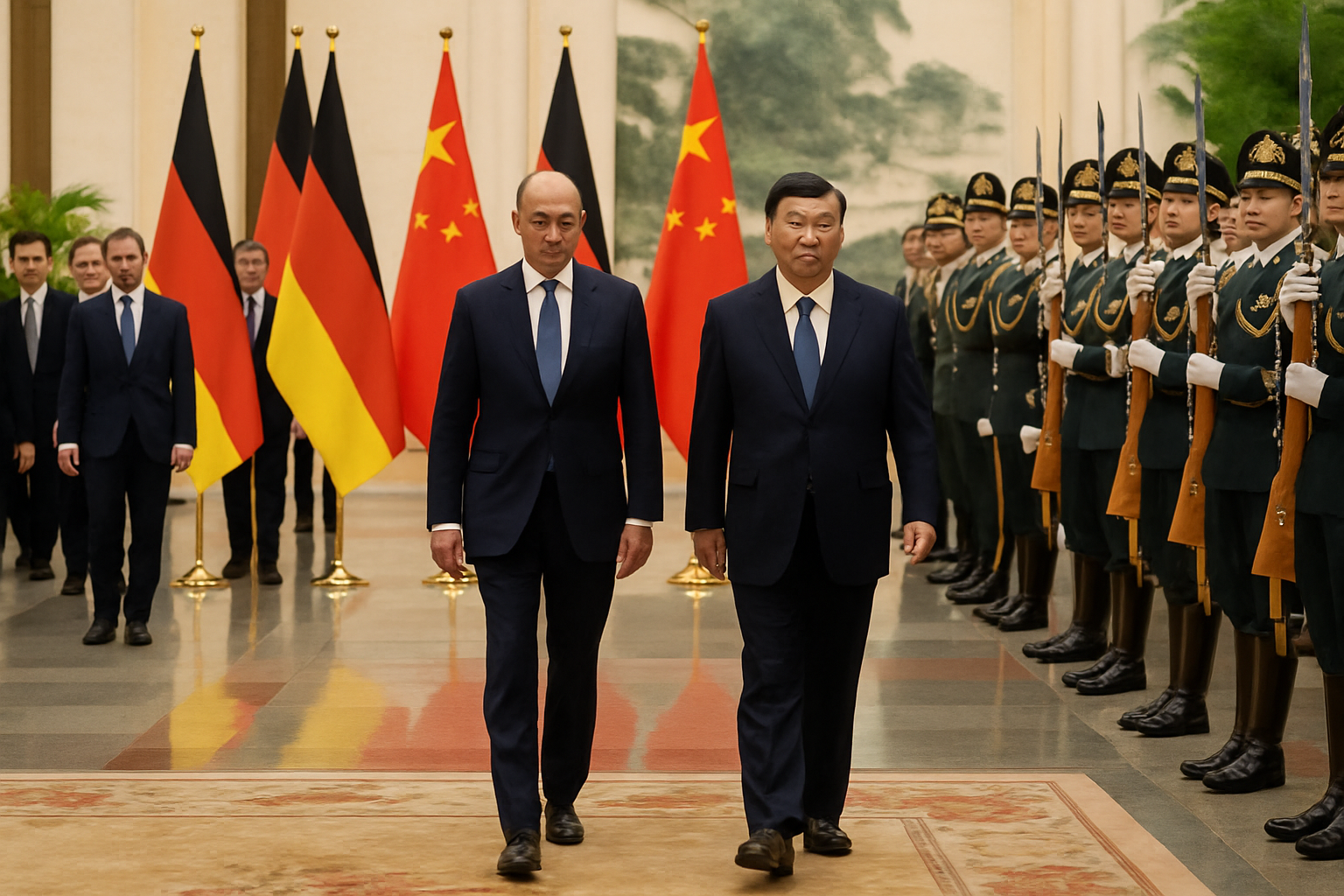
German Chancellor Friedrich Merz concluded his inaugural visit to China on Wednesday, securing a landmark 120-aircraft Airbus deal worth billions of euros while characterizing the trip as establishing "good cooperation" between Berlin and Beijing amid unprecedented global trade tensions.
The historic agreement represents a significant diplomatic and economic victory for Germany as it navigates increasingly complex relationships with both its largest trading partner China and its traditional ally the United States, particularly as the Trump administration's recent Supreme Court defeat over tariff policies creates new uncertainties in international trade.
Major Airbus Deal Signals Aviation Partnership Resilience
During his two-day visit to Beijing, Merz announced that China would purchase up to 120 additional aircraft from Airbus SE, including both A320neo and A350 models. The deal builds upon Airbus's existing substantial presence in China, where the company operates two assembly lines in the northern port city of Tianjin that primarily produce A320 jets for Chinese carriers.
The aircraft order demonstrates the continued strength of European-Chinese cooperation in the aviation sector despite broader geopolitical tensions. Airbus has maintained its position as a leading aircraft supplier to China even as broader trade relationships have faced increasing scrutiny from both European and American policymakers.
"This visit has been worthwhile, and I believe we have established good cooperation with Beijing," Merz stated during his concluding remarks.
— Friedrich Merz, German Chancellor
Strategic Context: Europe's China Challenge
Merz's visit comes at a critical juncture as Germany and the broader European Union grapple with what German officials have characterized as China's transformation from a "lucrative market to competitive threat" in high-tech manufacturing. Chinese firms now compete directly with established European manufacturers in sophisticated products, representing a fundamental shift from the previously complementary economic relationship.
The timing of the visit is particularly significant given the recent chaos in US trade policy. President Trump's global tariff program was struck down by the Supreme Court in a historic 6-3 ruling, leading to immediate escalation to 15% tariffs using alternative authorities. This constitutional crisis has created both uncertainty and opportunity for European leaders seeking to maintain stable trade relationships.
During his meetings at the Great Hall of the People, Merz emphasized the need for "fair" economic competition with China while acknowledging the "great potential for growth" in bilateral relations. However, he also noted that realistic expectations were necessary as Beijing "often operates by its own rules."
Economic Transformation and Trade Strategy
The Chancellor's visit occurs against the backdrop of China's sophisticated approach to international economic diplomacy. Beijing has recently implemented sector-specific trade arrangements, including significant reductions in EU dairy tariffs from 21.9%-42.7% to 7.4%-11.7%, affecting over $500 million in trade. This selective cooperation strategy demonstrates China's ability to maintain strategic relationships while advancing technological self-reliance.
Germany's recognition of this fundamental relationship change from complementary trade to direct competition reflects broader European concerns about maintaining technological sovereignty while benefiting from economic cooperation. The success of Merz's visit may provide a template for managing these competing pressures.
Global Trade Architecture in Flux
The German Chancellor's diplomatic success in China contrasts sharply with the current turmoil in US trade policy. The Supreme Court's rejection of Trump's IEEPA tariff authority, followed by the President's immediate escalation to 15% global tariffs using Section 122 of the Trade Act, has created the most serious constitutional crisis since Watergate.
China has welcomed the Supreme Court ruling as vindication of its position, particularly ahead of Trump's scheduled March 31-April 2 visit to Beijing. The constitutional constraints on US trade policy may paradoxically create space for more predictable diplomatic engagement, contrasting with Germany's emphasis on multilateral cooperation.
European officials have demanded that the US honor existing trade commitments, with the European Commission declaring that "an agreement is an agreement." The European Parliament has even suggested freezing US trade agreements due to the policy "chaos" in Washington.
Congressional Resistance and Alliance Implications
The dysfunction in US trade policy has been highlighted by unprecedented congressional resistance. The House passed legislation 219-211 to end Canada tariffs, with six Republican defections representing the first significant bipartisan rebuke of Trump's trade authority in his second term. This institutional opposition demonstrates growing anxiety about unpredictable trade approaches among traditional US allies.
For Germany, this creates both challenges and opportunities. While US-European cooperation remains essential for addressing global challenges, the current uncertainty in American policy may encourage greater European strategic autonomy, as discussed during the recent Munich Security Conference.
Broader Implications for European-Chinese Relations
Merz's successful visit establishes important precedents for European engagement with China during an era of strategic competition. The Chancellor's ability to secure concrete economic benefits while maintaining diplomatic dialogue demonstrates that selective cooperation remains possible despite broader tensions.
The aviation deal specifically reinforces the importance of maintaining technological partnerships where mutual benefits exist, even as competition intensifies in other sectors. Airbus's continued success in China provides European industry with valuable revenue streams while demonstrating the benefits of sustained technological cooperation.
However, the visit also highlighted ongoing challenges. Discussions covered sensitive topics including Ukraine, Taiwan, and Europe's growing trade imbalance with China. While no breakthrough agreements were announced on these issues, the fact that they were addressed directly suggests both sides recognize the importance of managing disagreements through continued dialogue.
Looking Forward: Sustainable Competition Management
The success of Merz's China visit will ultimately be measured by whether it establishes sustainable frameworks for managing economic competition while maintaining cooperation on global challenges. The Chancellor's emphasis on "fair" competition suggests Germany seeks to balance its economic interests with broader European concerns about Chinese market practices and technological competition.
The visit's timing also positions Germany as a potential bridge between the US and China as both superpowers navigate their complex relationship. Germany's ability to maintain productive relations with Beijing while upholding alliance commitments to Washington may prove crucial for global stability.
Economic and Technological Competition Realities
The broader context of German-Chinese relations reflects the challenges facing all advanced economies as China transitions from technology recipient to technology competitor. German businesses increasingly find themselves competing with Chinese companies in renewable energy, advanced manufacturing, and other sectors where Germany has traditionally held advantages.
This competitive dynamic was acknowledged during the visit, with both sides recognizing the need for new frameworks to manage direct competition while preserving beneficial cooperation. The Airbus deal demonstrates that mutually beneficial partnerships remain possible in sectors where technological collaboration serves both nations' interests.
The success of this selective cooperation model may influence broader European approaches to China engagement. If Germany can maintain significant economic benefits while managing competitive challenges, it may provide a template for other European nations seeking to balance economic interests with security concerns.
Alliance Considerations and Strategic Autonomy
Merz's China visit must also be understood within the context of evolving transatlantic relations. The recent Munich Security Conference highlighted European concerns about US strategic reliability, with unprecedented discussions about expanding French nuclear deterrence capabilities to serve broader European interests.
The Chancellor's ability to pursue German economic interests in China while maintaining alliance solidarity with the US represents a delicate balancing act. European leaders increasingly emphasize the need for "strategic autonomy" while preserving essential partnerships, and Germany's China policy exemplifies this approach.
The success of Merz's diplomatic engagement may encourage other European leaders to pursue similar balanced approaches, potentially leading to more coordinated European policies toward China that complement rather than conflict with US strategic objectives.
Future Trajectory and Implementation Challenges
The implementation of agreements reached during Merz's visit will require sustained political will from both Berlin and Beijing. The Airbus deal, while significant, represents just one component of a broader economic relationship that requires careful management across multiple sectors and policy areas.
Success will depend on translating high-level political commitments into practical policies that benefit businesses and consumers in both countries. This requires alignment with broader EU China strategies while maintaining Germany's technological sovereignty and competitive position.
The visit's outcomes will also influence European approaches to China engagement more broadly. If the selective cooperation model proves successful, it may encourage similar approaches by other European nations. If implementation proves difficult, it may vindicate more cautious approaches to Chinese engagement.
As global trade architecture continues evolving amid US constitutional constraints and Chinese strategic competition, Germany's experience managing this complex relationship may provide valuable lessons for the broader international community seeking to maintain beneficial economic cooperation while addressing legitimate security concerns.