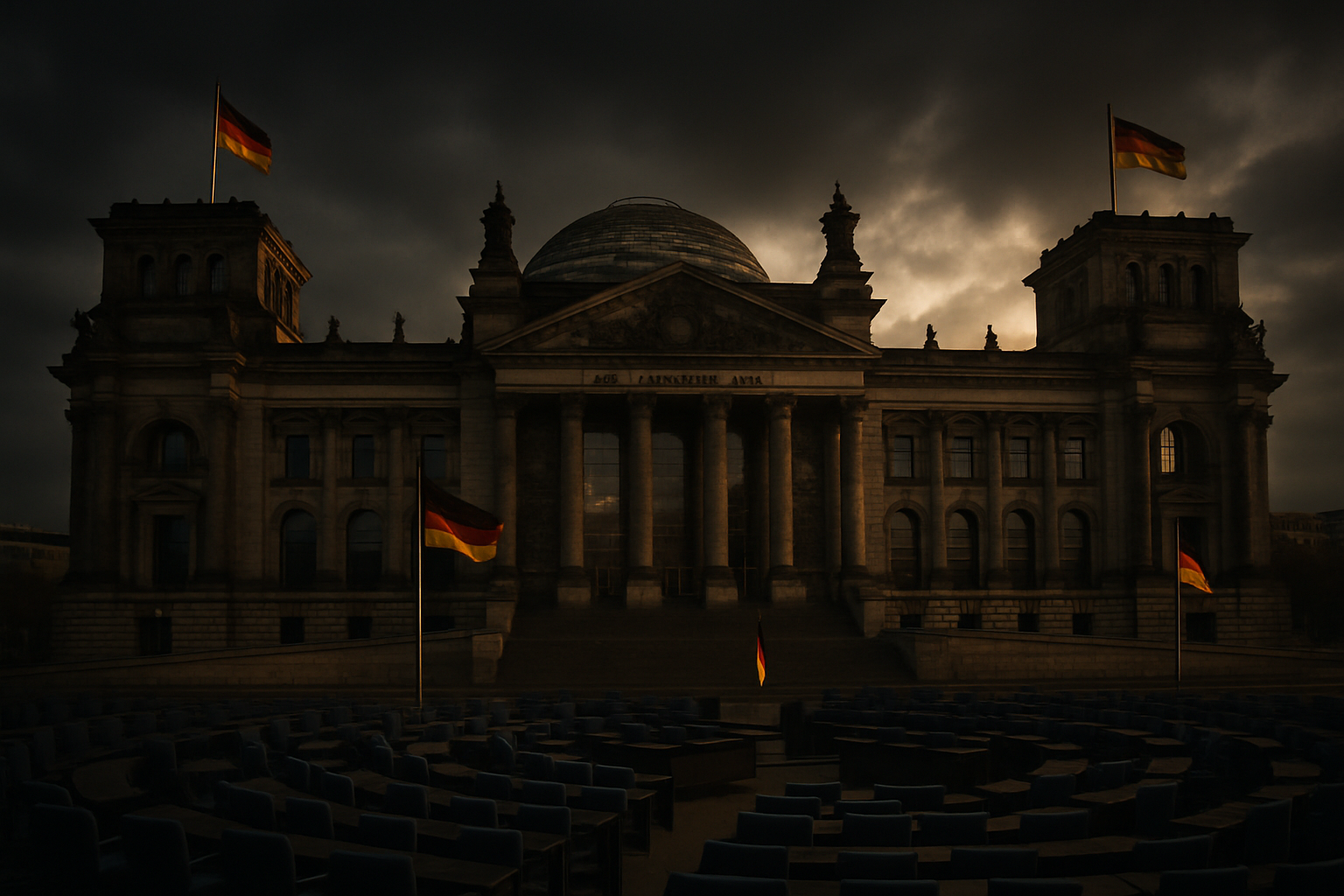
Germany's coalition government faces an unprecedented crisis as the Social Democratic Party (SPD) reels from devastating electoral defeats while the Free Democratic Party (FDP) leadership announces complete resignation, creating the most serious threat to Chancellor Friedrich Merz's administration since taking office.
The political earthquake began with the SPD's catastrophic defeat in Rhineland-Palatinate on March 22, ending 35 years of Social Democratic rule in the western German state. The loss follows another major setback in Baden-Württemberg earlier this month, where the party recorded its worst-ever state result, narrowly maintaining parliamentary representation.
SPD Leadership Under Pressure Despite Resistance to Change
Despite calls for accountability following the consecutive defeats, SPD co-chairs Bärbel Bas and Lars Klingbeil have announced their intention to remain in office. The decision reflects what observers describe as a "lack of personnel alternatives" within the party rather than confidence in their leadership.
"The SPD has nobody willing to become the kingslayer," noted Swiss political analyst from the NZZ. "The fear of the party's complete downfall is greater than the will for renewal."
Sources within the party suggest this resistance to change stems from the absence of viable successors rather than satisfaction with current leadership performance. The devastating losses in traditionally stronghold states have created what insiders describe as a "crisis of vision" beyond mere personnel issues.
"A Social Democracy without vision is needed by no one. The SPD has more than just a personnel problem - it lacks any vision for both the country and itself."
— Swiss Political Commentary, NZZ
FDP in Complete Meltdown as Entire Leadership Resigns
The crisis deepened dramatically with the announcement that FDP party chair Christian Dürr and the entire federal executive board will resign at the party conference scheduled for May 2026. The move comes after devastating losses in both Baden-Württemberg and Rhineland-Palatinate, where the liberal party failed to clear the five percent threshold for parliamentary representation.
The FDP's collapse has been particularly dramatic. In Rhineland-Palatinate, the party's candidate Daniela Schmitt was visibly distraught on election night, reflecting what media described as the "inevitable downfall" of the liberals. The party's three fundamental problems - organizational weakness, ideological confusion, and electoral irrelevance - have reached a critical breaking point.
Remarkably, despite announcing his resignation, Dürr has indicated he will stand for re-election as party chair at the May conference, highlighting the party's struggle to find new leadership capable of reversing its fortunes.
Broader Implications for German Democracy
The simultaneous crises affecting both coalition partners have created the most unstable political situation in Germany since the end of the Merkel era. The developments occur against a backdrop of rising support for the Alternative for Germany (AfD), which achieved historic breakthroughs in both state elections, nearly doubling its support in traditionally stable western German regions.
Political analysts warn that the coalition's weakness is inadvertently strengthening extremist forces. "Those who don't address the concerns of Germans drive voters into the arms of the AfD," observed FAZ political commentary, emphasizing how the coalition partners' focus on internal struggles has left a vacuum in addressing citizens' priorities.
The timing is particularly problematic given Germany's central role in addressing the ongoing Middle East crisis, energy security challenges, and the broader European political instability that has characterized early 2026.
Coalition Mathematics and Future Scenarios
With both major coalition partners in crisis, questions arise about the government's ability to pass significant legislation or maintain political authority. The SPD's continued decline in polls, combined with the FDP's potential extinction as a parliamentary force, creates unprecedented challenges for coalition management.
The situation has led to speculation about various scenarios, including early federal elections, coalition reshuffles, or the formation of new alliances. However, political observers note that none of the alternatives appear particularly attractive given the current fragmentation of the German party system.
The crisis also highlights the broader challenge facing traditional center-left and liberal parties across Europe, where voters increasingly turn to either populist alternatives or environmental parties that offer clearer ideological positions.
International Context and European Implications
Germany's political instability comes at a particularly sensitive time for European Union leadership. With France facing its own political challenges and other EU member states grappling with far-right advances, German political coherence is viewed as crucial for continental stability.
The memory system reveals this crisis as part of a broader pattern affecting European democracies, with traditional coalition mathematics breaking down and "authoritarian innovation" challenging established democratic norms across the continent.
The developments in Germany are being closely watched by international partners, particularly as the country plays a crucial role in NATO decision-making, EU economic policy, and responses to global crises including the ongoing Iran situation that has dominated headlines in recent weeks.
Path Forward Unclear
As Germany's political establishment grapples with these cascading crises, the path forward remains highly uncertain. The SPD's refusal to acknowledge the scale of its problems, combined with the FDP's organizational collapse, creates a governance vacuum at a time when strong leadership is desperately needed.
The May FDP conference will serve as a crucial test of whether Germany's liberal party can reinvent itself or faces complete political irrelevance. Meanwhile, the SPD's continued resistance to fundamental reform raises questions about its ability to remain a major force in German politics.
For Chancellor Merz's CDU, the coalition partners' crises present both opportunity and risk. While the weakening of traditional rivals could benefit the Christian Democrats electorally, governing with unstable partners creates immediate practical challenges for policy implementation and political authority.
The coming months will determine whether this represents a temporary crisis of coalition management or a fundamental realignment of German politics with implications extending far beyond the country's borders. What remains clear is that Germany's political landscape is experiencing its most significant transformation since reunification, with consequences that will reshape both domestic governance and European leadership for years to come.