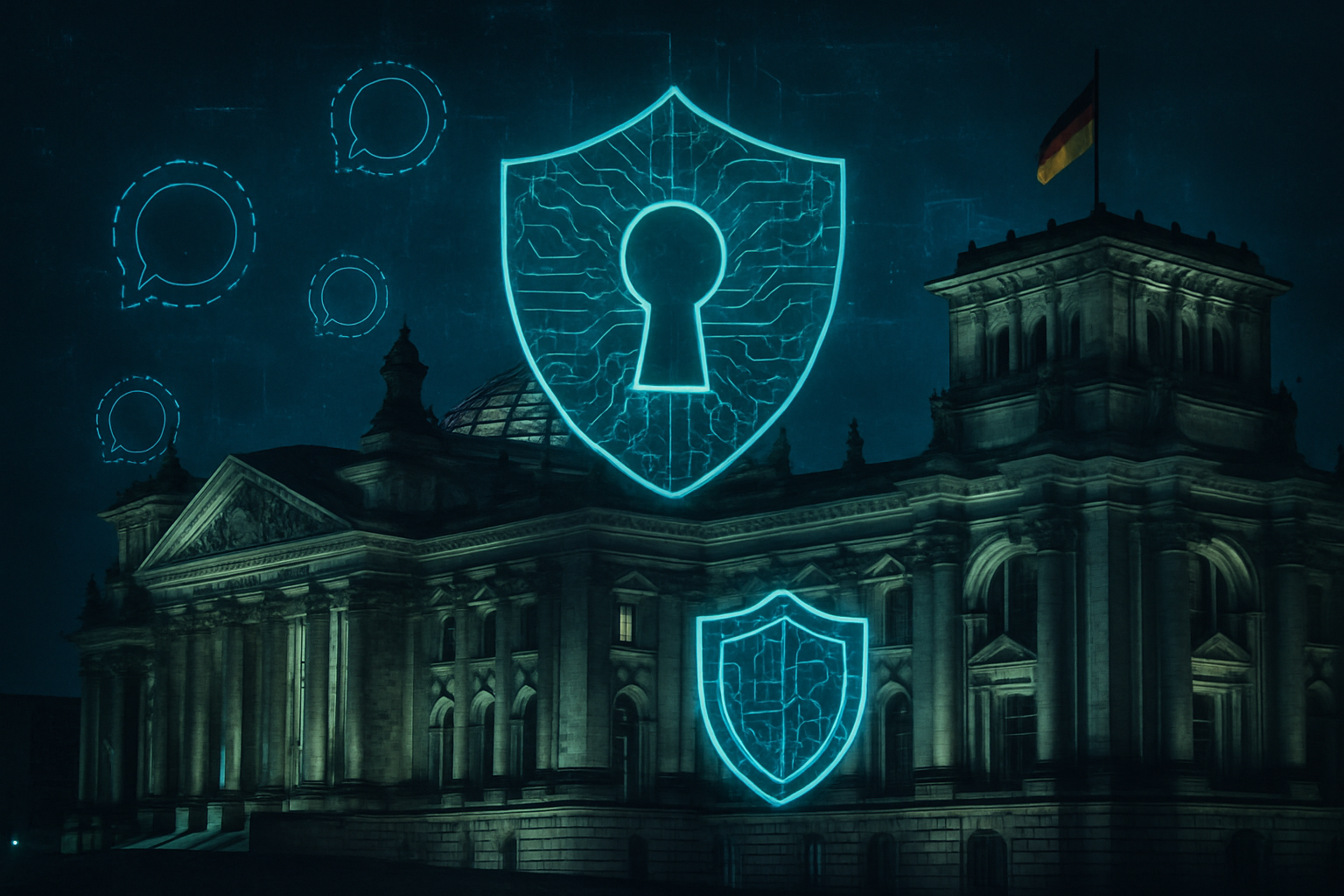
German government officials have been targeted in sophisticated phishing attacks through the Signal messaging app, prompting authorities to launch a comprehensive espionage investigation that underscores the escalating cyber warfare threats facing democratic institutions worldwide.
According to multiple German media reports including tagesschau.de and The Local Germany, the phishing campaign against Signal users appears to be significantly more extensive than initially reported, with Der Spiegel investigations revealing that federal ministers have been affected by what security experts describe as state-sponsored espionage operations.
Scope of Attack Broader Than Initially Disclosed
German prosecutors officially launched the spying investigation on Friday, April 25, 2026, following mounting evidence that the attacks represent a coordinated campaign targeting high-level government officials. Sources familiar with the investigation describe the operation as a "wake-up call" regarding the vulnerability of encrypted communication platforms used by senior government personnel.
The revelation that federal ministers are among those targeted represents a significant escalation in the documented threat level. Signal, widely regarded as one of the most secure messaging platforms due to its end-to-end encryption, has become a preferred communication tool for government officials, journalists, and activists worldwide precisely because of its security features.
"This latest Russia-directed plot against Germany demonstrates the sophisticated nature of modern cyber warfare targeting our most secure communication channels."
— German Parliamentary Source
Technical Sophistication Suggests State-Level Operation
Cybersecurity experts analyzing the attack patterns indicate the operation likely involves advanced endpoint compromise techniques that access devices before or after encryption and decryption processes, effectively circumventing Signal's end-to-end encryption protections. This level of technical sophistication typically requires substantial state resources and advanced capabilities.
The targeting methodology focuses specifically on individuals with access to sensitive government information, military intelligence, and journalistic sources. This precision targeting, combined with the technical complexity required to compromise encrypted platforms, strongly suggests state-sponsored operations rather than opportunistic criminal activities.
Part of Broader International Cyber Campaign
The German investigation occurs within the context of a broader international cybersecurity crisis that has affected multiple democratic nations throughout 2026. According to intelligence reports from Dutch agencies AIVD and MIVD issued in March 2026, Russian state hackers have been conducting a "global cyber campaign" targeting Signal and WhatsApp accounts of senior government officials, military personnel, and journalists worldwide.
This represents a major escalation in Russian digital warfare capabilities, moving beyond traditional targets to focus specifically on encrypted messaging platforms used by high-value targets across democratic institutions. The coordination and scope of these operations indicate substantial planning and resource allocation by hostile state actors.

Democratic Institutions Under Digital Siege
The targeting of encrypted communications poses fundamental threats to democratic oversight and press freedom, according to cybersecurity analysts. When hostile state actors can potentially access the private communications of government officials, journalists, and their sources, it undermines the basic functioning of democratic institutions and free press operations.
European regulatory frameworks are struggling to balance digital security needs with privacy rights preservation amid these escalating threats. The attacks highlight the strategic importance of maintaining secure communication channels resistant to foreign interference as a core national security priority.
Intelligence sources indicate that beyond Germany, similar operations have affected officials across multiple European Union member states, suggesting a coordinated campaign designed to compromise democratic institutions across the continent.
Global Context of Escalating Cyber Threats
The German Signal app attacks occur amid what cybersecurity experts describe as an unprecedented global cybersecurity crisis. Cyber incidents have surged 20.6% in Q4 2025 according to international monitoring agencies, with criminal networks increasingly using artificial intelligence-enhanced capabilities to conduct sophisticated attacks.
Recent major breaches include the Netherlands' Odido breach affecting 6.2 million customers (one-third of the population), Bosnia and Herzegovina reporting 27 million cyber attack attempts in January 2026 alone, and systematic targeting of critical infrastructure including power grids, water treatment facilities, and transportation networks across multiple countries.
The global semiconductor shortage has created what security experts term a "critical vulnerability window" until 2027, with memory chip price increases constraining advanced security system deployment precisely when threats are escalating most rapidly.
Response and Protective Measures
German authorities are implementing comprehensive response measures including enhanced monitoring protocols, improved endpoint security, and coordination with international partners through Europol and other multilateral frameworks. Security recommendations for government officials include multi-factor authentication, regular security updates, network segmentation, and comprehensive incident response protocols specifically designed for state-sponsored attacks.
The investigation represents a critical test of international cooperation against sophisticated cyber threats that transcend traditional criminal networks. Success requires unprecedented coordination between technical capabilities, legal frameworks, and diplomatic responses to address threats that operate across jurisdictions with state-level resources.
"This investigation will help establish new standards for protecting democratic institutions against 21st-century digital warfare tactics that threaten the foundation of open societies."
— European Cybersecurity Expert
Implications for Digital Governance
The German Signal app investigation highlights fundamental challenges in digital governance as democratic institutions face increasingly sophisticated cyber threats. The attacks demonstrate how modern cyber warfare can target the most secure communication platforms used by government officials, potentially compromising sensitive state communications and democratic processes.
Resolution of this crisis will help establish precedents for how democratic nations can effectively counter state-sponsored digital aggression while preserving openness and privacy principles that are essential to democratic societies. The success or failure of the international response will influence the trajectory of digital governance for decades to come.
As this investigation continues, it serves as a stark reminder that the digital infrastructure supporting modern democratic governance faces unprecedented threats requiring innovative defensive strategies, international cooperation, and sustained commitment to protecting democratic institutions in an increasingly connected but dangerous digital environment.