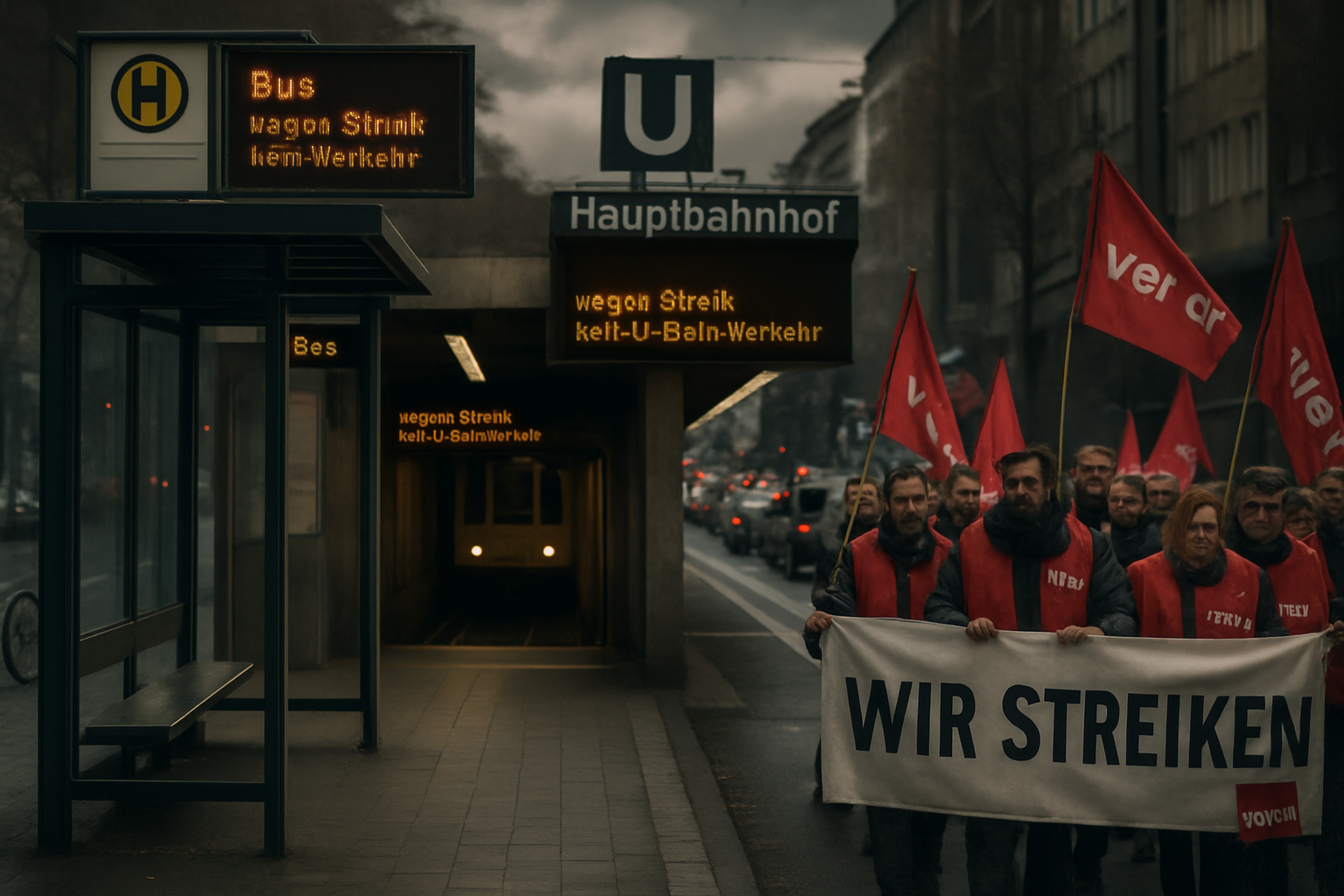
Germany's public transportation networks ground to a halt on Friday morning as approximately 100,000 transit workers launched a comprehensive 48-hour strike, paralyzing buses, trains, and subways across major cities from Berlin to Munich in the most significant transport disruption the country has faced in recent years.
The strike, orchestrated by Verdi, one of Germany's largest public sector unions, represents a coordinated effort to gain leverage in critical negotiations covering working conditions, shift work arrangements, and salary increases. The action affects nearly every major German city, with particularly severe disruptions reported in Berlin, Hamburg, Cologne, Düsseldorf, Frankfurt, Stuttgart, and Munich.
Nationwide Transport Paralysis
According to reports from major German cities, subways, trams, and buses stopped running or operated on severely limited emergency schedules starting at 3 AM local time on Friday. Regular services are not expected to resume until 3 AM on Sunday, creating a transportation crisis that will span the entire weekend.
Berlin's transport operator BVG confirmed the participation of its workers in what officials described as a "warning strike" designed to demonstrate the union's bargaining power. The timing coincides with ongoing negotiations between Verdi and municipal transport companies that have reached a critical impasse over key worker demands.
In what union representatives characterize as a tactical evolution, this strike has been designated "without mobilization," meaning workers are conducting coordinated work stoppages rather than street protests. This approach follows lessons learned from previous labor actions, including recent strikes in other European countries that achieved maximum economic impact through targeted service disruption.
Union Demands and Negotiation Breakdown
Verdi union officials have outlined specific demands that vary by state but generally include substantial salary increases exceeding 20%, reduced working hours, extended rest periods between shifts, and significantly higher bonuses for night and weekend work. The union argues that these improvements are necessary to address years of wage stagnation and increasingly difficult working conditions.
The negotiations have been particularly challenging because they involve multiple levels of government and various transport authorities across Germany's federal system. Each state and municipal authority has different financial constraints and operational requirements, making unified agreement difficult to achieve.
"Our members have reached a breaking point with current working conditions. The pandemic years placed enormous stress on transport workers, and they deserve recognition through improved pay and better work-life balance."
— Verdi Union Representative
Perfect Storm of Challenges
The transport strike occurs during an already challenging period for German infrastructure, as the country continues to face severe winter weather conditions that have tested transportation networks across Europe. Recent weeks have seen widespread ice warnings, airport closures, and railway disruptions due to extreme cold and precipitation.
Germany's weather service has expanded ice warnings from northeastern regions to western and southern areas, creating additional safety concerns for both public and private transportation. The compound effect of labor action and weather emergencies has created what experts describe as a "perfect storm" for German mobility.
The situation reflects broader tensions within European transportation sectors, where workers are adapting to changing industry conditions while seeking to balance operational continuity with necessary infrastructure modernization. Similar strikes have affected other European countries in recent months, suggesting coordinated labor movements across the continent.
Economic and Social Impact
The economic implications of the nationwide strike extend far beyond passenger inconvenience. Preliminary estimates suggest the action could cost millions of euros in lost productivity, delayed freight deliveries, and tourism disruption during a critical winter period when many businesses depend on consistent transportation links.
Commuters in major metropolitan areas face particularly acute challenges, with many forced to rely on private vehicles, creating traffic congestion that compounds the economic losses. Some employers have implemented flexible working arrangements to accommodate the transportation difficulties, while others face operational disruptions that affect their ability to serve customers.
Educational institutions have been forced to adjust schedules, with several universities and schools in affected cities canceling classes or moving to remote instruction. Healthcare systems are implementing emergency protocols to ensure essential personnel can reach their workplaces despite the transportation breakdown.
Government Response and Public Reaction
German government officials have expressed concern about the strike's timing and scope, particularly given the ongoing weather emergency that already strains the country's transportation infrastructure. However, they have also acknowledged the legitimacy of workers' concerns about pay and working conditions.
Transport authorities are working to maintain minimal emergency services where possible, focusing on ensuring that essential workers, including healthcare personnel and emergency responders, can access critical locations. Some cities have implemented temporary measures such as expanded taxi services and emergency shuttle buses for essential travel.
Public reaction has been mixed, with many commuters expressing frustration at the timing but also showing understanding for workers' demands. Social media discussions reflect the complexity of public opinion, with many Germans recognizing the essential role of transport workers while also expressing concern about the strike's impact on daily life.
European Context and International Implications
The German transport strike occurs within a broader pattern of European labor activism that has seen coordinated actions across multiple countries and sectors. Recent months have witnessed significant strikes in France, Italy, and other European Union countries, suggesting that workers across the continent are responding to similar pressures regarding wages, working conditions, and economic uncertainty.
Transportation networks have become particularly vulnerable to these labor actions because of their central role in modern economic life. The interconnected nature of European transportation systems means that disruptions in one country can have cascading effects across borders, affecting international freight, tourism, and business operations.
This pattern reflects broader challenges facing European economies as they navigate post-pandemic recovery, energy transitions, and evolving labor market conditions. The success or failure of these negotiations could influence similar labor actions across Europe and establish precedents for how governments and unions manage industrial relations in critical infrastructure sectors.
Looking Ahead: Resolution Prospects
With negotiations continuing throughout the strike period, both sides express cautious optimism about reaching a resolution that addresses workers' core concerns while maintaining the operational viability of Germany's transport networks. The exact demands vary by state, creating complexity in the negotiation process but also providing flexibility for tailored agreements.
Industry experts suggest that successful resolution will require innovative approaches to worker compensation and scheduling that reflect both financial realities and the legitimate needs of transport employees. The outcome will likely establish important precedents for labor relations in Germany's public sector and influence similar negotiations across Europe.
As Germany works to resolve this transportation crisis, the broader implications for European infrastructure resilience and labor relations remain significant. The strike demonstrates both the critical importance of public transportation systems and the need for sustainable approaches to worker compensation and conditions in essential services.
The resolution of this conflict will provide important lessons for managing labor disputes in critical infrastructure while maintaining the social solidarity that has traditionally characterized German industrial relations. The coming days will prove decisive in determining whether innovative solutions can address worker concerns while ensuring the transportation systems that millions of Germans depend on can continue to function effectively.