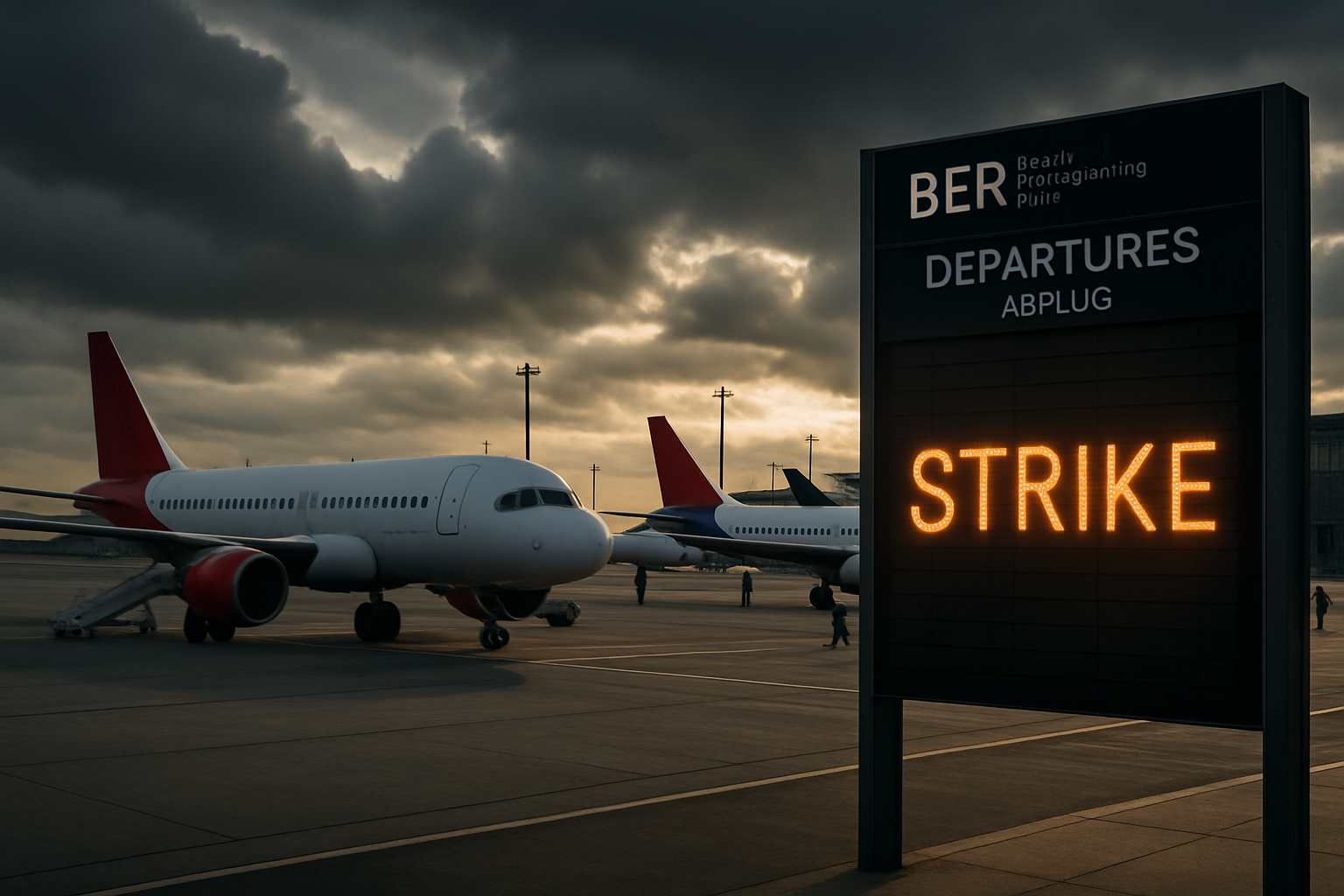
Berlin Brandenburg Airport suspended all passenger operations Wednesday following a Ver.di union strike, canceling 445 flights and affecting approximately 57,000 passengers in the latest wave of German transport disruptions that have paralyzed critical infrastructure nationwide.
The Ver.di trade union announced the warning strike targeting Germany's capital airport, forcing the complete halt of passenger flight operations for the day. The action represents the latest escalation in ongoing labor disputes that have severely disrupted German transportation networks throughout early 2026, creating cascading effects across banking services and passenger movement.
Simultaneous Strikes Cripple German Infrastructure
The aviation strike coincides with widespread public transport disruptions across Germany, with North Rhine-Westphalia and Saxony bearing the brunt of the coordinated industrial action. The multi-sector strikes have created unprecedented challenges for German banking operations, as customers and staff struggle to reach branches and conduct routine business operations.
This latest disruption builds upon months of sustained labor unrest that has tested Germany's transportation infrastructure. In February, Ver.di orchestrated comprehensive 48-hour strikes affecting 100,000 transport workers across buses, trains, and subway systems in major German cities including Berlin, Hamburg, Cologne, Düsseldorf, Frankfurt, Stuttgart, and Munich.
Broader European Context of Labor Disputes
The German strikes occur against a backdrop of intensifying European labor movements throughout 2026. Recent months have witnessed significant industrial action across multiple countries, from Argentina's nationwide CGT general strikes affecting banking and aviation to comprehensive transport disruptions in Italy, where coordinated aviation and railway worker strikes affected major airports including Rome Fiumicino and Milan Malpensa.
Norway's VG and Aftenposten newspapers reported identical coverage of the Berlin airport crisis, highlighting the international attention focused on German transportation stability. The coordinated media coverage underscores growing concerns about the spillover effects of German strikes on broader European connectivity.
Economic Impact on German Banking Sector
German banking operations face mounting pressure as transport strikes limit customer access to physical branches and constrain staff mobility. The disruptions come at a critical time when financial institutions are managing increased operational costs and navigating volatile energy markets that have plagued Europe throughout 2026.
The banking sector's vulnerability to transport disruptions became particularly evident during the February Ver.di strikes, when major financial centers experienced significant reductions in foot traffic and face-to-face customer interactions. Digital banking services have seen increased usage as customers adapt to transportation limitations, accelerating the sector's digital transformation.
Pattern of Escalating German Labor Actions
The current strike represents the continuation of a broader pattern of German labor militancy that began intensifying in early 2026. Ver.di union demands have consistently focused on salary increases exceeding 20%, reduced working hours, extended rest periods, and enhanced compensation for night and weekend shifts.
"The departure from traditional German social partnership models toward more confrontational labor relations represents a fundamental shift in how disputes are resolved,"
— Labor Relations Expert
Previous strikes designated as "without mobilization" - featuring work stoppages without street protests - have evolved into more comprehensive actions affecting critical infrastructure. The February strikes coincided with severe winter weather conditions, creating compound crises that tested Germany's emergency response capabilities.
International Aviation Network Effects
Berlin Brandenburg Airport's closure creates significant ripple effects throughout European aviation networks. As a major hub connecting Central and Eastern Europe, the disruption forces airlines to implement costly alternative routing strategies and affects thousands of connecting passengers.
The strike occurs during a period of heightened sensitivity for global aviation networks. Throughout March 2026, international aviation has faced unprecedented challenges, including the Middle East crisis that led to over 18,000 flight cancellations worldwide and the closure of Dubai International Airport, the world's busiest passenger hub.
Government and Industry Response
German authorities have urged travelers to check with airlines for rebooking options and alternative transportation arrangements. The federal government faces mounting pressure to mediate between unions and transport companies, as strikes threaten Germany's reputation for infrastructure reliability.
Industry representatives have criticized the timing and scope of the strikes, arguing that coordinated actions across multiple transportation sectors create disproportionate economic costs. The German airline industry estimates millions of euros in lost revenue from cancelled flights and disrupted schedules.
Looking Ahead: Resolution Challenges
Negotiations between Ver.di and municipal transport companies remain gridlocked, with both sides maintaining firm positions on wage increases and working conditions. The union's ability to coordinate strikes across different transportation sectors demonstrates sophisticated organizational capacity that could sustain prolonged industrial action.
Recovery timelines remain uncertain, as transportation crises require complex coordination between federal, state, and municipal authorities. Unlike weather-related disruptions with predictable resolution patterns, labor disputes depend on successful negotiations that could extend for weeks or months.
The German strikes represent a critical test of European labor relations in an era of economic transformation, energy security challenges, and changing worker expectations. Success in resolving these disputes could provide templates for managing similar crises across Europe, while prolonged disruption risks undermining Germany's role as a continental transportation hub.