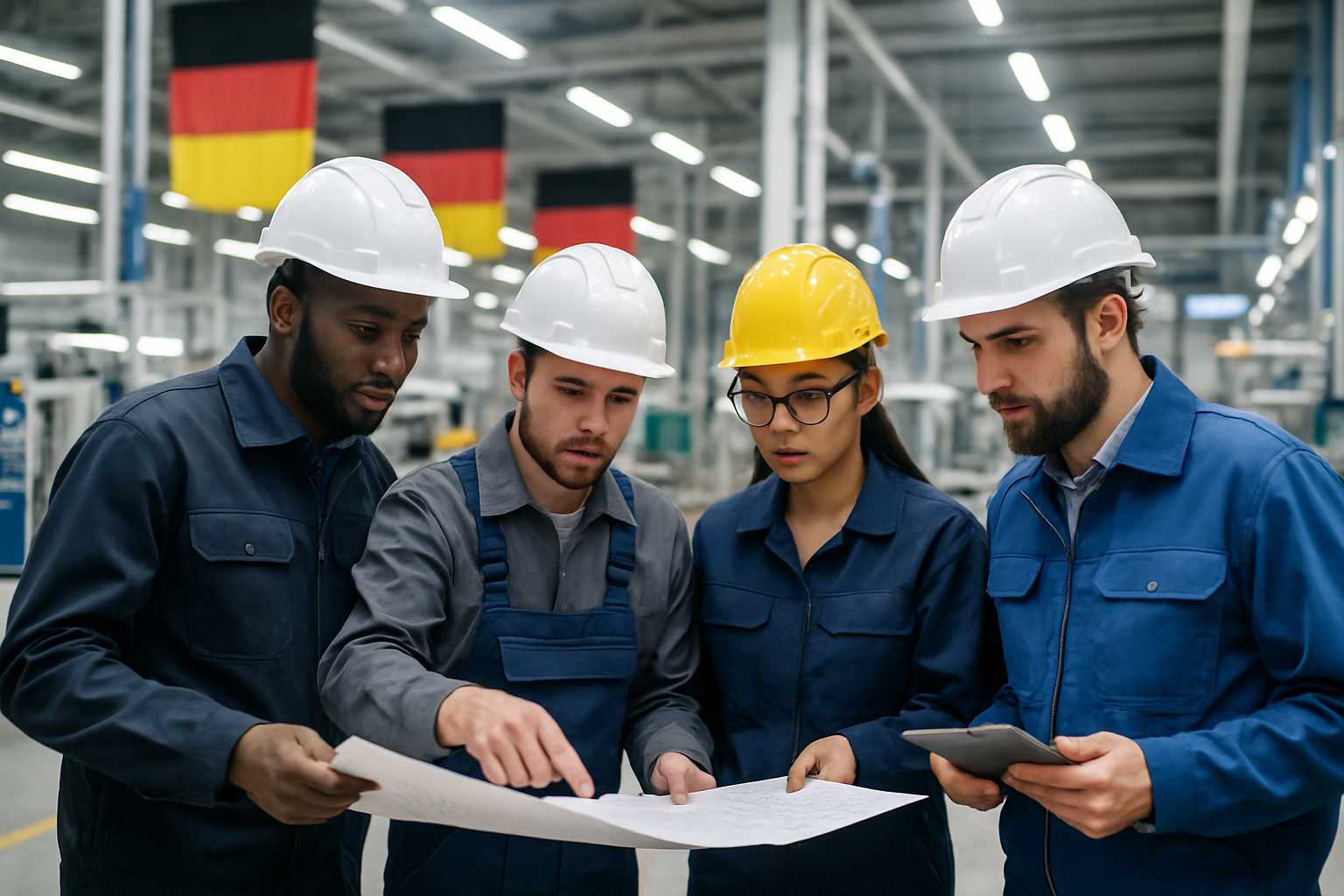
Germany is grappling with a severe demographic crisis that threatens to undermine its economic foundation, requiring the nation to attract 288,000 foreign workers annually to prevent a catastrophic 10% workforce contraction by 2040, according to a landmark 2024 study by the Bertelsman Foundation.
The stark warning comes as Europe's largest economy faces an unprecedented convergence of aging population dynamics, declining birth rates, and critical labor shortages across multiple sectors. The demographic emergency positions immigration not as a policy choice, but as an economic necessity for maintaining Germany's industrial competitiveness and social stability.
The Scale of Germany's Demographic Challenge
The Bertelsman Foundation's comprehensive analysis reveals the mathematical inevitability of Germany's workforce crisis without immediate intervention. Current birth rates, combined with an aging population structure inherited from decades of below-replacement fertility, have created what demographers describe as a "demographic time bomb" with far-reaching economic implications.
Germany's situation mirrors broader European demographic trends, but with particular urgency given its role as the continent's economic powerhouse. The country's industrial base, from automotive manufacturing to advanced engineering, depends heavily on skilled labor that domestic demographics can no longer adequately supply.
Recent data from across Europe illustrates the scale of the challenge. Housing crises in major German cities, where rental prices have increased up to 20% and residents report that "even those who can pay find no housing anymore," reflect the complex interplay between demographic pressures and inadequate infrastructure for potential immigrant workers.
Global Context of Labor Migration Patterns
Germany's immigration needs occur within a broader global transformation of labor markets and migration patterns. Historical memory reveals multiple precedents for successful large-scale labor integration, contrasting sharply with current restrictive approaches across much of Europe.
Albania's recent success integrating 27,000 foreign nationals to address labor shortages provides a compelling model. The small Balkan nation welcomed workers from India, Nepal, Philippines, Egypt, and Myanmar to fill critical gaps in fishing, construction, manufacturing, and tourism sectors, demonstrating that proactive immigration policies can address labor market needs while supporting economic growth.
Meanwhile, other European nations have pursued contradictory approaches. The European Parliament's historic March 2026 decision to approve external deportation centers, allowing transfer of asylum seekers to third countries outside EU borders, reflects a shift from protection-based to deterrence-focused migration policies that may undermine long-term labor market needs.
Sectoral Labor Shortage Analysis
Germany's workforce crisis extends across critical economic sectors, each facing unique challenges in attracting and retaining workers. Healthcare systems strain under demographic pressure, with aging populations requiring increased medical care while fewer young Germans enter medical professions. Construction industries report project delays and cost overruns due to insufficient skilled workers, exacerbating housing shortages that further complicate worker accommodation.
The technology sector faces particular challenges, with global semiconductor shortages driving memory chip prices six-fold higher, affecting smart building technologies and industrial automation systems. These infrastructure constraints create a paradox where Germany needs immigrant workers to build and maintain the technological systems that could partially address labor shortages through automation.
Manufacturing, Germany's economic cornerstone, confronts the "double burden" of requiring immediate skilled labor while simultaneously adapting to AI-driven workplace transformations. Unlike wholesale automation approaches seen in other countries, Germany's industrial model emphasizes human-machine collaboration, requiring significant immigrant worker integration to maintain competitiveness.
Integration Challenges and Opportunities
Successfully attracting 288,000 immigrants annually requires addressing systemic barriers that currently impede effective integration. Housing shortages in major German cities represent perhaps the most immediate challenge, with rental markets experiencing unprecedented pressure that affects both domestic residents and potential immigrant workers.
Language requirements and professional credential recognition create additional integration hurdles. Germany's B1 language proficiency standards for permanent residency, while maintaining quality assurance, may need adjustment to accommodate urgent labor market needs. Successful models from other countries demonstrate that targeted language training combined with workplace integration can achieve both linguistic competency and immediate economic contribution.
Educational infrastructure requires expansion to support immigrant families, addressing not only immediate worker needs but long-term demographic sustainability. Countries implementing comprehensive educational reforms, including AI-integrated learning systems and culturally sensitive curricula, report superior integration outcomes and higher retention rates among immigrant communities.
Demographic Implications for European Integration
Germany's immigration needs intersect with broader European demographic trends that threaten continental integration and economic competitiveness. Fertility rates across developed European nations have fallen well below replacement levels, creating synchronized workforce contractions that could undermine the European Union's global economic position.
The contrast with restrictive migration policies elsewhere in Europe highlights fundamental tensions between short-term political pressures and long-term economic necessities. While countries implement "emergency brake" visa restrictions and external deportation centers, Germany's demographic mathematics demand exactly the opposite approach: expanded immigration pathways and comprehensive integration support systems.
Regional coordination becomes essential as European nations compete for the same pools of skilled international workers. Germany's success in attracting necessary immigration depends partly on developing more attractive integration packages than competing destinations, including housing assistance, family support services, and clear pathways to permanent residency and citizenship.
Policy Framework for Sustainable Immigration
Achieving the 288,000 annual immigration target requires comprehensive policy frameworks addressing multiple integration dimensions simultaneously. Housing policy must expand beyond market mechanisms to include targeted accommodation for immigrant workers, potentially through public-private partnerships and innovative financing mechanisms.
Labor market policies need restructuring to expedite professional credential recognition while maintaining quality standards. Fast-track assessment procedures, combined with bridging programs for partially recognized qualifications, could accelerate immigrant worker integration into critical sectors experiencing immediate shortages.
Social integration policies must address community concerns about rapid demographic change while emphasizing the economic benefits of immigration. Public communication strategies highlighting immigration's role in sustaining pension systems, maintaining healthcare services, and preserving industrial competitiveness could build broader public support for necessary policy changes.
International Cooperation and Competition
Germany's immigration challenge occurs within intensifying global competition for skilled workers. Countries like Canada have implemented comprehensive Express Entry systems targeting specific sectors, while others pursue restrictive approaches that could create opportunities for German recruitment efforts.
Strategic partnerships with origin countries could facilitate organized labor migration that serves both German economic needs and origin country development goals. Circular migration programs, skills transfer initiatives, and diaspora engagement could create sustainable immigration flows while addressing global development challenges.
The success of Germany's immigration strategy will likely influence European Union migration policy development for decades. As the bloc's largest economy and most significant destination for intra-European migration, German policies establish precedents that smaller member states often follow.
Technology and Future Workforce Dynamics
Germany's immigration needs must account for technological transformation reshaping work across all sectors. While AI and automation will eliminate some positions, they simultaneously create new roles requiring human creativity, cultural competency, and interpersonal skills that immigrant workers can provide.
The global semiconductor crisis, driving memory chip prices to unprecedented levels, ironically provides time for workforce adaptation that might otherwise be unavailable. This infrastructure constraint buffer allows Germany to focus on human capital development while technological deployment occurs more gradually than initially projected.
Successful integration of AI-human collaboration models requires diverse perspectives and cultural competencies that immigration can provide. Countries emphasizing human-centered AI development, rather than wholesale replacement approaches, report superior innovation outcomes and workplace satisfaction.
Climate Change and Migration Pressures
Germany's demographic crisis intersects with global climate displacement pressures that are intensifying migration flows worldwide. With 19 consecutive months of global temperatures exceeding 1.5°C above pre-industrial levels, environmental migration will likely supplement economic migration in coming decades.
Proactive immigration policies that anticipate climate displacement could position Germany advantageously in managing both immediate labor shortages and longer-term humanitarian obligations. Integration infrastructure developed for economic migrants could serve dual purposes as climate displacement accelerates.
The European Union's shift toward deterrence-focused migration policies may prove counterproductive as climate pressures intensify displacement beyond traditional economic categories. Germany's demographic needs could justify leadership in developing more sustainable European approaches to both economic and climate migration.
Long-term Sustainability and Social Cohesion
Achieving sustainable immigration requires addressing legitimate concerns about social cohesion while emphasizing the economic necessity of demographic renewal. Public education about immigration's role in sustaining Germany's social security system, healthcare infrastructure, and industrial competitiveness could build broader support for necessary policy changes.
Integration success depends on mutual adaptation rather than one-way assimilation, requiring both immigrants and receiving communities to adjust expectations and behaviors. Successful models emphasize shared civic values while celebrating cultural diversity as a source of innovation and resilience.
The Bertelsman Foundation's warning about workforce contraction represents more than an economic challenge—it's a test of German society's capacity for renewal and adaptation. Success in attracting and integrating 288,000 immigrants annually would not only address immediate demographic needs but position Germany as a model for democratic societies navigating 21st-century demographic transitions.
The stakes extend far beyond Germany's borders. As Europe's largest economy and political leader, German immigration policy success or failure will influence continental approaches to demographic challenges for decades. The mathematical imperative identified by the Bertelsman Foundation demands bold policy responses that match the scale of the demographic challenge while maintaining social cohesion and democratic values.