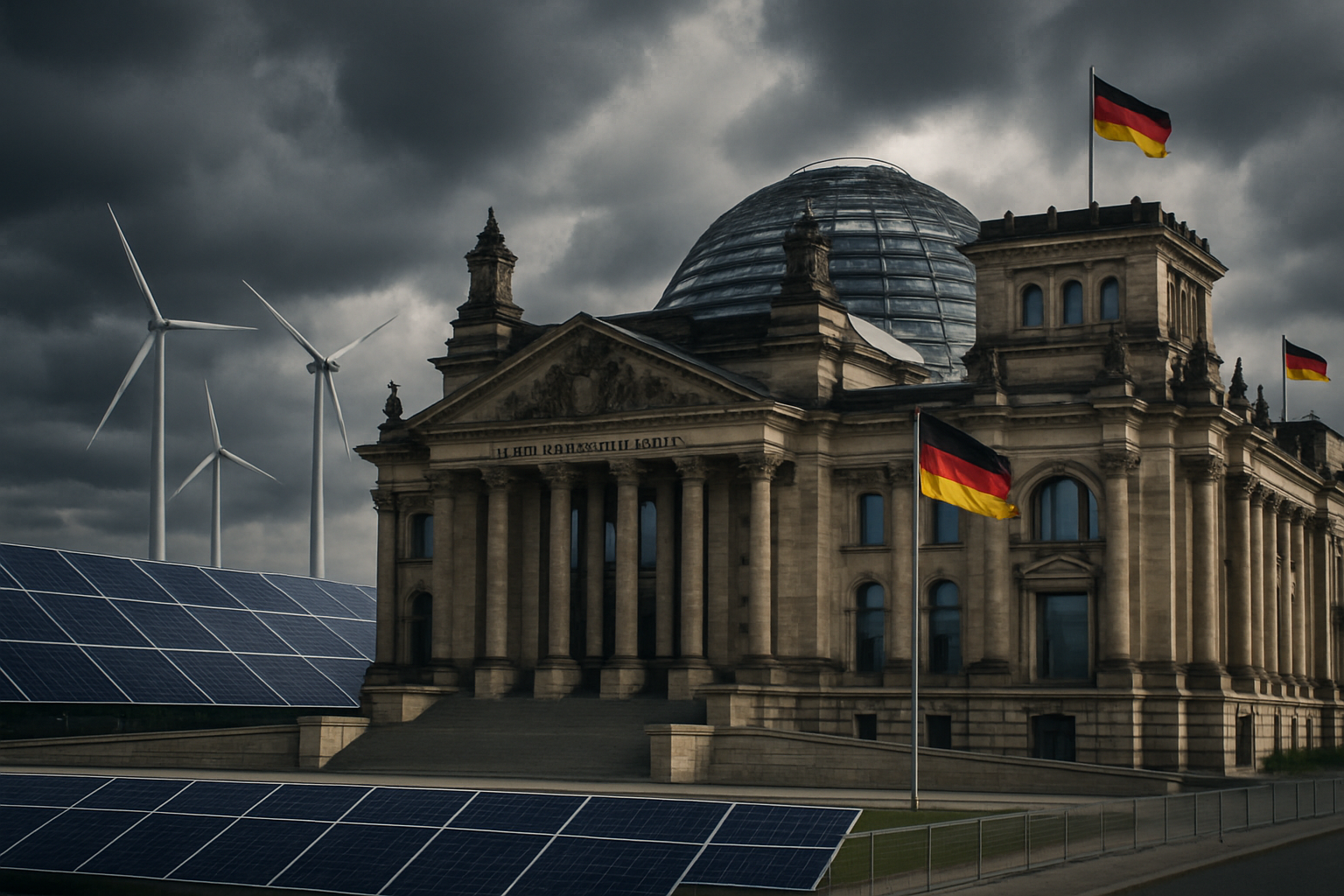
Germany finds itself at the center of a heated energy policy debate as Union faction leader Jens Spahn calls for a "societal discussion" about returning to nuclear power, while the ongoing Iran crisis exposes critical vulnerabilities in European energy security architecture.
The debate over nuclear power has gained unprecedented urgency as oil prices surge past $100 per barrel and natural gas costs have exploded by 24% across Europe due to the Iran conflict's impact on the Strait of Hormuz, which handles 40% of global oil transit. Against this backdrop of energy crisis, Spahn argues that reconnecting old nuclear reactors would be "comparatively cheap," though leading scientists remain deeply skeptical of such proposals.
Energy Security Crisis Drives Nuclear Reconsideration
The Iran war has created the most severe energy crisis since the 1970s oil shocks, with the International Energy Agency releasing a record 400 million barrels from strategic petroleum reserves - the largest intervention in 50 years. Germany, despite its 88% renewable electricity capacity and advanced battery storage systems, remains vulnerable during this transition period as fossil fuel dependencies persist.
Defense Minister Boris Pistorius led European resistance to Trump's naval coalition demands for the Strait of Hormuz, asking pointedly: "What does Donald Trump expect a handful of European frigates to do that the powerful US Navy cannot?" This stance reflects Germany's broader strategic approach of maintaining energy independence while avoiding direct military involvement in what many view as American "optional wars."
The Nuclear Restart Debate: Technical and Political Challenges
Spahn's call for nuclear reconsideration comes as multiple European nations accelerate atomic energy programs. Commission President Ursula von der Leyen has declared reducing nuclear power share a "strategic mistake," while Hungary's Paks II project represents Europe's largest nuclear investment at €39.1 billion. Romania leads in small modular reactor (SMR) technology, and even Denmark has eliminated its atomic energy prohibition.
However, German scientists warn that restarting old reactors would constitute "a complete new beginning" rather than a simple reconnection. The technical challenges are substantial: advanced centrifuge technology, sophisticated infrastructure, and safety systems that have been dormant since the Atomausstieg (nuclear phase-out) require comprehensive overhauls exceeding original construction complexity.

Economic Considerations Amid Crisis
The economic argument for nuclear restart has gained traction as energy costs spiral. Natural gas prices have reached €47.32/MWh - the highest levels since February 2025 - while Qatar's LNG production halt affects approximately 20% of global exports. Germany's antitrust authorities are strengthening laws to prevent gas station price manipulation, representing significant market intervention in modern German energy policy.
Austria has implemented comprehensive fuel price brake systems, while France deploys 500 fuel inspectors to prevent price manipulation. These emergency measures across Europe demonstrate the continental scope of the energy crisis driving nuclear reconsideration.
Geopolitical Context: Alliance Tensions and Energy Independence
Germany's energy policy debate unfolds against unprecedented NATO tensions. Trump's declaration that the alliance is a "paper tiger" without US involvement has accelerated European strategic autonomy discussions. Chancellor Friedrich Merz previously stated that "American leadership [is] challenged, perhaps already squandered," reflecting German frustration with transatlantic energy security coordination.
The Iran crisis has exposed critical supply chain vulnerabilities, with China controlling 60% of production and 90% of refining for lithium, cobalt, and rare earth elements essential to renewable infrastructure. Nuclear power offers a pathway to energy independence that avoids these geopolitically sensitive supply chains.
"Nuclear provides weather-independent reliability versus wind and solar, addressing grid stability requirements as renewable penetration increases."
— European Commission Energy Analysis
Scientific Opposition and Environmental Concerns
Leading German scientists remain skeptical of nuclear restart proposals, citing massive technical barriers and safety concerns. Environmental groups, including Greenpeace, denounce nuclear expansion as a "betrayal of the European Green Deal," emphasizing renewable energy and efficiency focus over atomic power revival.
The scientific community points to Chernobyl and Fukushima as enduring reminders of catastrophic risks, while nuclear waste management remains problematic for thousands of years. These concerns persist despite technological advances in small modular reactors featuring passive safety systems and digital monitoring capabilities.
The European Nuclear Renaissance Context
Germany's nuclear debate occurs within a broader European atomic energy revival. Switzerland's parliament voted 26-12 to overturn a 2017 referendum ban on new nuclear plants, while Estonia explores nuclear baseload options to complement its renewable leadership. Slovakia positions nuclear power as central to climate goals, and Greece's ministerial committee investigates SMR technology.
This continental nuclear renaissance reflects a fundamental shift in European thinking about energy security and strategic autonomy. Von der Leyen's acknowledgment that nuclear reduction was a "strategic mistake" signals institutional backing for atomic energy expansion addressing energy security vulnerabilities exposed by the Iran crisis.
Climate Integration and Long-term Strategy
Nuclear power advocates argue that atomic energy provides essential carbon-free baseload electricity to complement renewables in achieving Europe's 90% emissions reduction target by 2040. Weather-independent nuclear generation addresses grid stability challenges as wind and solar penetration increases, offering resilience against extreme weather events that climate change is intensifying.
Critics maintain that aggressive renewable deployment with advanced storage systems can meet decarbonization goals without nuclear risks. Estonia's success with 88% renewable electricity and massive battery storage serving 90,000 households demonstrates alternative pathways, though even Estonia considers nuclear baseload complementarity.
Economic and Employment Implications
Nuclear restart would generate thousands of specialized, high-paying jobs in construction and hundreds of permanent operations positions lasting century-plus reactor lifetimes. Economic multiplier effects include research and development, advanced manufacturing, and supporting services around nuclear facilities.
Stable electricity pricing from nuclear generation reduces market volatility compared to fossil fuel dependencies. Technology export potential could establish German global leadership in next-generation reactor systems, competing with US TerraPower Wyoming projects and Japan's Kashiwazaki-Kariwa restart.
Implementation Timeline and Political Realities
The Iran crisis serves as an immediate catalyst for energy policy reversals, but nuclear restart requires years of planning, regulatory approval, and safety certification. German leaders must navigate climate commitments, security requirements, and public acceptance while maintaining environmental protection standards.
Political consensus remains elusive. The Union faction's nuclear advocacy contrasts with environmental parties' continued opposition, reflecting broader European divisions between energy security imperatives and environmental protection priorities. Public opinion polls show mixed German attitudes toward nuclear power, influenced by both Fukushima memories and current energy crisis realities.
International Implications and Strategic Considerations
Germany's nuclear decision carries implications far beyond national borders. As Europe's largest economy and industrial powerhouse, German energy choices influence continental policy frameworks and global nuclear industry development. Success or failure in nuclear restart could determine broader European energy architecture for decades.
The decision occurs amid the most dangerous international crisis since the Cold War end, affecting regional war prevention, global energy security, nuclear governance credibility, and international law enforcement simultaneously. The rapid transition from diplomatic breakthrough to military confrontation in the Iran crisis demonstrates multipolar era crisis management fragility.
Germany's response to energy vulnerabilities will establish templates for balancing environmental commitments with security requirements, providing frameworks for other nations facing similar energy independence challenges while maintaining democratic governance standards.
Looking Ahead: Critical Juncture for German Energy Future
The nuclear restart debate represents a critical juncture in German energy policy, with decisions made in 2026 potentially shaping the nation's energy landscape for generations. Success in balancing energy security, environmental protection, and economic competitiveness could establish Germany as a leader in 21st-century energy transformation.
As the Iran crisis continues to disrupt global energy markets and expose strategic vulnerabilities, Germany faces fundamental choices about energy independence pathways. Whether through nuclear restart, accelerated renewable deployment, or hybrid approaches, the nation must address geopolitical energy risks while maintaining climate leadership and democratic principles.
The coming months will test whether German political institutions can forge consensus on energy security strategies that balance immediate crisis response with long-term sustainability goals, potentially determining not only Germany's energy future but broader European strategic autonomy in an increasingly multipolar world.