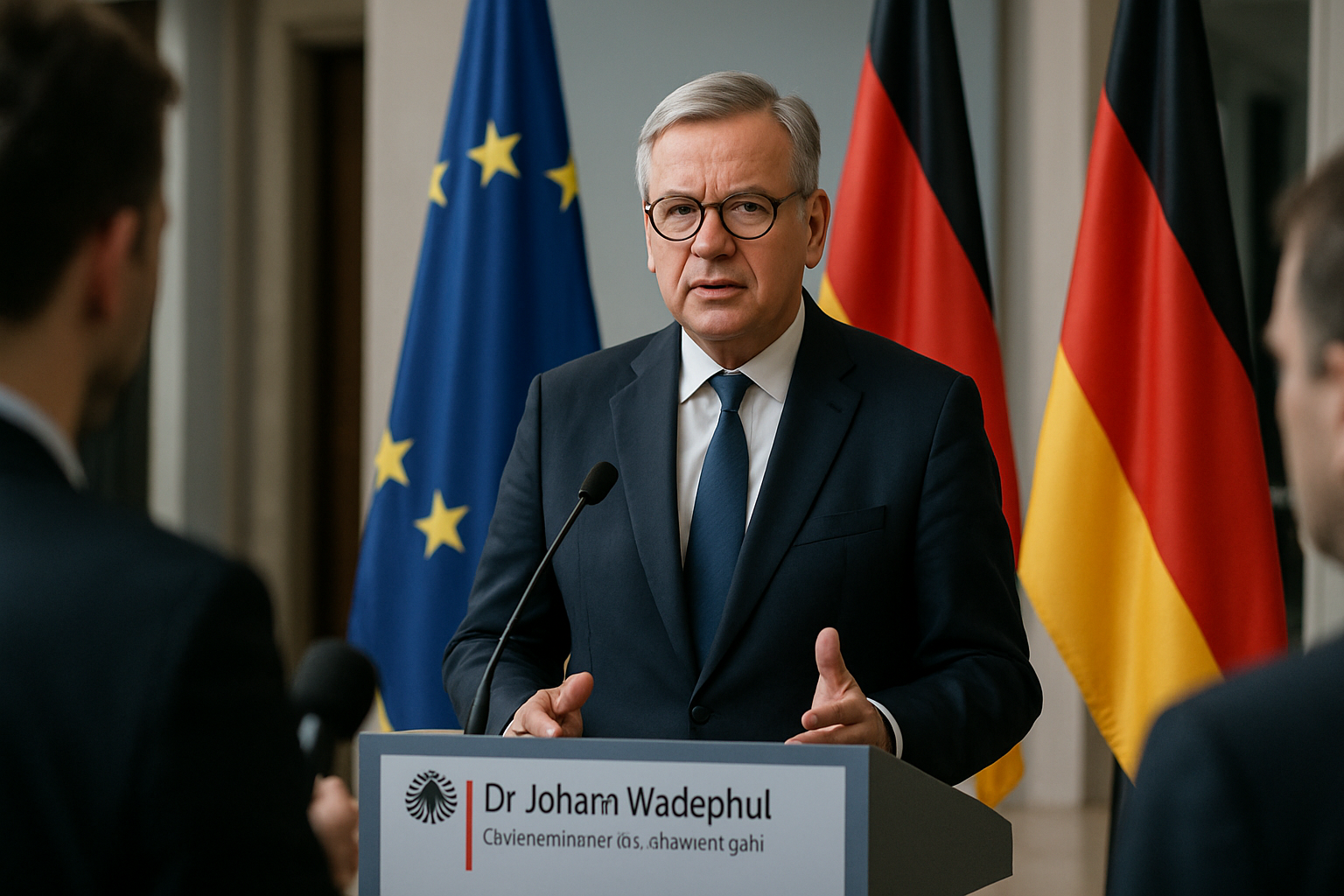
German Foreign Minister Johann Wadephul officially confirmed Monday that Germany will not participate in US-Israeli military operations against Iran, maintaining the country's commitment to diplomatic neutrality as the Middle East crisis reaches unprecedented levels.
Speaking to reporters in Berlin, Wadephul stated that the German government "has no intention of participating" in military actions against Iran, despite the escalating tensions following the death of Iran's Supreme Leader Ali Khamenei and subsequent regional retaliation campaign "Operation True Promise 4."
Germany's Position Amid Regional Crisis
The German declaration comes as the United States and Israel continue "Operation Epic Fury," the largest coordinated military operation in the Middle East since the 2003 Iraq invasion. The campaign has resulted in massive Iranian retaliation across the region, with casualties reported in the UAE, Kuwait, Qatar, and other Gulf states.
Wadephul's announcement represents a significant diplomatic stance, distinguishing Germany's approach from the more aggressive positions taken by Washington and Jerusalem. The minister emphasized that Germany would focus on "defensive measures only," should the situation require any military involvement.
This position aligns with Germany's historical preference for diplomatic solutions in international conflicts, particularly in the volatile Middle East region. However, the decision creates potential friction within NATO and among Western allies, as the US seeks broader international support for its Iran strategy.
Context of Escalating Iran Crisis
The German announcement comes at the culmination of months of failed nuclear diplomacy between the US and Iran. Despite achieving a "broad agreement on guiding principles" during Geneva talks in February 2026 – the most significant diplomatic progress since the JCPOA collapse in 2018 – fundamental disagreements over scope ultimately proved insurmountable.
Iran had excluded ballistic missiles and regional proxy activities as "red lines" from nuclear-only discussions, while US Secretary of State Marco Rubio insisted on comprehensive agreements addressing missiles, armed groups, and human rights. This structural disagreement, unchanged for over a decade, prevented any breakthrough despite unprecedented regional coalition support from Saudi Arabia, UAE, Qatar, and Egypt.
"The German government has no intention of participating in military operations against Iran. We believe defensive measures and diplomatic solutions remain the appropriate response."
— Johann Wadephul, German Foreign Minister
Nuclear Diplomacy Collapse
The current military escalation followed the complete breakdown of nuclear negotiations, despite initial optimism. Iran had been enriching uranium to 60% purity – approaching the 90% weapons-grade threshold – with former IAEA inspector Dr. Yusri Abu Shadi confirming over 400kg of enriched uranium making nuclear weapons "easily achievable."
President Trump's administration deployed an unprecedented dual-carrier naval presence with the USS Gerald R. Ford and USS Abraham Lincoln positioned 800km from Iran's coast, representing approximately one-third of the active US Navy fleet in the region. The military buildup accompanied diplomatic efforts but ultimately presaged the current military confrontation.
European Response Coordination
Germany's position reflects broader European concerns about the rapid escalation from diplomacy to military action. EU High Representative Kaja Kallas has been coordinating emergency responses among member states, with multiple countries activating evacuation protocols for their nationals in the region.
The European approach emphasizes reinforcement of existing naval missions rather than direct military participation in offensive operations. The EU's Aspides naval mission has been strengthened with additional ships responding to maritime security threats, but European leaders remain divided on direct support for US-Israeli military actions.
Regional and Global Implications
Germany's refusal to participate highlights the complex international dynamics surrounding the Iran crisis. While maintaining strong transatlantic ties and NATO commitments, German leadership has consistently advocated for diplomatic solutions over military interventions, particularly in Middle Eastern conflicts.
The decision comes as the crisis has already created unprecedented global disruption. Over 18,000 flights have been cancelled worldwide due to airspace closures, representing the most extensive aviation crisis since COVID-19. Oil prices have surged as Iran threatens to block the Strait of Hormuz, through which 40% of global oil transit passes.
The energy implications are particularly significant for Germany and Europe, with natural gas prices rising 24% as the crisis threatens global supply chains extending far beyond the Middle East region.
Historical Context and Nuclear Governance
The German position must be understood within the broader context of nuclear governance crisis. The New START treaty between the US and Russia expired on February 5, 2026, marking the first time in over 50 years without bilateral nuclear constraints between the superpowers. Combined with China's nuclear expansion and Iran's advanced uranium enrichment program, the international nuclear order faces unprecedented challenges.
Germany has historically played a crucial role in nuclear non-proliferation efforts and has consistently supported diplomatic solutions to nuclear crises. The country's approach to the Iran situation reflects this broader commitment to multilateral diplomacy and arms control mechanisms.
NATO and Alliance Considerations
While Germany's decision not to participate in offensive operations against Iran creates potential tensions within NATO, it does not represent a complete break with alliance solidarity. German officials have emphasized their commitment to defensive measures and have not withdrawn from broader Middle East security cooperation.
The distinction between offensive participation and defensive support reflects Germany's careful balancing of alliance obligations with its preference for diplomatic solutions. This approach has characterized German foreign policy in various Middle Eastern conflicts over the past decades.
Looking Forward: Diplomatic Alternatives
Despite the current military escalation, German officials continue to advocate for renewed diplomatic engagement once the immediate crisis stabilizes. The country's position reflects a longer-term perspective on Middle East stability that prioritizes sustainable political solutions over military interventions.
The German stance also considers the broader implications for European security and energy independence. As the crisis threatens global energy markets and supply chains, European leaders are particularly concerned about the long-term consequences of expanded military operations in the region.
Germany's approach emphasizes the need for multilateral frameworks to address Iran's nuclear program and regional activities, rather than unilateral military actions that could further destabilize an already volatile region.
Strategic Implications
The German decision represents a significant diplomatic statement about the limits of military solutions to nuclear proliferation challenges. As the crisis continues to unfold, Germany's position may influence other European allies and shape broader international responses to the Iran situation.
The emphasis on diplomatic neutrality and defensive measures reflects German strategic thinking about conflict prevention and the importance of maintaining dialogue channels even during military escalations. This approach could prove valuable for future crisis management and post-conflict reconstruction efforts.
As the Middle East faces its most dangerous moment since the end of the Cold War, Germany's commitment to diplomatic solutions over military participation provides an alternative framework for international engagement with the Iran crisis. The long-term implications of this approach will likely influence both transatlantic relations and broader European security policy in the years ahead.