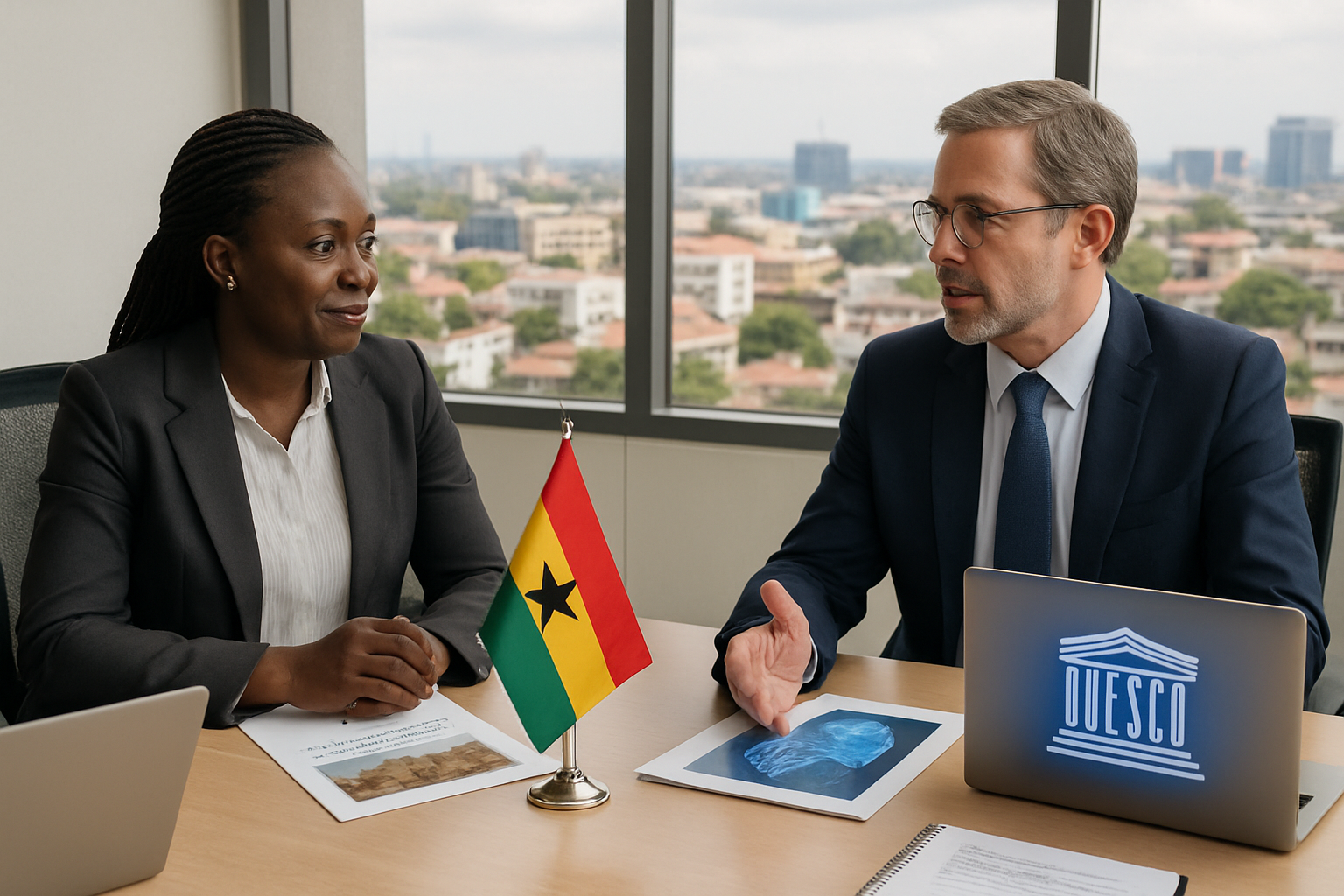
Ghana Tourism Authority and UNESCO have announced a groundbreaking partnership to harness artificial intelligence and cultural heritage preservation for tourism sector advancement, marking a significant milestone in the nation's digital transformation strategy.
Chief Executive Officer of Ghana Tourism Authority, Maame Efua Houadjeto, held strategic discussions with Edmond Moukala, Head of Office and UNESCO Representative to Ghana, at UNESCO's Accra office on February 27, 2026. The high-level meeting focused on strengthening institutional cooperation in culture, education, and artificial intelligence to boost Ghana's tourism development and global competitiveness.
Strategic Vision for Cultural Heritage Integration
The discussions centered on practical measures to deepen cooperation between the GTA and UNESCO in safeguarding Ghana's rich cultural heritage while positioning it as a viable economic asset. Both institutions acknowledged culture as one of Ghana's most potent soft power tools and a strategic pillar for inclusive growth in the increasingly competitive global tourism market.
Speaking during the engagement, CEO Houadjeto emphasized the critical role of cultural preservation in modern tourism development. The partnership represents a sophisticated understanding of how traditional cultural assets can be enhanced through technological innovation without compromising their authenticity or significance.
Artificial Intelligence as Tourism Enhancement Tool
The collaboration places particular emphasis on exploring how artificial intelligence can be harnessed to boost Ghana's tourism development. This approach aligns with global trends where successful tourism destinations are increasingly leveraging AI for visitor experience enhancement, cultural site preservation, and destination marketing optimization.
The partnership occurs within the context of what experts are calling the "2026 Educational Technology Renaissance" – a global phenomenon characterized by thoughtful integration of digital tools with traditional cultural values. This approach has proven successful in countries like Malaysia, which operates the world's first AI-integrated Islamic school, and Singapore's WonderBot 2.0 heritage education system.
Global Context and Competitive Positioning
Ghana's initiative comes at a critical juncture for the global tourism industry, which is experiencing unprecedented transformation. The sector has surpassed pre-pandemic levels with over $570 billion in infrastructure investment surge worldwide. Countries implementing quality-focused strategies that combine cultural authenticity with technological enhancement are demonstrating superior resilience and sustainable growth.
The timing is particularly strategic given global tourism trends. Generation Z travelers, who represent 50% of those making multiple annual trips, are increasingly demanding AI-integrated travel planning combined with authentic cultural experiences. This demographic shift creates significant opportunities for destinations that can successfully balance technological innovation with cultural preservation.
"Culture represents one of Ghana's most potent soft power tools and a strategic pillar for inclusive growth in the global tourism landscape."
— Maame Efua Houadjeto, CEO Ghana Tourism Authority
International Cooperation Framework
The Ghana-UNESCO partnership exemplifies successful international cooperation models that are emerging across Africa. Similar initiatives include Sierra Leone's robotics education programs preparing youth for technology-driven economies, and Rwanda's creative industry development supported by international partnerships.
UNESCO's involvement provides Ghana access to global best practices in cultural heritage preservation and digital integration. The organization's extensive experience in supporting member states' cultural tourism development offers valuable frameworks for implementing AI solutions while maintaining cultural integrity.
Economic Implications and Benefits
The economic implications of this partnership extend beyond immediate tourism revenue. Countries implementing comprehensive cultural tourism strategies with technological enhancement consistently demonstrate improved community resilience, enhanced international competitiveness, and greater success in attracting sustainable investment.
Prevention-first approaches to tourism development, which this partnership represents, generate measurable benefits including reduced infrastructure strain, improved visitor satisfaction, and enhanced cultural preservation outcomes. The economic multiplier effects extend to transportation improvements, cultural industry support, artisan network development, and year-round employment creation.
Implementation Strategy and Timeline
While specific implementation details were not disclosed, the partnership follows successful models from other regions. Croatia's implementation of 62 tourist medical clinics for the 2026 season represents Europe's most extensive seasonal healthcare network, while Rome's Trevi Fountain management system generates €6 million annually through strategic visitor flow control.
The collaboration will likely focus on developing AI-powered visitor guidance systems, digital cultural heritage documentation, and enhanced destination marketing capabilities. These technological tools will serve to amplify Ghana's cultural assets rather than replace traditional tourism experiences.
Regional Leadership Implications
Ghana's partnership with UNESCO positions the nation as a potential leader in West African tourism innovation. The initiative provides a template for other emerging economies seeking to leverage technology for tourism development while maintaining cultural authenticity.
Regional cooperation is increasingly replacing individual destination competition, with countries demonstrating that collaborative approaches yield superior outcomes. Ghana's UNESCO partnership could catalyze broader West African tourism cooperation initiatives, similar to successful Caribbean and European regional tourism frameworks.
Challenges and Opportunities
The partnership faces implementation challenges common to AI tourism initiatives globally. Infrastructure constraints, including the ongoing global memory semiconductor shortage affecting technology deployment until 2027, require innovative solutions and phased implementation approaches.
However, these constraints also create opportunities for efficient, culturally-sensitive technology deployment. Countries successfully implementing AI tourism solutions emphasize human-centered approaches that enhance rather than replace cultural experiences, providing sustainable competitive advantages.
Future Prospects and Global Significance
The Ghana-UNESCO partnership represents more than bilateral cooperation – it exemplifies the sophisticated balance required between technological advancement and cultural preservation in modern tourism development. As the global tourism industry continues transforming toward quality-focused, culturally-authentic experiences, initiatives like this partnership establish crucial precedents.
Success will likely influence international tourism policy discussions and provide practical templates for other developing nations seeking to leverage cultural assets for economic development. The partnership demonstrates that effective tourism modernization requires thoughtful technological tool adaptation serving specific cultural and economic needs rather than standardized solutions.
As Ghana moves forward with this innovative partnership, the nation positions itself at the forefront of sustainable tourism development that honors cultural heritage while embracing technological possibilities. The collaboration with UNESCO ensures that this advancement serves both economic objectives and cultural preservation goals, creating a model for 21st-century tourism development that balances tradition with innovation.