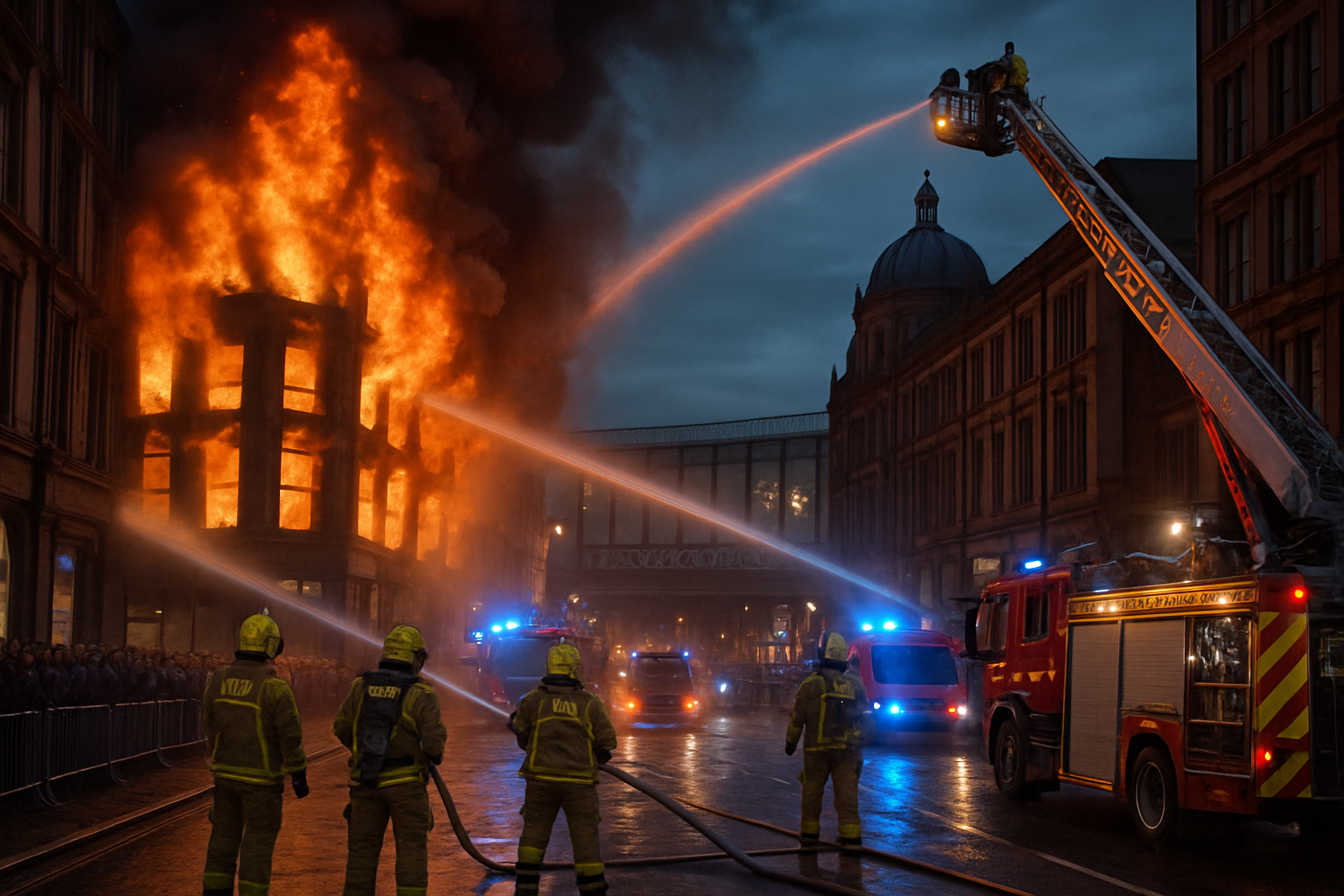
A major fire that began in a vape shop on Union Street has forced the indefinite closure of Glasgow Central Station, Scotland's busiest railway hub, creating unprecedented disruption to the nation's transport network as the four-storey building collapsed after hours of intense flames.
The fire, which started on Sunday afternoon in what sources confirm was a vape shop premises, quickly engulfed the entire Victorian-era building before spreading concerns forced authorities to close Glasgow Central Station as a precautionary measure. By Monday evening, the station remained shuttered with no clear timeline for reopening, leaving thousands of passengers stranded and railway operators scrambling to implement emergency contingency plans.
Building Collapse and Emergency Response
Eyewitness accounts describe a dramatic scene as the four-storey structure on Union Street, located in close proximity to the railway station, became fully engulfed in flames before ultimately collapsing. The proximity of the fire to Glasgow Central Station—Scotland's busiest transport hub handling over 32 million passengers annually—prompted immediate safety protocols that resulted in the complete closure of all rail services.
Lamin Kongira, who witnessed the initial outbreak, told BBC Scotland News that he observed a shopkeeper running from the premises shouting "fire, fire," before attempting to tackle the blaze in its early stages. However, the fire rapidly spread beyond control, necessitating a full emergency response from Scottish Fire and Rescue Service.
The collapsed building created a scene of devastation in the heart of Glasgow's transport quarter, with debris scattered across Union Street and emergency services establishing wide cordons to protect both the public and the adjacent railway infrastructure.
Transport Network in Crisis
The closure of Glasgow Central Station has created a domino effect across Scotland's interconnected transport system, with rail operators warning of "days of disruption" as alternative arrangements struggle to cope with displaced passenger volumes. The station serves as the primary hub for services connecting Glasgow to Edinburgh, London, and destinations throughout Scotland, making its closure particularly impactful.
ScotRail and other operators have implemented emergency bus replacement services, but these cannot match the capacity or speed of regular rail connections. Cross-border services to England have been diverted through alternative routes where possible, though many services face significant delays or cancellations.
The timing of the closure compounds the disruption, as it affects both business travelers and commuters during a critical period. With Glasgow Central handling approximately 38 million passenger journeys annually, even temporary closure creates logistics challenges that ripple throughout the Scottish economy.
Investigation and Safety Concerns
While the exact cause remains under investigation, preliminary reports point to the fire originating within the vape shop premises on Union Street. The rapid spread and intensity of the blaze have raised questions about fire safety protocols in commercial buildings adjacent to critical infrastructure.
Scottish authorities have launched a comprehensive investigation involving multiple agencies, including Police Scotland, Scottish Fire and Rescue Service, and railway safety inspectors. The probe will examine both the immediate cause of the fire and the adequacy of existing safety measures designed to protect transport infrastructure from adjacent commercial risks.
The incident highlights broader concerns about the concentration of critical transport infrastructure in dense urban areas where commercial and residential properties create potential hazards. Glasgow Central's position in the city center, while convenient for passengers, places it at risk from incidents in surrounding buildings.
Economic Impact and Business Disruption
The closure of Glasgow Central Station is generating significant economic impact beyond immediate transport disruption. Hotels, restaurants, and businesses that depend on rail passenger footfall are experiencing immediate revenue losses, while the broader Scottish economy faces productivity impacts from disrupted business travel and commuting patterns.
Tourism operators report concerns about visitor confidence, particularly given Glasgow's role as a gateway to Scottish destinations. International travelers arriving via Edinburgh or other airports face additional journey complexity reaching Glasgow and onward destinations, potentially affecting Scotland's tourism recovery plans.
Freight operations, while less visible to the public, face similar disruptions that could affect supply chains serving Scottish businesses and consumers. The integrated nature of Scotland's rail network means that Glasgow Central's closure creates bottlenecks that extend far beyond the immediate Glasgow area.
Historical Context and Infrastructure Vulnerability
This incident recalls previous disruptions to major European transport hubs, though few have matched the scale of impact created by Glasgow Central's closure. The station, opened in 1879 and expanded multiple times, represents a classic example of Victorian-era transport infrastructure integrated into dense urban fabric—a design that creates both accessibility and vulnerability.
Recent years have seen increased attention to transport infrastructure resilience, particularly following extreme weather events and security concerns. However, the Glasgow fire demonstrates that adjacent commercial premises can create risks that traditional transport security measures may not fully address.
The incident occurs during a period of significant investment in Scottish transport infrastructure, including ongoing upgrades to rail networks and stations. The disruption could influence future planning approaches that balance accessibility with security and safety considerations.
Recovery Timeline and Contingency Measures
Railway operators indicate that Glasgow Central Station will remain closed for "a further day on Tuesday" at minimum, with the possibility of extended closure depending on structural assessments of both the collapsed building and potential damage to station infrastructure. Engineers must evaluate potential impacts from heat, smoke, and debris before declaring the facility safe for resumed operations.
Alternative transport arrangements include enhanced bus services, temporary coach connections to Edinburgh, and redirected rail services through Glasgow Queen Street where capacity permits. However, these measures cannot fully compensate for Glasgow Central's capacity and connectivity.
The recovery process will likely involve coordination between multiple agencies, including Network Rail, ScotRail, local authorities, and emergency services. Lessons learned from this incident may influence future emergency response protocols and infrastructure protection measures throughout Scotland's transport network.
Broader Implications for Transport Security
The Glasgow Central incident raises important questions about protecting critical transport infrastructure from risks posed by adjacent commercial properties. While terrorist attacks and extreme weather events receive significant attention in transport security planning, fires originating in nearby businesses represent a different category of risk that may require enhanced mitigation strategies.
European transport authorities will likely examine the Glasgow situation for lessons applicable to their own major stations located in dense urban environments. The incident demonstrates how quickly localized commercial fires can escalate to create national-level transport disruption when they affect key infrastructure nodes.
As Scotland works to restore normal rail services, the investigation findings and recovery process will provide valuable insights for transport resilience planning. The challenge lies in balancing the accessibility and urban integration that make stations like Glasgow Central successful with the security measures needed to protect them from various hazard sources.
The fire's impact on Scotland's transport network serves as a reminder of the interconnected nature of modern infrastructure and the far-reaching consequences when key nodes face disruption, regardless of the cause. As recovery efforts continue, the focus remains on both restoring services and implementing measures to prevent similar disruptions in the future.