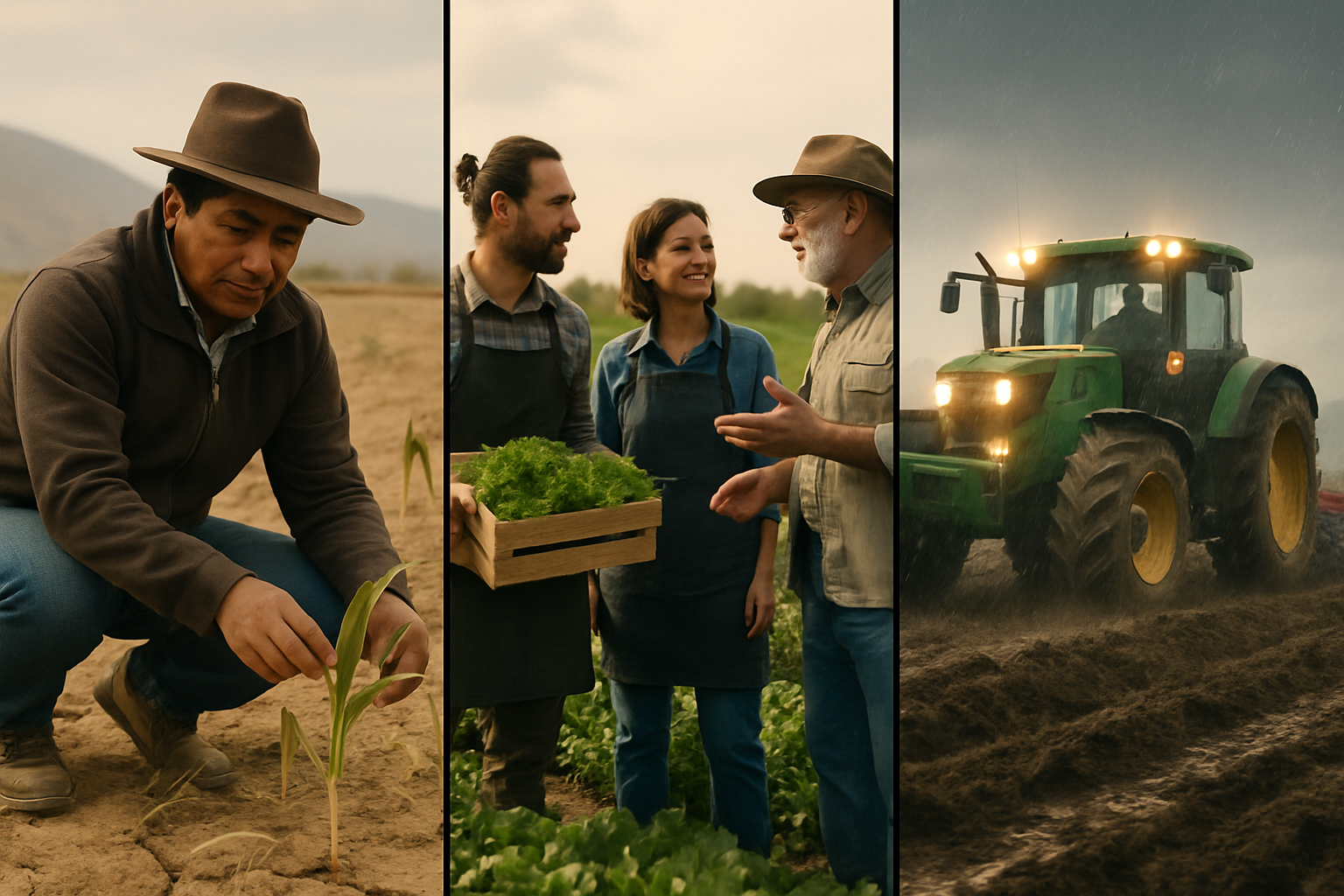
Agricultural sectors across five nations are grappling with an unprecedented convergence of climate change, economic pressures, and supply chain disruptions as the world experiences its 20th consecutive month of temperatures exceeding 1.5°C above pre-industrial levels.
From Bolivia's strategic push toward biotechnology solutions to Latvia's farmers questioning their economic viability, the global agricultural landscape reveals stark contrasts in how different regions are adapting to mounting pressures. Meanwhile, Bosnia and Herzegovina faces immediate livestock challenges, and Serbia seeks stabilization measures for its dairy market.
Bolivia Embraces Agricultural Biotechnology
In a significant policy shift, Bolivia's Minister of Productive Development, Rural Areas and Water, Óscar Mario Justiniano, announced ambitious plans to incorporate biotechnology into the nation's agricultural sector. The initiative represents a cornerstone of recent Bolivia-Brazil summit agreements aimed at strengthening national production through strategic partnerships.
Central to Bolivia's transformation is the introduction of improved seeds, including HB4 technology for soybeans specifically designed to resist water stress conditions. "This allows producers to have better technological tools applied to seeds," Justiniano explained, highlighting the critical role of drought-resistant varieties in adapting to increasingly unpredictable weather patterns.
"This allows producers to have better technological tools applied to seeds to face phenomena like drought and optimize the country's logistical infrastructure."
— Óscar Mario Justiniano, Bolivia's Minister of Development
The biotechnology push builds on Bolivia's broader agricultural partnerships, particularly with India, which have demonstrated the effectiveness of South-South cooperation in sharing agricultural expertise. These partnerships represent a shift away from traditional North-South aid models toward peer-to-peer knowledge transfer that respects cultural contexts while introducing beneficial innovations.
European Agriculture Under Economic Strain
In stark contrast, Latvia's agricultural sector faces an existential crisis. Juris Lazdiņš, chairman of the "Zemnieku saeima" (Farmers' Parliament), warned that rising fuel costs are forcing many farmers to question whether farming remains economically viable. The crisis has reached such severity that some agricultural operations are considering complete shutdown.
"Due to high fuel prices, some farmers doubt whether it's worth working this year," Lazdiņš stated during a TV3 interview, highlighting how global energy markets are directly impacting local food production decisions.
The situation in Latvia reflects broader European agricultural challenges, where mounting production costs, regulatory pressures, and climate volatility are creating what experts describe as a "perfect storm" for traditional farming operations. This spring could prove decisive for the entire sector as farmers weigh immediate survival against long-term sustainability.
Livestock Sector Faces Multiple Pressures
Bosnia and Herzegovina's poultry industry confronts severe challenges following an avian influenza outbreak that triggered an EU export ban on chicken meat. The suspension has caused significant financial losses for poultry producers, exposing the vulnerability of agricultural sectors dependent on international markets.
The outbreak demonstrates how quickly food safety issues can cascade through interconnected global supply chains, particularly during climate stress periods that create optimal conditions for pathogen spread.
Meanwhile, Serbia has achieved a breakthrough in dairy market stabilization through negotiations between the Ministry of Agriculture, producer associations, and dairy companies. Representatives reached concrete agreements to stabilize milk markets, addressing price volatility that has plagued the sector amid broader economic uncertainties.
Climate Change as the Underlying Driver
These agricultural challenges unfold against the backdrop of unprecedented global warming. January 2026 marked the hottest month in recorded history, extending a streak of 20 consecutive months exceeding critical temperature thresholds. This sustained warming has fundamentally altered traditional farming cycles, water availability, and pest management patterns worldwide.
The convergence of climate pressures with economic and policy challenges creates what agricultural experts term "compound stress" on food systems. Traditional farming practices developed over centuries for stable climate conditions now prove inadequate for rapidly changing environmental realities.
Technology-Traditional Knowledge Integration
Successful agricultural adaptation increasingly requires sophisticated integration of cutting-edge technology with traditional farming knowledge. Bolivia's biotechnology initiative exemplifies this approach, combining modern genetic tools with established agricultural expertise while respecting community structures.
Similarly, agricultural innovations across other regions demonstrate that purely technological solutions ignoring local traditions and community needs often fail to achieve sustainable results. The most effective approaches balance modern science with indigenous wisdom and community-based management systems.
Economic and Social Implications
The agricultural crisis extends far beyond farm gates, creating cascading effects throughout rural economies. In Latvia, the potential shutdown of farming operations threatens not only food production but also rural employment, community stability, and cultural traditions tied to agricultural life.
Bosnia's poultry export ban illustrates how quickly agricultural disruptions can affect national economies, particularly in countries where agricultural exports constitute significant portions of foreign currency earnings. The interconnected nature of global food systems means that local crises rapidly become international concerns.
Looking Forward: Adaptation Strategies
Despite mounting challenges, agricultural sectors worldwide are demonstrating remarkable adaptive capacity when supported by appropriate policies, infrastructure, and international cooperation. Bolivia's strategic biotechnology adoption, Serbia's stakeholder negotiations, and even Latvia's honest assessment of economic realities all represent different aspects of necessary agricultural transformation.
Success factors consistently include community ownership of development processes, transparent governance structures, sustained political commitment, and adaptive management capabilities that can respond to rapidly changing conditions. International cooperation that respects local autonomy while providing technical and financial support proves more effective than traditional top-down development models.
The window for building resilient, equitable food systems is narrowing rapidly as environmental change accelerates and population growth increases demands on agricultural resources. However, the diverse approaches demonstrated across Bolivia, Latvia, Bosnia, and Serbia provide templates for scaling successful interventions globally while maintaining the flexibility and innovation necessary for continued adaptation during these unprecedented agricultural challenges.