Agricultural communities across four continents are confronting unprecedented environmental challenges as the 20th consecutive month of global temperatures exceeding 1.5°C above pre-industrial levels marks the longest sustained warming period in recorded human history, forcing rapid adaptation of farming practices developed over centuries.
From Algeria's preparation for the 2025-2026 harvest season to the Philippines' struggling cabbage farmers caught in the crossfire of international conflicts, the global agricultural sector faces a complex web of climate, economic, and geopolitical pressures that demand innovative solutions and unprecedented international cooperation.
Algeria Prepares for Critical Harvest Season
In Algeria, Agriculture Minister Yasin Walid led a national meeting with grain and legume cooperative directors on March 25, preparing for the 2025-2026 harvest and threshing campaign scheduled to begin in mid-April. The gathering focused on evaluating current plowing and sowing operations while assessing crop development and germination conditions across different regions of the country.
The timing of these preparations is critical, as Algeria's agricultural sector must adapt to increasingly unpredictable weather patterns. The country's approach reflects a broader trend across North Africa, where traditional farming cycles are being adjusted to accommodate climate volatility while maintaining food security for growing populations.
Climate Stress Threatens Regional Food Systems
The challenges facing Algeria are echoed across the Mediterranean and beyond. In Bosnia and Herzegovina, agricultural communities are watching anxiously as meteorologists issue orange weather warnings for dramatic temperature changes, with predictions of snow, sleet, and storm-force winds threatening fruit orchards already in full bloom.
This weather volatility particularly affects fruit growers who have committed significant resources to orchards that are now vulnerable to unseasonable cold snaps. The timing of these weather events, occurring when trees are in their most vulnerable blooming stage, illustrates the precarious balance farmers must maintain in an era of climate unpredictability.
Food Safety Concerns Intensify Under Climate Pressure
France faces a different but equally serious agricultural challenge as the French Agency for Food, Environmental and Occupational Health Safety (ANSES) calls for drastic reduction in cadmium concentration in phosphate fertilizers. The agency's research reveals that basic food products including cereals, potatoes, and vegetables are contaminated with this heavy metal, with the French population, particularly children, showing widespread exposure.
"The population must be protected from chronic exposure to cadmium through agricultural practices that prioritize soil health and long-term food safety."
— ANSES Research Team
This contamination issue highlights how intensive agricultural practices, originally developed to increase productivity, can create long-term environmental and health consequences that become more problematic as climate stress increases the vulnerability of both crops and consumers.
Geopolitical Conflicts Compound Agricultural Pressures
The interconnected nature of global food systems becomes painfully evident in the Philippines, where cabbage farmers are harvesting crops at a loss as prices plunge while fuel costs soar due to the ongoing conflict with Iran. This situation demonstrates how geopolitical tensions can cascade through agricultural supply chains, affecting farmers thousands of miles away from conflict zones.
Filipino farmers face the impossible choice between harvesting crops that won't cover production costs or leaving them to rot in the fields. The surge in fuel prices affects every aspect of agricultural operations, from running irrigation equipment to transporting produce to market, creating a crisis that extends far beyond national borders.
Technology and Traditional Knowledge Convergence
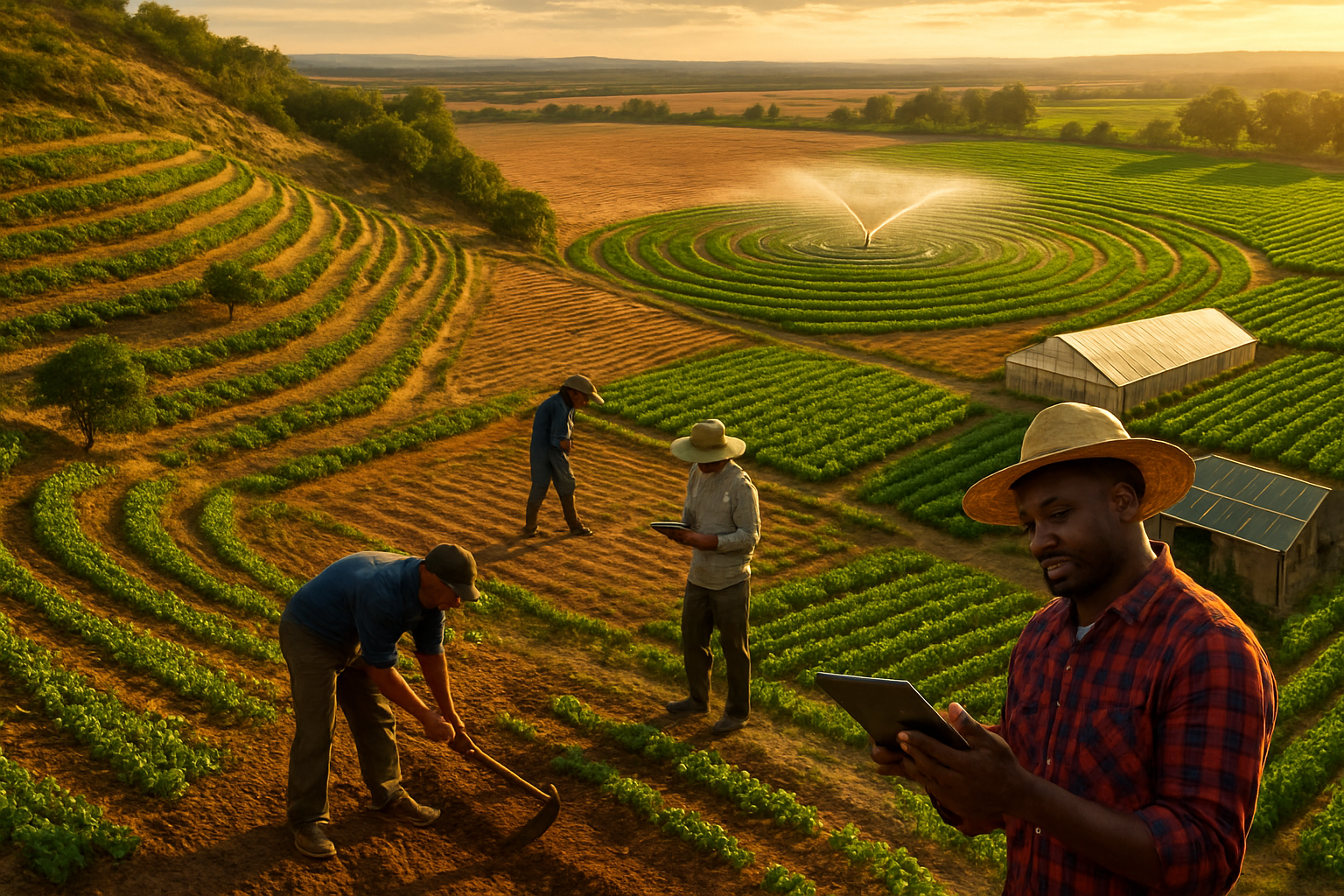
Despite these challenges, agricultural communities worldwide are demonstrating remarkable adaptability. Drawing on historical agricultural memory from recent innovations, successful adaptations consistently show sophisticated integration of cutting-edge technology with traditional farming knowledge and community-based management systems.
The most effective responses to climate stress combine modern precision agriculture techniques with indigenous farming practices that have sustained communities for generations. This hybrid approach respects cultural knowledge while incorporating beneficial technological innovations that can help farmers adapt to rapidly changing environmental conditions.
South-South Cooperation Emerges as Key Strategy
A significant trend emerging from the current crisis is the increased reliance on South-South cooperation, where developing nations share expertise through peer partnerships rather than depending on traditional North-South aid relationships. This approach has proven more culturally appropriate and economically sustainable than conventional development assistance.
Countries facing similar agricultural challenges are increasingly collaborating directly, sharing technologies, crop varieties, and adaptation strategies that have been tested in comparable environmental conditions. This peer-to-peer knowledge transfer accelerates the adoption of successful innovations while respecting local contexts and priorities.
Economic Implications Beyond the Farm Gate
The agricultural innovations emerging from this crisis function as comprehensive economic development engines extending far beyond farm-level improvements. Successful adaptation creates sustainable rural employment, enhances food security, and generates economic multiplier effects that benefit entire regions through improved transportation networks, processing capabilities, and international trade opportunities.
When farmers can maintain productivity despite climate challenges, the benefits ripple through supply chains, supporting jobs in logistics, processing, retail, and export sectors. Conversely, agricultural failures create economic devastation that extends throughout rural and urban communities dependent on stable food systems.
Climate Context Demands Urgent Action
These agricultural developments occur against the backdrop of unprecedented environmental stress. January 2026 marked the hottest month in recorded history, extending a streak of sustained warming that has fundamentally altered atmospheric systems beyond natural recovery mechanisms.
The sustained warming is overriding natural climate variability, including La Niña cooling effects that historically provided some temperature moderation. This creates a "perfect storm" scenario where agricultural systems must adapt not just to higher average temperatures, but to increased variability and the breakdown of seasonal patterns that have guided farming for millennia.
Implementation Challenges and Success Factors
Despite the innovation and adaptability shown by agricultural communities, significant implementation challenges remain. Funding sustainability is particularly critical for developing nations, where immediate economic pressures often override long-term environmental considerations. Technical capacity building requires sustained investment in education, training, and institutional development that extends beyond initial technology deployment.
Climate change itself disrupts project timelines, requiring adaptive management systems capable of responding to rapidly changing conditions. However, the diversity of approaches being developed provides resilience against dependencies on single solutions, offering multiple adaptation pathways for different geographical and cultural contexts.
"Success factors consistently include community ownership of development processes, transparent governance structures, sustained political commitment that transcends electoral cycles, and international cooperation that respects local autonomy while providing essential technical and financial support."
— Agricultural Development Analysts
The Window for Action Narrows
The window for building resilient and equitable food systems is narrowing rapidly as environmental change accelerates and population growth increases demands on agricultural resources. Yet the agricultural sector is demonstrating remarkable adaptive capacity when supported by appropriate policies, infrastructure investments, market access, and international cooperation.
The tools and knowledge exist for comprehensive responses to these challenges, as demonstrated by successful innovations emerging from agricultural communities worldwide. The question now is whether these innovations can be scaled rapidly enough while maintaining the effectiveness principles that ensure community benefit.
Strategic Implications for Global Food Security
The convergence of climate pressures, supply chain vulnerabilities, and economic instabilities is creating a critical decision point for global food security policy. The coordination of immediate crisis response with long-term resilience building has become crucial for food systems serving growing populations amid accelerating environmental change.
Success depends on sustained international cooperation, enhanced coordination across multiple sectors and scales, and increased financial commitments that recognize food security as essential infrastructure for human prosperity and planetary sustainability. The human dimension remains central to these efforts, as millions of farmers, food workers, and vulnerable communities depend on stable and fair global food systems.
Looking Toward 2026 and Beyond
The agricultural developments and challenges documented across these four nations in March 2026 may prove decisive for global food security trajectories in the decades ahead. The choices made during this critical period—regarding agricultural adaptation, international cooperation, and innovation investment—could determine whether food production systems can keep pace with environmental change while serving growing populations.
As we enter what climatologists call the "critical climate action decade," the agricultural sector's response to these unprecedented challenges will test humanity's capacity to adapt, innovate, and cooperate in the face of accelerating environmental change. The stakes have never been higher, but the demonstrated ingenuity and resilience of farming communities worldwide provide grounds for cautious optimism in building sustainable and resilient food systems for the future.