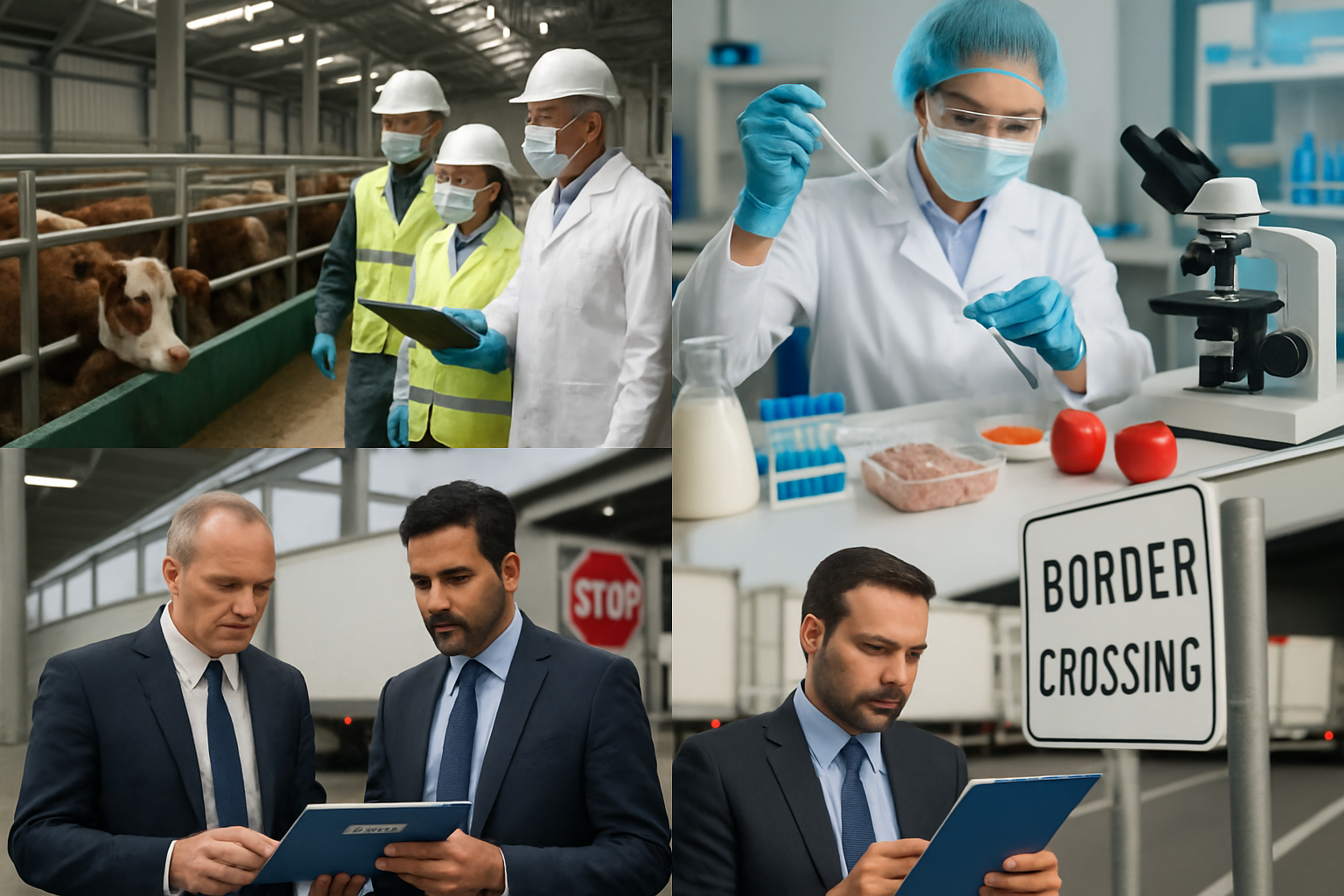
Agricultural authorities across multiple continents are confronting a convergence of livestock disease outbreaks, food safety violations, and trade restrictions that threatens to destabilize global food supply chains during the most challenging agricultural period in recent history.
The crisis centers on Cyprus, where foot-and-mouth disease has now spread beyond initial containment zones, forcing authorities to recruit veterinarians from Slovakia under temporary licensing arrangements. The outbreak, which began in February 2026, has already resulted in the culling of over 17,000 animals and threatens Cyprus's disease-free status crucial for agricultural exports.
Meanwhile, Mozambique has implemented a complete ban on pork imports from neighboring Malawi following swine fever outbreaks, while Romania has secured new export opportunities with China for processed poultry and dairy products, highlighting the complex interplay between disease management and international trade.
Cyprus Disease Crisis Reaches Critical Phase
The Cypriot Veterinary Council has approved temporary practice licenses for four Slovak veterinary officials to assist with the foot-and-mouth disease outbreak that has overwhelmed local capacity. The Pancyprian Grain Producers' Organization has called for unprecedented measures, including the potential closure of crossing points to and from the northern part of the island.
"The state should consider closing crossing points to and from the north as a drastic measure to contain the spread of foot-and-mouth disease," the organization stated, while expressing solidarity with affected livestock farmers across Cyprus.
— Pancyprian Grain Producers' Organization
The disease outbreak has prompted intensified checks along the ceasefire line, as authorities work to prevent further viral spread. The crisis comes at a particularly challenging time, as the United Nations had been hoping for the opening of two new crossing points in the region.
When contacted by Planet News, UNFICYP spokesperson Aleem Siddique maintained that "this is a decision for the authorities, we are peacekeepers," emphasizing the organization's neutral stance on the containment measures.
Regional Disease Containment Measures Intensify
In Mozambique, livestock authorities have implemented a comprehensive ban on pork products from Malawi following confirmed swine fever outbreaks. The prohibition extends to all pig movement between the two countries, typically conducted through the Tete border crossing in southern Malawi.
According to Cláudio Gune, head of Mozambique's Livestock Department, the measures represent a necessary precautionary response to protect the country's domestic pig population from the highly contagious African swine fever virus.
The regional response demonstrates the interconnected nature of agricultural security, as disease outbreaks in one country rapidly trigger protective measures across international borders, potentially disrupting established trade relationships and food supply chains.
Trade Opportunities Emerge Amid Crisis
While disease concerns restrict some trade flows, new opportunities are emerging elsewhere. Romania's Agriculture Minister Florin Barbu signed a significant agricultural cooperation protocol with his Chinese counterpart Han Jun during a visit to China, opening access to the world's largest consumer market.
The agreement permits Romanian exports of dairy products, fish, and processed poultry to China, representing a major breakthrough for Romanian agricultural producers seeking market diversification.
"We are opening the largest market in the world for Romanian products," Barbu declared, highlighting the strategic importance of the China agreement.
— Florin Barbu, Romania's Agriculture Minister
The Romanian-Chinese agricultural protocol demonstrates how countries are actively pursuing new market opportunities even as disease outbreaks create restrictions elsewhere, reflecting the dynamic nature of global agricultural trade relationships.
Climate Pressures Compound Agricultural Challenges
These agricultural challenges are unfolding against the backdrop of unprecedented climate conditions, with March 2026 marking the 20th consecutive month of global temperatures exceeding 1.5°C above pre-industrial levels. The sustained warming period represents the longest streak of extreme temperatures in recorded history, fundamentally altering traditional farming cycles and disease patterns.
The combination of climate stress and disease pressure creates optimal conditions for pathogen spread while simultaneously challenging agricultural production systems designed for more stable environmental conditions. Traditional seasonal disease patterns have been disrupted, requiring rapid adaptation from veterinary and agricultural authorities worldwide.
International Cooperation Under Strain
The crisis highlights both the strengths and limitations of international agricultural cooperation. While the European Union has provided Cyprus with vaccine supplies and technical support, and Slovakia has offered veterinary expertise, the rapid spread of diseases across borders demonstrates the challenges facing coordinated response efforts.
The African Continental Free Trade Agreement framework is being tested as countries like Mozambique implement trade restrictions that could affect regional food security objectives. Similarly, the recruitment of foreign veterinary professionals in Cyprus shows how emergency situations can require unprecedented cooperation arrangements.
Food Safety Standards Under Pressure
Beyond disease outbreaks, food safety enforcement systems are facing mounting pressure. The convergence of climate stress, supply chain disruptions, and increased pathogen activity is straining traditional food safety protocols developed for more stable environmental conditions.
Countries are reporting increased challenges in maintaining food safety standards as extreme weather events disrupt storage and transportation systems, while warmer temperatures create optimal conditions for foodborne pathogen growth.
Economic Implications Ripple Across Sectors
The agricultural crisis extends beyond immediate health concerns to significant economic implications. Cyprus's tourism sector faces potential impacts as the foot-and-mouth outbreak coincides with the approach of peak tourist season. The country's halloumi industry, which depends on disease-free status for international exports, faces particular vulnerability.
Insurance costs for agricultural operations are rising globally as disease outbreaks become more frequent and severe. Molecular testing requirements are increasing, demanding substantial infrastructure investments from food producers and processors.
Consumer confidence in multinational food corporations continues to decline, with measurable shifts toward local sourcing and simplified supply chains as people seek greater transparency and reliability in their food systems.
Prevention-Focused Transformation Required
Agricultural experts increasingly identify 2026 as a critical transformation turning point, requiring a fundamental shift from reactive crisis management to prevention-focused approaches that integrate traditional agricultural wisdom with modern safety science.
The European Food Safety Authority is developing standardized international protocols and coordinated early warning systems to better address cross-border contamination and disease spread. Enhanced molecular testing capabilities are being deployed to detect heat-stable toxins that can survive conventional processing methods.
Success in managing these complex challenges depends on sustained political commitment, adequate funding for prevention systems, comprehensive oversight capabilities, and unprecedented levels of international cooperation addressing both immediate safety threats and long-term climate vulnerabilities.
Looking Forward: Building Resilient Food Systems
The convergence of livestock disease outbreaks, food safety challenges, and climate pressures during March 2026 represents a critical test of global food system resilience. The crisis demonstrates both the vulnerabilities inherent in interconnected agricultural networks and the adaptive capacity of international cooperation mechanisms.
As countries navigate this complex landscape, the choices made in 2026 may prove decisive for global food system trajectories in the decades ahead. The window for building resilient, equitable food systems is narrowing rapidly as environmental pressures intensify, making coordinated international action more crucial than ever.
The human dimension remains central to these challenges, with millions of farmers, food workers, and vulnerable communities depending on stable and fair global food systems that balance immediate humanitarian needs with long-term sustainability requirements during this unprecedented period of agricultural transformation.