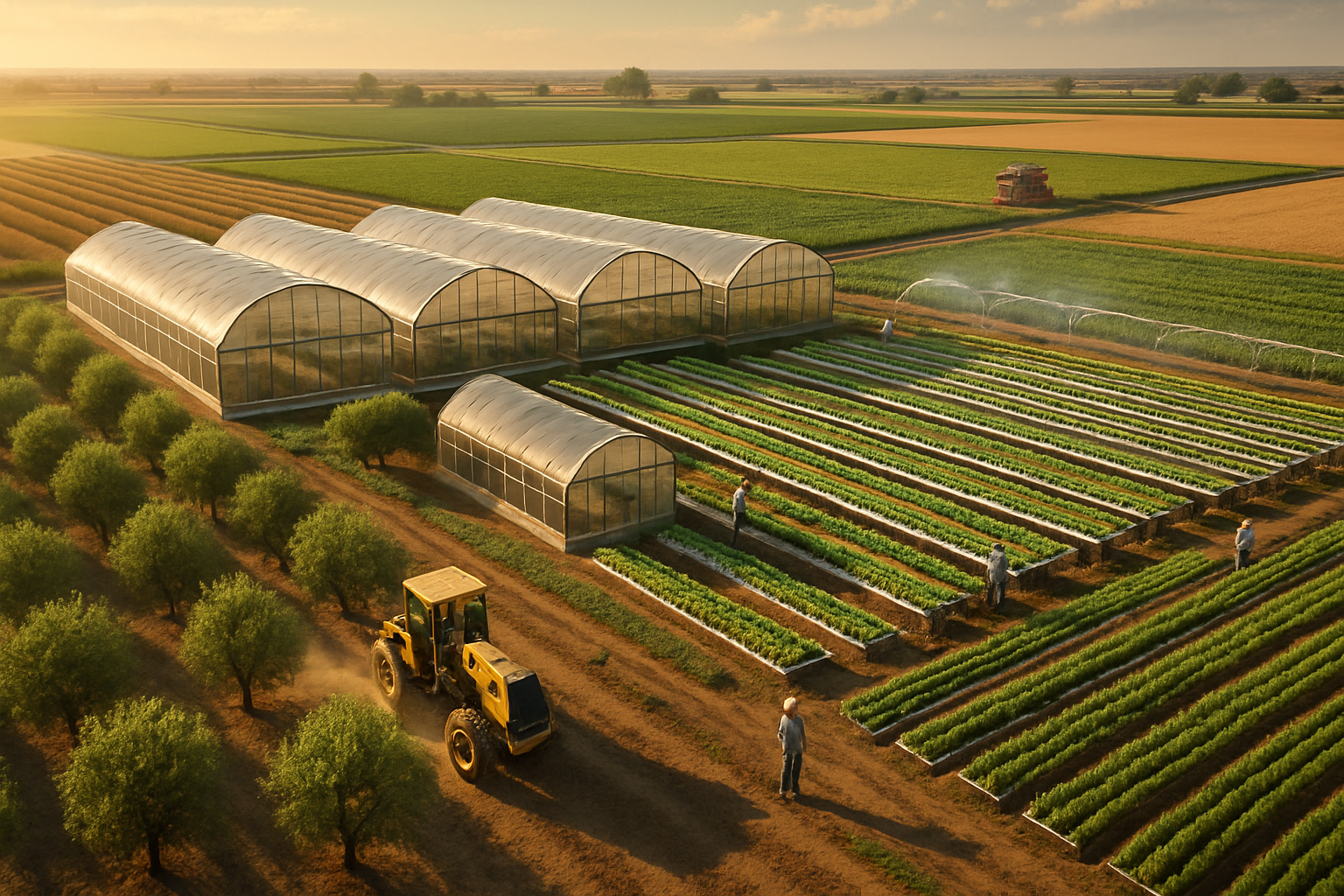
A comprehensive analysis of agricultural developments across Australia, Bulgaria, and Ghana reveals a complex landscape where trade opportunities collide with food safety concerns, highlighting the urgent need for modernized agricultural policies during an era of accelerating climate change.
Australia's Almond Industry Breaks Export Records
Australian almond producers have achieved unprecedented success as the ongoing trade war between the United States and China creates unexpected opportunities for alternative suppliers. The industry has reached the remarkable milestone of $1.3 billion in value, demonstrating how geopolitical tensions can reshape global agricultural markets.
This success comes at a critical time when traditional trade relationships are being restructured. As China reduces its dependence on American agricultural products due to trade tensions, countries like Australia are positioned to fill the supply gap with high-quality alternatives. The almond industry's achievement represents more than just impressive export numbers—it showcases Australia's capacity to scale up production and meet international demand standards.
The timing couldn't be more significant. With global food security concerns mounting and supply chain vulnerabilities exposed by recent crises, Australia's agricultural sector is proving its resilience and adaptability. This success aligns with broader patterns of South-South cooperation and trade diversification that are reshaping international agricultural commerce.
Bulgaria's Food Safety Enforcement Intensifies
Meanwhile, in Eastern Europe, Bulgaria has implemented rigorous food safety protocols following concerns over imported agricultural products. The Bulgarian Food Safety Agency (BAFH) conducted comprehensive testing of sunflower seeds imported from Argentina, taking samples immediately after the vessel's arrival at Varna port on February 25, 2026.
"The analysis shows lead content, cadmium levels, and other parameters that must comply with current European legislation requirements."
— Bulgarian Food Safety Agency Statement
This heightened vigilance reflects growing awareness of food safety vulnerabilities in international supply chains. The Bulgarian approach demonstrates proactive monitoring systems designed to prevent contaminated products from entering the European market. Such measures are becoming increasingly important as climate change affects growing conditions worldwide, potentially altering the safety profiles of agricultural products.
The focus on sunflower seeds from Argentina is particularly relevant given the ongoing challenges in global agricultural trade. Countries are implementing more stringent testing protocols to ensure imported food products meet domestic safety standards, creating additional layers of complexity in international agricultural commerce.
Ghana's School Feeding Revolution
In West Africa, Ghana is pioneering innovative approaches to nutrition and agricultural development through its expanding "Nkoko Nkitinkiti" (small-scale poultry) program. This government initiative, which translates to "small-scale poultry" in the local Twi language, is being integrated into the country's School Feeding Programme to improve nutritional outcomes for students.
The program represents a sophisticated understanding of food security that goes beyond mere production to encompass nutrition, education, and sustainable livelihoods. By connecting poultry farming with school feeding programs, Ghana is creating multiple beneficial outcomes: improved student nutrition, support for local farmers, and development of sustainable food systems.
This initiative builds on Ghana's broader agricultural transformation efforts, including recent achievements in cocoa processing and export development. The integration of livestock development with educational nutrition programs demonstrates how developing nations are creating innovative solutions that address multiple challenges simultaneously.
Climate Change Amplifies Agricultural Challenges
These developments occur during the 18th consecutive month of global temperatures exceeding 1.5°C above pre-industrial levels, creating unprecedented stress on agricultural systems worldwide. The sustained warming is fundamentally altering traditional farming cycles, water availability, and pest management practices across all regions.
From Australia's almond orchards adapting to changing precipitation patterns to Bulgaria's enhanced food safety protocols responding to climate-altered growing conditions, agricultural systems are experiencing rapid transformation. Traditional approaches that worked for decades are being reevaluated as environmental conditions shift beyond historical norms.
The climate context makes successes like Australia's almond exports even more remarkable, as producers must navigate both market opportunities and environmental challenges. Similarly, Ghana's school feeding program represents climate adaptation through diversification—reducing dependence on single crops while building resilient local food systems.
Technology Meets Traditional Knowledge
Across all three regions, successful agricultural adaptation requires sophisticated integration of cutting-edge technology with traditional farming knowledge. Australia's almond success builds on generations of agricultural expertise combined with modern irrigation, processing, and quality control systems. Bulgaria's food safety protocols leverage advanced testing technology while respecting traditional European food safety standards.
Ghana's poultry program exemplifies this synthesis by incorporating modern livestock management techniques with traditional community-based farming practices. The success depends on respecting existing social structures while introducing beneficial innovations that enhance rather than replace local knowledge systems.
Economic Implications and Market Transformation
The economic implications of these agricultural developments extend far beyond the immediate sectors involved. Australia's almond success contributes significantly to export earnings while demonstrating the country's capacity to respond rapidly to changing global market conditions. This flexibility becomes increasingly valuable as trade relationships continue to evolve.
Bulgaria's enhanced food safety measures, while adding costs to importation processes, ultimately protect consumer health and maintain confidence in the food supply system. Such investments in food safety infrastructure are proving essential as global supply chains become more complex and climate change introduces new contamination risks.
Ghana's school feeding program creates economic multiplier effects through rural employment, improved educational outcomes, and enhanced food security. By connecting agricultural development with social programs, the country is creating sustainable economic development that serves multiple policy objectives simultaneously.
International Cooperation and Knowledge Sharing
These three case studies illustrate the importance of international cooperation in addressing contemporary agricultural challenges. Australia's almond industry benefits from trade relationships with China, Bulgaria's food safety standards align with European Union regulations, and Ghana's agricultural programs receive support from international development organizations.
The pattern reflects broader trends toward South-South cooperation, where developing nations share expertise and resources rather than relying solely on traditional North-South aid relationships. Countries are increasingly learning from peers facing similar challenges, creating more sustainable and culturally appropriate development approaches.
Future Implications for Global Food Security
The February 2026 agricultural developments across Australia, Bulgaria, and Ghana provide templates for addressing global food security challenges through diverse approaches. Quality-focused production, strategic food safety protocols, and integrated nutrition programs represent different but complementary strategies for building resilient food systems.
Success factors consistently include community ownership, international cooperation, technology-traditional knowledge synthesis, and adaptive management responding to changing environmental conditions. These principles are becoming essential as agricultural systems worldwide navigate accelerating climate change, evolving trade relationships, and increasing food safety requirements.
The window for building resilient, equitable food systems is narrowing rapidly, making the innovations and successes documented in February 2026 crucial for global food security planning. Whether through export market development, enhanced safety protocols, or integrated nutrition programs, countries are demonstrating that effective agricultural development requires comprehensive approaches addressing production, safety, and social objectives simultaneously.
As the global agricultural community confronts unprecedented challenges from climate change, trade disruptions, and food safety concerns, the diverse experiences of Australia, Bulgaria, and Ghana offer valuable insights for scaling successful interventions worldwide while maintaining the flexibility and innovation necessary for continued adaptation.