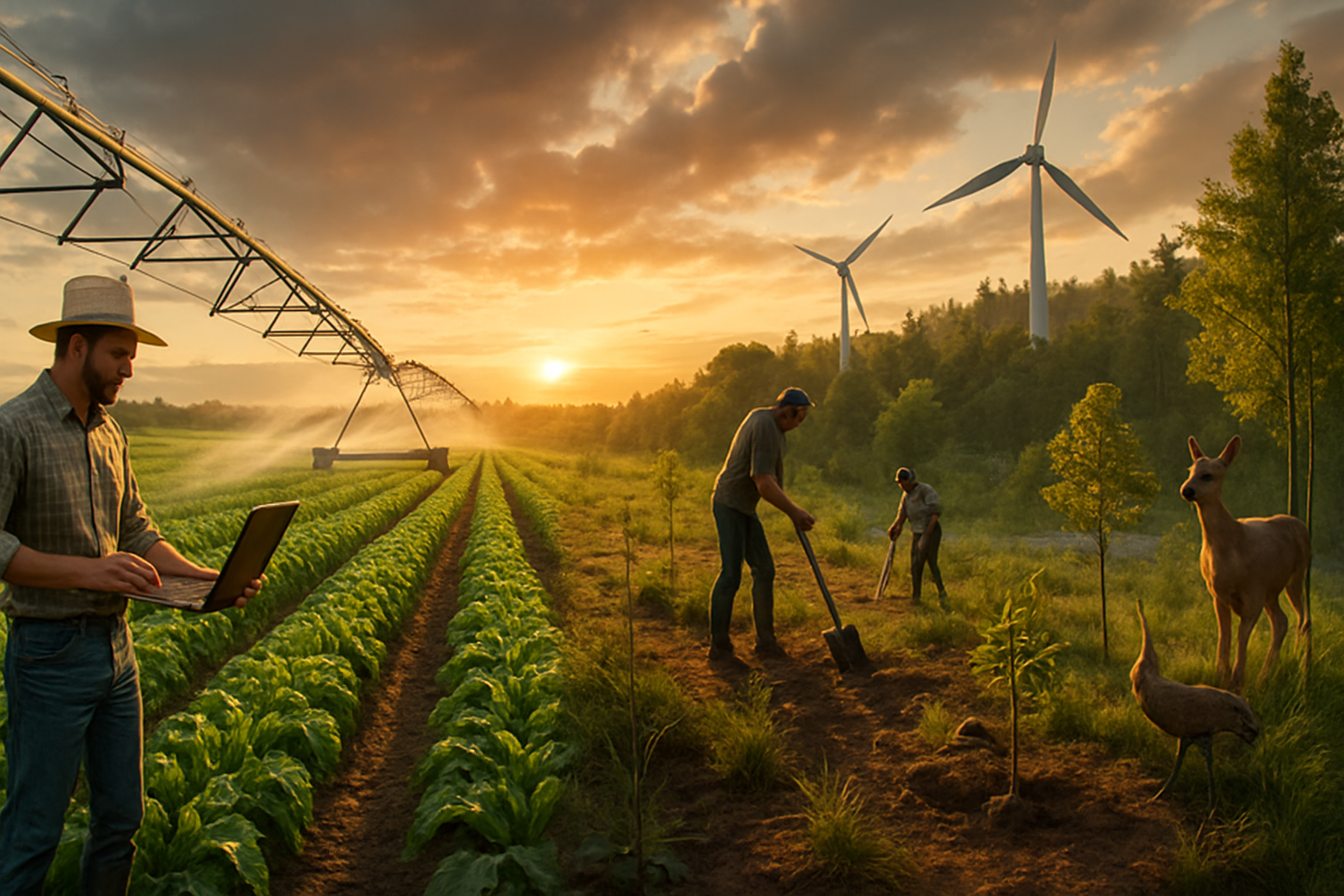
Agricultural and environmental systems across the globe are undergoing unprecedented transformation as farmers, governments, and conservationists grapple with mounting climate pressures, disease outbreaks, and technological disruption during what has become the 20th consecutive month of temperatures exceeding 1.5°C above pre-industrial levels.
Three critical stories from Bolivia and Cyprus illustrate the complex intersection of agricultural innovation, livestock health crises, and environmental policy shifts that define the current agricultural landscape. These developments occur against the backdrop of a global agricultural renaissance marked by both technological breakthroughs and significant challenges to food security and environmental sustainability.
Bolivia Advances Agricultural Biotechnology
In Santa Cruz, Bolivia, agricultural institutions have completed the agronomic validation of three new varieties of biotechnologically-enhanced cotton seeds, representing a significant advancement in the country's agricultural modernization efforts. The initiative, spearheaded by the Chamber of Agriculture of the East, the Tropical Agricultural Research Center, and the Departmental Federation of Cotton Producers, demonstrates the growing sophistication of South American agricultural science.
The validated varieties - Guaraní, Pora 3, and Guazuncho 4 - incorporate two stacked biotechnological events: the RR event providing tolerance to glyphosate herbicide, and the BT event offering resistance to lepidopteran insects. According to agricultural technicians, these characteristics enable improved agronomic management, reduced pest losses, and optimized agricultural practices in an era of increasing climate volatility.
"These biotechnological innovations represent more than agricultural advancement - they're essential tools for climate adaptation," explains Dr. Ricardo Morales, a regional agricultural specialist.
— Agricultural Expert Commentary
This development aligns with broader South American agricultural transformation initiatives, where countries like Argentina have achieved remarkable export success with wheat shipments to China, and Paraguay has demonstrated sophisticated agricultural management despite drought and pest pressures.
Cyprus Faces Livestock Disease Crisis and Farmer Resistance
Meanwhile, in Cyprus, a dramatic confrontation has emerged between agricultural authorities and livestock farmers over foot-and-mouth disease containment measures. Farmers from across the island gathered in the Oroklini livestock farming area to physically block the culling of sheep and goats, creating road blockades and preventing Veterinary Services officials from entering affected sites.
The protest, marked by farmers placing a coffin on a vehicle roof as a symbol of their anger, highlights the deep tensions surrounding disease management policies. Despite adverse weather conditions and rain, protesters maintained their vigil, determined to protect their livestock from what they view as unnecessary culling operations.
This farmer resistance comes as the Cypriot government has backed the full and strict application of European protocols as the only viable method to protect the livestock industry and shield the broader economy from foot-and-mouth disease. Following consultations at the Presidential Palace with European Commissioner for Health and Animal Welfare Olivér Várhelyi, President Nikos Christodoulides emphasized that failure to comply with Brussels' instructions would automatically result in "exit from the common market."
Global Agricultural Crisis Context
These regional challenges reflect broader global agricultural pressures documented across multiple continents throughout 2026. From Cyprus's foot-and-mouth crisis requiring the culling of over 17,000 animals to Uganda's livestock market paralysis due to similar outbreaks, the world's agricultural systems are facing unprecedented stress.

The agricultural sector's challenges extend beyond disease management to encompass climate adaptation, technological integration, and economic sustainability. In Romania, farmers like Răzvan Avram from Green Agro in Vrancea County have demonstrated sophisticated drought-resistant farming approaches, combining precision irrigation with resistant crop varieties and cooperative marketing strategies.
Technology-Traditional Knowledge Integration
Successful agricultural adaptation increasingly requires sophisticated synthesis of cutting-edge technology with traditional farming wisdom. Examples span the globe: Cameroon's PADJI SARL achieving 40-60% water reduction through laser irrigation systems, Kenya's Nguruman irrigation project supporting over 10,000 farmers, and Algeria's innovative conversion of date waste to livestock feed.
This integration pattern extends to environmental conservation efforts, where countries are combining advanced monitoring technologies with indigenous conservation practices. Estonia's conversion of abandoned tramway infrastructure into green corridors and Finland's advanced tree seed processing facilities demonstrate how environmental challenges can be addressed through innovative technological applications while respecting traditional ecological knowledge.
Climate Pressures Accelerate Agricultural Evolution
The current agricultural transformation occurs during what climate scientists describe as the most sustained period of global warming in recorded human history. January 2026 marked the hottest month ever recorded, extending an unprecedented streak of 20 consecutive months exceeding critical temperature thresholds.
This sustained warming has fundamentally altered traditional farming cycles, water availability, and pest management patterns worldwide. Countries are responding with diverse strategies ranging from biotechnological innovations like Bolivia's cotton varieties to precision agriculture techniques that optimize resource use while adapting to unpredictable weather patterns.
"Climate change is forcing agricultural evolution that typically would occur over decades to happen in just a few years. The stakes couldn't be higher for global food security."
— International Agricultural Development Expert
South-South Cooperation Emerges
One of the most significant trends emerging from the agricultural crisis is the rise of South-South cooperation, where developing nations share expertise and resources through peer partnerships rather than traditional North-South aid relationships. Bolivia's cotton innovation, for instance, builds on knowledge-sharing initiatives with countries like India, while Zimbabwe has donated 370 metric tonnes of maize to Malawi during regional food shortages.
These partnerships prove more culturally appropriate and economically sustainable than conventional development assistance, as they address similar challenges through shared experiences and mutual understanding.
Environmental Protection as Economic Strategy
Environmental protection increasingly functions as an economic development strategy rather than a regulatory burden. Countries implementing comprehensive environmental protection demonstrate greater economic resilience and attract sustainable investment across multiple sectors, from green technology manufacturing to nature-based tourism.
Croatia's griffon vulture conservation success, with 173 pairs nesting in northern Adriatic cliffs representing the highest count in decades, enhances eco-tourism appeal while positioning the country as a regional environmental leader. Similarly, New Zealand's achievement of possum-free status on the Otago Peninsula demonstrates how sustained conservation efforts can achieve remarkable species management results while supporting local economies.
Implementation Challenges and Success Factors
Despite technological advances and innovative approaches, agricultural and environmental initiatives face significant implementation challenges. Funding sustainability remains critical for developing nations where immediate economic pressures often override long-term considerations. Technical capacity building requires sustained investment in education, training, and institutional development.
Climate change disrupts project timelines, requiring adaptive management capabilities that can respond rapidly to changing conditions. Success factors consistently identified across initiatives include community ownership, transparent governance, sustained political commitment, and the integration of traditional knowledge with modern technology.
Strategic Implications for Global Food Security
The convergence of climate pressures, supply chain vulnerabilities, and economic instabilities creates a critical decision point for global food security policy. The window for building resilient and equitable food systems is narrowing rapidly as environmental change accelerates and population growth increases demands on agricultural resources.
Agricultural innovations documented in 2026 - from Pakistan's banana waste-to-textile fiber projects to Egypt's unprecedented livestock expansion supporting over 45,000 beneficiaries with 526,760 cattle - provide diverse templates for addressing global food security challenges. However, these successes require rapid scaling while maintaining effectiveness principles that ensure community benefit.
"The agricultural renaissance of 2026 may determine whether food production can keep pace with environmental change while serving growing populations during this critical climate action decade."
— UN Food and Agriculture Organization Representative
The Human Dimension
At the center of these agricultural and environmental transformations are millions of farmers, food workers, and vulnerable communities who depend on stable and fair global food systems. The choices made during this critical period will likely determine food security trajectories for decades to come, making coordinated international action more urgent than ever before.
The Cypriot farmers blocking roads to protect their livestock, Bolivian researchers validating biotechnological innovations, and communities worldwide adapting to climate pressures all represent the human face of this global transformation. Their success or failure will determine whether humanity can build adaptive capacity to protect essential environmental systems while maintaining food security.
Future Outlook
The tools, knowledge, and cooperation frameworks exist for comprehensive responses to current agricultural and environmental challenges. However, success depends on sustained international cooperation, enhanced coordination across multiple sectors and scales, and increased financial commitments that recognize food security and environmental protection as essential infrastructure for human prosperity and planetary sustainability.
As March 2026 represents a critical juncture in global environmental and agricultural policy, the coordinated responses emerging across continents potentially offer decisive direction for environmental protection and food security trajectories in the decades ahead. The convergence of extreme weather events, infrastructure vulnerabilities, and emergency response limitations underscores the urgent need for coordinated international action, with choices made in the coming months likely to be decisive for global climate resilience affecting generations to come.