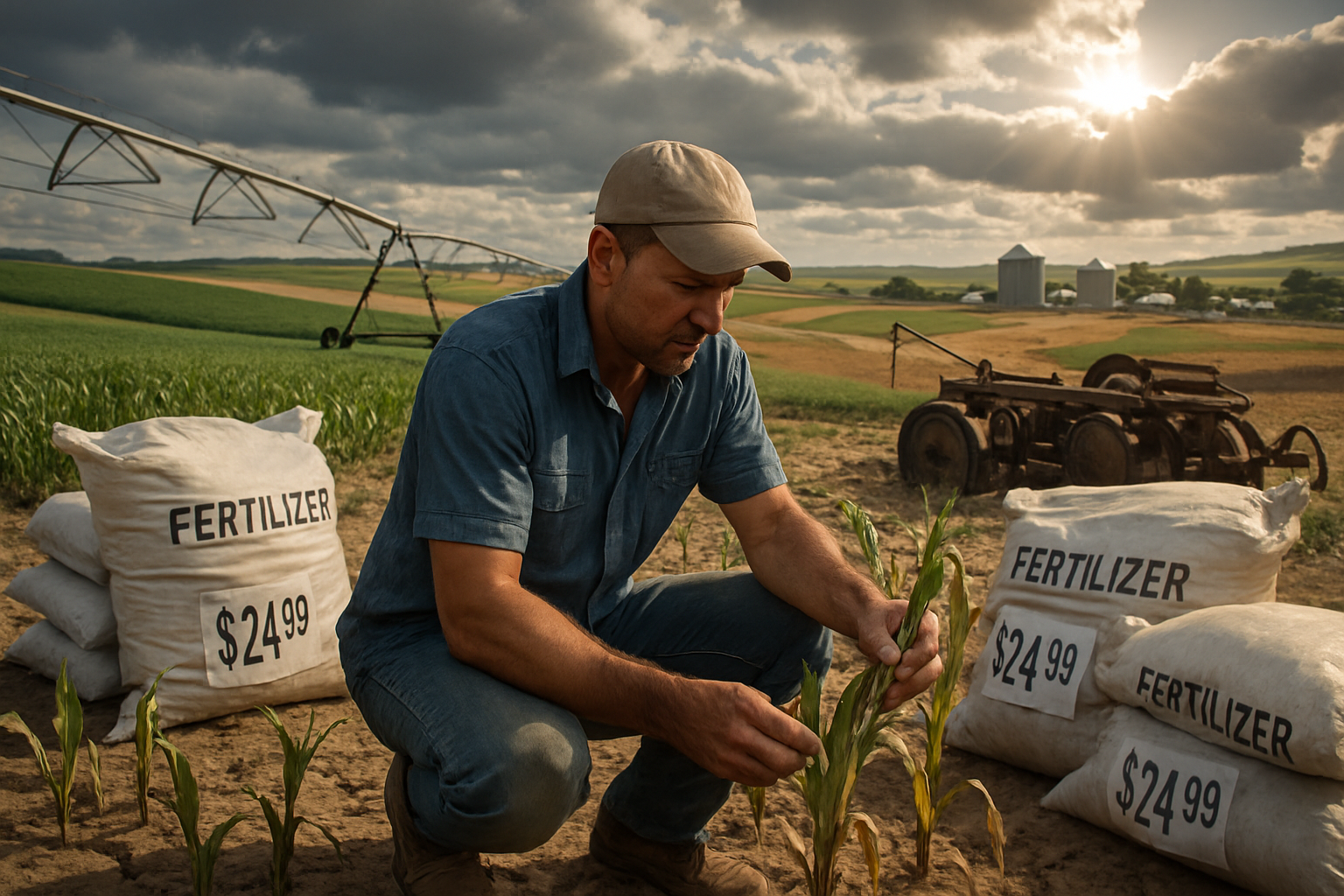
Food production systems across five continents are experiencing unprecedented stress as climate pressures, safety violations, and evolving trade relationships create a perfect storm threatening global agricultural stability.
From South America's expanding beef export networks to Southeast Asia's stringent food recalls, the agricultural landscape is undergoing dramatic transformation amid the 20th consecutive month of temperatures exceeding 1.5°C above pre-industrial levels.
Regional Trade Dynamics Reshape Agricultural Markets
Bolivia and Paraguay have formalized a groundbreaking bilateral meat trade agreement that opens new markets for both bovine and pork products. The Servicio Nacional de Calidad y Salud Animal (Senacsa) confirmed the reciprocal arrangement, enabling Paraguay to export pork to Bolivia while simultaneously allowing Bolivian beef imports into Paraguayan markets.
"Se realizó un acuerdo de apertura de ese mercado para las exportaciones de carne bovina y carne porcina procedente de Paraguay, y al mismo tiempo, nuestro país habilitó la importación de carne bovina desde Bolivia," stated Senacsa officials, emphasizing the principle of sanitary reciprocity underlying the agreement.
This development reflects broader South-South cooperation trends as developing nations increasingly establish direct trade partnerships, bypassing traditional North-South dependencies. The timing coincides with global supply chain vulnerabilities exposed through recent climate disruptions and geopolitical tensions.
Food Safety Violations Trigger International Alerts
Simultaneously, food safety authorities worldwide are grappling with contamination incidents that underscore systemic vulnerabilities in industrial food processing. The Netherlands reported its third dead mouse discovery in Jumbo supermarket's frozen green bean products, prompting comprehensive supply chain investigations and heightened consumer awareness campaigns.
Singapore's Food Authority issued recall notices for dried pineapple slices containing undisclosed sulfur dioxide allergens, part of a broader pattern of labeling violations affecting sensitive populations. The compound can trigger severe reactions including hives, stomach complications, and respiratory distress in sulfite-hypersensitive individuals.
"Sulfur dioxide is an allergen that can result in symptoms such as hives, stomach-ache, diarrhoea and vomiting in people who are hypersensitive to sulphite."
— Singapore Food Authority Statement
These incidents contribute to declining consumer confidence in multinational food corporations, with documented shifts toward local sourcing and simplified supply chains across developed nations.
Economic Pressures Drive Policy Innovation
The Philippines implemented emergency economic measures as food manufacturers agreed to voluntary price freezes lasting up to 60 days. President Marcos announced the initiative as government efforts to cushion the impact of global tensions on basic commodity prices, reflecting sophisticated policy coordination between public and private sectors.
The price stabilization program demonstrates how nations are adapting traditional market mechanisms to address contemporary challenges. Several major food manufacturers committed to maintaining current pricing structures while government officials monitor compliance and assess longer-term sustainability measures.
Meanwhile, concerns over cassava consumption safety have emerged from Cameroon, where biological research reveals natural cyanide content in this staple food consumed by millions across Africa. Scientists warn that widespread cassava dependence may have contributed to nutritional deficiencies across the continent, calling for dietary diversification programs and improved processing methods to reduce toxin exposure.
Climate Change Amplifies Agricultural Vulnerabilities
The sustained warming period—now extending to 20 months above critical temperature thresholds—is fundamentally altering traditional farming cycles, water availability, and pest management strategies. Agricultural experts report that historical seasonal patterns guiding food production for millennia are no longer reliable predictors.
Enhanced molecular testing protocols have been implemented across European Union food safety agencies to detect heat-stable toxins that conventional bacterial screening methods miss. The investment in advanced detection capabilities reflects growing recognition that climate change creates optimal pathogen growth conditions while disrupting traditional food preservation methods.
International Cooperation Frameworks Evolve
The European Food Safety Authority (EFSA) is developing standardized international protocols and coordinated early warning systems for cross-border contamination prevention. This initiative builds on lessons learned from recent infant formula contamination incidents that affected dozens of children across multiple countries.
African Continental Free Trade Agreement member nations are establishing enhanced agricultural standards enabling coordinated responses to food safety challenges that individual countries cannot address independently. The framework represents a shift toward prevention-focused approaches rather than reactive crisis management.
Social media platforms are emerging as powerful enforcement acceleration tools, with viral videos exposing food safety violations leading to rapid regulatory responses. This democratization of oversight is empowering consumer participation in quality control processes while creating additional pressure on regulatory authorities to respond swiftly to public concerns.
Economic Implications and Market Transformations
The convergence of climate pressures, safety concerns, and trade relationship evolution is creating significant economic implications across the agricultural sector. Insurance costs are mounting as companies invest in molecular testing infrastructure and enhanced quality control measures.
Consumer behavior patterns show measurable shifts toward local sourcing and supply chain transparency demands. Premium pricing for authentic, traceable products is becoming economically viable as public awareness of food system vulnerabilities increases.
Industry experts identify 2026 as a critical transformation turning point requiring enhanced international coordination, climate-adaptive processing technologies, and prevention-focused approaches that integrate traditional agricultural wisdom with modern safety science.
Success Factors and Implementation Challenges
Agricultural communities worldwide are demonstrating remarkable adaptive capacity when supported by appropriate policies, infrastructure investments, and market access improvements. Success factors consistently include community ownership of development processes, transparent governance frameworks, sustained political commitment transcending electoral cycles, and adaptive management capabilities responding to rapidly changing environmental conditions.
However, significant implementation challenges persist. Funding sustainability remains critical for developing nations where immediate economic pressures often override long-term environmental considerations. Technical capacity building requires sustained investment in education, training, and institutional development beyond initial technology deployment.
Climate change disruptions demand constant project timeline adjustments, requiring adaptive management strategies that can respond to increasingly unpredictable conditions while maintaining productivity essential for food security.
Looking Forward: Templates for Global Resilience
The diverse approaches emerging across different continents provide complementary templates for addressing global food security challenges. Bolivia-Paraguay trade partnerships demonstrate regional cooperation benefits, while Philippines price stabilization shows sophisticated market intervention capabilities. Singapore's recall protocols exemplify proactive consumer protection, and Netherlands supply chain investigations reveal the importance of systematic quality monitoring.
The window for building resilient, equitable food systems is narrowing rapidly as environmental change accelerates and population growth increases agricultural resource demands. However, the tools and knowledge exist for comprehensive responses when political will, community engagement, and international cooperation align effectively.
Success in scaling these innovations globally will likely determine whether agricultural systems can keep pace with environmental change while serving growing populations during this critical climate action decade. The human dimension remains central—millions of farmers, food workers, and vulnerable communities depend on stable, fair global food systems that balance immediate humanitarian needs with long-term sustainability requirements.