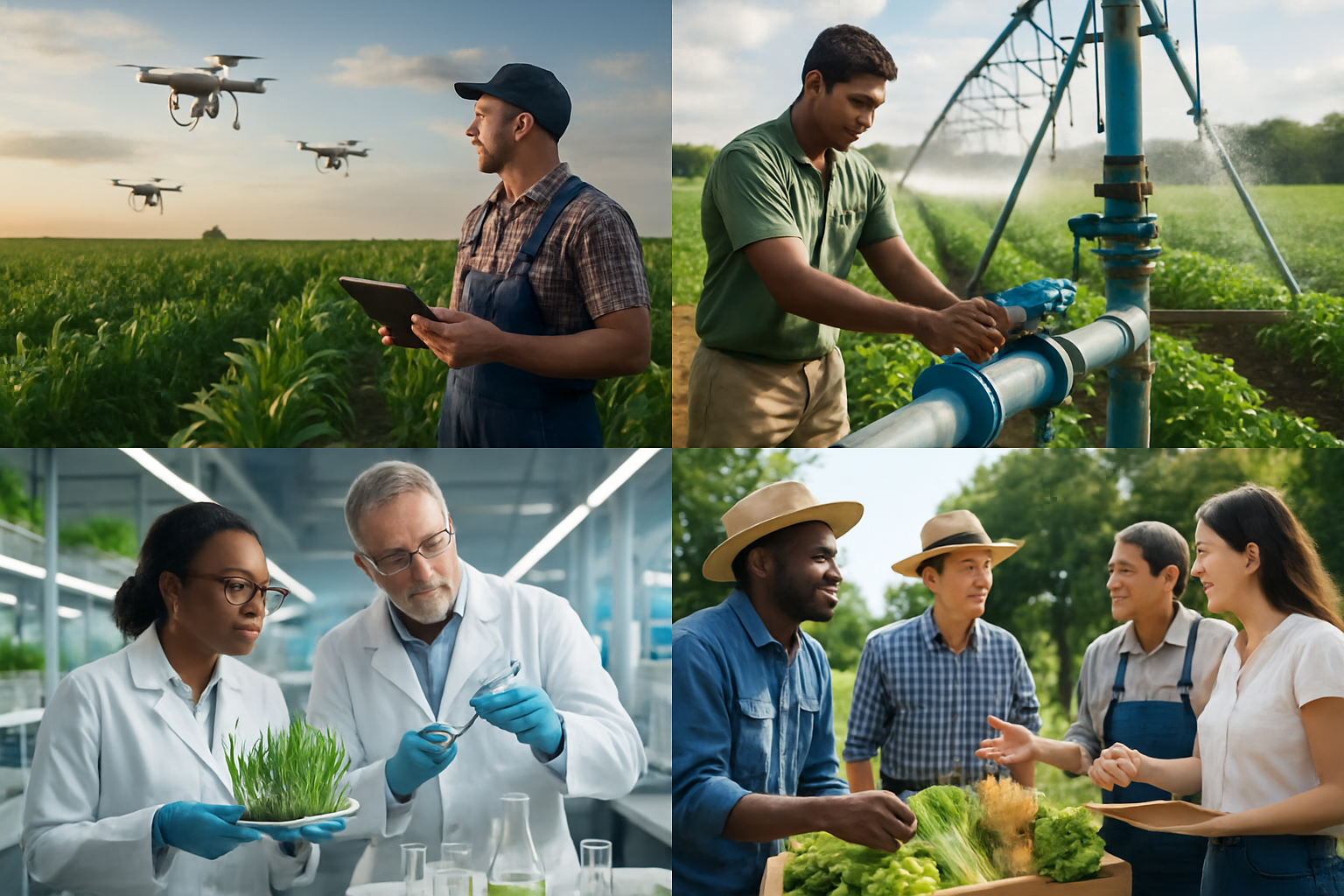
As nations grapple with mounting food security challenges during an unprecedented period of climate instability, a remarkable surge in agricultural innovation and international cooperation is emerging across six continents, revealing both significant progress and persistent obstacles in the global quest for sustainable food systems.
Recent developments spanning from Azerbaijan's industrial partnerships to the Philippines' rice market struggles illustrate the complex landscape of modern agricultural transformation, where traditional farming practices intersect with cutting-edge technology amid the backdrop of the 20th consecutive month of global temperatures exceeding 1.5°C above pre-industrial levels.
Strategic Partnerships Drive Agricultural Modernization
In Azerbaijan, the registration of "Dongfeng-Improtex AZ Agro" LLC by the State Tax Service marks a significant milestone in the country's agricultural mechanization efforts. This Chinese partnership represents part of a broader global trend toward South-South cooperation in agricultural development, moving beyond traditional North-South aid models to more sustainable peer-to-peer technology sharing.
The initiative builds on Azerbaijan's broader economic diversification strategy, complementing the country's energy sector success with agricultural modernization that could transform rural economies. Such partnerships reflect a growing pattern of developing nations sharing expertise through mutually beneficial arrangements rather than conventional aid dependencies.
Similarly, Ghana's government announcement of the "Nkoko Nkitinkiti" (small-scale poultry) program integration with the School Feeding Programme demonstrates sophisticated food security planning that connects livestock development with educational nutrition outcomes, creating multiple beneficial effects: improved student nutrition, farmer income support, and sustainable local food systems development.
Climate Adaptation Challenges Across Global Food Systems
The climate context surrounding these developments cannot be understated. January 2026 marked the hottest month in recorded history, extending an unprecedented streak of sustained warming that has fundamentally altered traditional farming cycles, water availability, and pest management patterns worldwide.
"Traditional farming schedules no longer align with actual weather patterns, forcing farmers to operate without the seasonal predictability that has historically guided food production for millennia."
— Agricultural Climate Adaptation Report, 2026
This climate reality manifests differently across regions. Bolivia has successfully initiated beef exports to Egypt, with Ambassador Hatem El-Nashar confirming two initial shipments through BFC, demonstrating how countries are diversifying agricultural trade relationships to build resilience against climate and market volatility.
In contrast, the Philippines faces the challenge of changing consumer preferences, with Agriculture Secretary Francisco Tiu Laurel Jr. noting that domestic consumers now favor imported rice over local varieties, highlighting the complex interplay between climate adaptation, production quality, and market dynamics that many nations must navigate.
Food Safety and Quality Assurance Initiatives
Amid expansion efforts, food safety remains paramount. Bulgaria's proactive approach exemplifies this commitment, with the Bulgarian Food Safety Agency (BAFH) conducting comprehensive testing of sunflower seeds imported from Argentina following vessel arrival at Varna port, analyzing lead, cadmium, and other parameters to ensure compliance with European legislation.
This heightened vigilance reflects growing awareness of food safety challenges amplified by climate change, which creates optimal conditions for pathogen growth while disrupting traditional preservation methods. The systematic approach to import monitoring demonstrates how countries are adapting their regulatory frameworks to address new climate-related food safety risks.
Gabon's Ministry of Agriculture's launch of an appeal for selecting 150 poultry farms under the Plan Opérationnel d'Urgence pour la Filière Avicole (POUFA) initiative represents another dimension of food security planning. This program, designed to support local production while anticipating the prohibition of chicken imports scheduled for January 2027, shows how nations are strategically planning for food sovereignty while maintaining safety standards.
Addressing Rural Development and Food Access
The human dimension of food security challenges became starkly apparent in Namibia, where fifteen pupils from Rundu Secondary School were hospitalized for suspected food poisoning, highlighting the critical importance of food safety systems in educational settings and rural communities.
This incident underscores the interconnected nature of food security challenges, where agricultural production, food distribution systems, safety protocols, and community health all intersect to determine outcomes for vulnerable populations, particularly children in developing regions.
Technology Integration and Traditional Knowledge Synthesis
The most successful agricultural adaptation strategies emerging from global analysis demonstrate sophisticated integration of cutting-edge technology with traditional farming knowledge and community-based management systems. This approach respects existing agricultural expertise while incorporating beneficial innovations that enhance productivity and sustainability.
Examples from recent memory include Finland's breakthrough in winter raspberry cultivation, Papua New Guinea's mechanized farming operations generating millions in revenue, and Algeria's innovative conversion of date waste into livestock feed. These diverse approaches provide templates for different geographical and economic contexts while maintaining the principle of technology-tradition synthesis.
Economic Development Through Agricultural Innovation
Agricultural development increasingly functions as a comprehensive economic engine extending far beyond farm-level improvements. Successful initiatives generate sustainable rural employment, create transportation and processing networks, develop infrastructure, and establish export revenue streams that support entire rural ecosystems.
The pattern emerges across continents: countries implementing comprehensive agricultural modernization programs report enhanced community resilience, reduced social service demands, and improved economic competitiveness through sustainable rural development that provides alternatives to urban migration while preserving cultural practices.
Implementation Challenges and Success Factors
Despite promising innovations, significant implementation challenges persist. Funding sustainability remains critical for developing nations where immediate economic pressures often override long-term environmental and agricultural considerations. Technical capacity building requires sustained investment in education, training, and institutional development beyond initial technology deployment.
Climate change continues to disrupt project timelines, requiring adaptive management approaches that can respond rapidly to changing conditions. The diversity of approaches provides resilience against single-solution dependencies, offering multiple adaptation pathways for different national circumstances.
Success factors consistently identified across successful initiatives include community ownership of development processes, transparent governance frameworks, sustained political commitment that transcends electoral cycles, and adaptive management capabilities that balance economic development with environmental sustainability.
International Cooperation and Knowledge Sharing
The emergence of South-South cooperation as a preferred model for agricultural development represents a fundamental shift from traditional aid relationships. Countries with similar challenges increasingly share expertise through regional cooperation mechanisms, creating shared value chains and collective responses to food security challenges that individual nations cannot address independently.
This trend reflects the maturation of developing nations as agricultural innovation centers rather than merely technology recipients, contributing to global food security while building local economic resilience during an era of accelerating environmental change.
Strategic Implications for Global Food Security
The window for building resilient, equitable food systems is narrowing rapidly as environmental change accelerates and population growth increases agricultural resource demands. However, the tools and knowledge exist for effective responses, as demonstrated by the pioneering initiatives emerging across continents.
Success in scaling these innovations globally will depend on sustained political commitment, adequate funding, coordination between immediate crisis response and long-term resilience building, and recognition of food security as a global public good requiring unprecedented international cooperation.
The developments of March 2026 provide both warning and opportunity – demonstrating that while agricultural communities face extraordinary challenges, they also possess remarkable adaptive capacity when supported by appropriate policies, infrastructure, market access, and international cooperation during this critical period of global transformation.