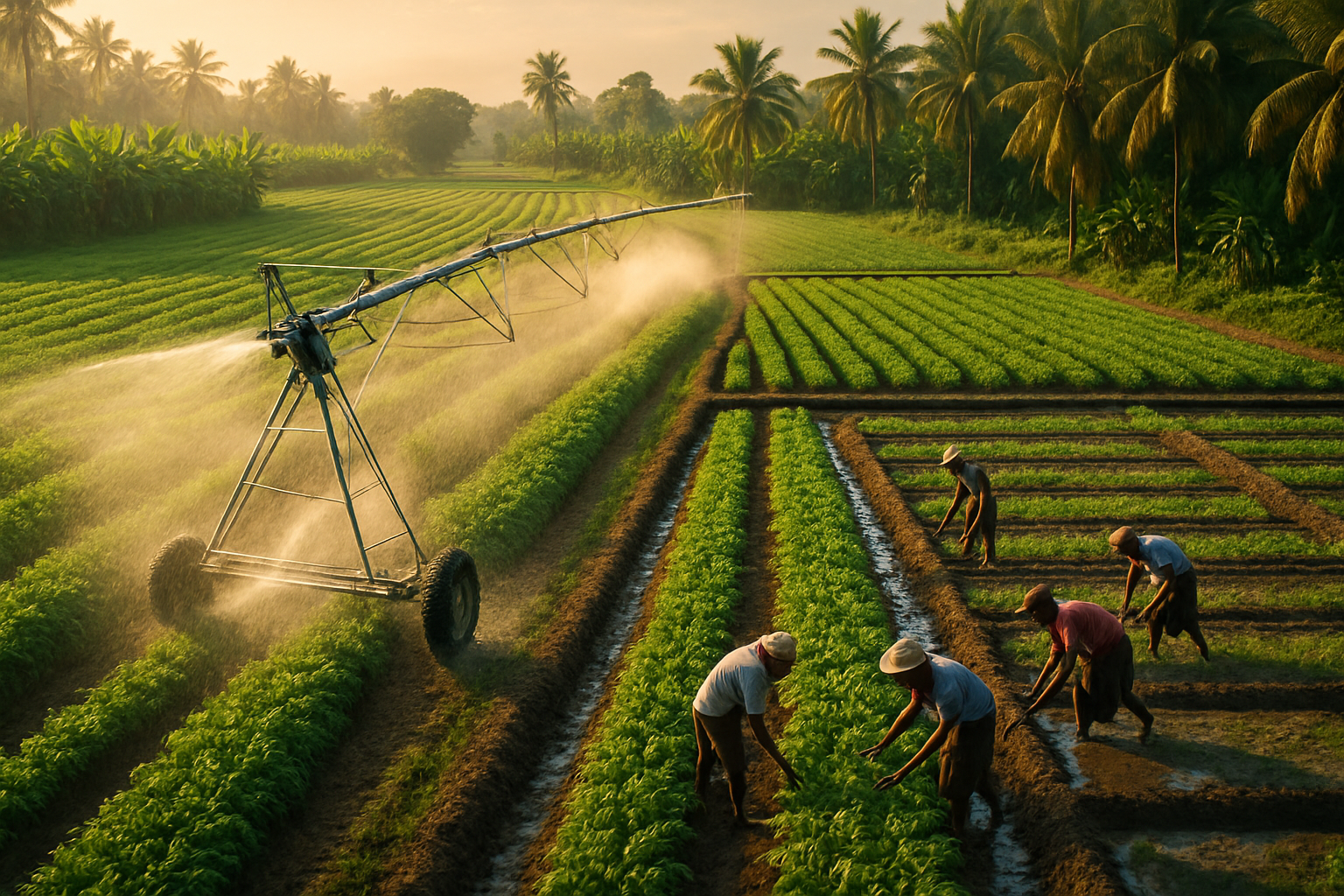
Agricultural development initiatives across Nicaragua and Namibia demonstrate the accelerating transformation of global food systems through international partnerships and strategic livestock investments, reflecting a broader renaissance in South-South cooperation that is reshaping agricultural development worldwide.
Nicaragua has significantly strengthened its cacao sector through a landmark international agreement aimed at boosting exports, improving producer incomes, and promoting sustainable farming practices. The initiative positions the Central American nation as a key player in the global chocolate supply chain while supporting thousands of smallholder farmers who form the backbone of the country's agricultural economy.
Meanwhile, Namibia's Hope Farm Project in the Erongo region received additional livestock as part of a joint initiative between the agriculture ministry and the Swakop Uranium Foundation, demonstrating how public-private partnerships can drive meaningful agricultural development in challenging environments.
Nicaragua's Strategic Cacao Expansion
The international cacao agreement represents a pivotal moment for Nicaragua's agricultural sector, which has been working to diversify beyond traditional coffee exports. The partnership incorporates advanced processing techniques with traditional cultivation methods that have been refined over generations by local farmers.
According to agricultural experts, Nicaragua's geographic position and climate conditions provide ideal growing environments for premium cacao varieties that are increasingly sought after by international chocolate manufacturers. The agreement includes provisions for technical training, quality improvement programs, and direct market access that bypasses traditional commodity trading systems.
"This partnership transforms our approach from simple raw material export to value-added production," explains a senior official familiar with the negotiations. "We're building capacity for sustainable cultivation while ensuring our farmers receive fair compensation for their expertise and labor."
Namibia's Livestock Development Initiative
The Hope Farm Project represents a different but equally significant approach to agricultural development, focusing on livestock improvement in one of Africa's most challenging agricultural environments. The Erongo region faces persistent water scarcity and variable rainfall patterns that make traditional farming particularly difficult.
The partnership between Namibia's agriculture ministry and the Swakop Uranium Foundation illustrates how extractive industries can contribute meaningfully to agricultural development. The livestock provided includes breeds specifically selected for their adaptation to arid conditions and their potential for improving local food security.
The initiative builds on traditional Namibian livestock management practices while incorporating modern veterinary care and breeding techniques. Local communities have been actively involved in the planning and implementation, ensuring that the program aligns with existing cultural practices and economic needs.
Global Context of Agricultural Transformation
These developments occur within the context of unprecedented global agricultural innovation driven by climate pressures and evolving international cooperation frameworks. Recent months have seen similar initiatives across multiple continents, from Kenya's irrigation rehabilitation programs benefiting over 10,000 farmers to Algeria's innovative date waste conversion projects.
The emergence of South-South cooperation as a dominant force in agricultural development represents a fundamental shift from traditional aid models. Countries like Zimbabwe have demonstrated regional leadership by donating 370 metric tonnes of maize to Malawi, while Malaysia has achieved remarkable agricultural transformation through outcome-driven delivery approaches.
Climate change continues to drive innovation in agricultural practices worldwide, with sustained global temperatures creating urgent needs for adaptation strategies. Both Nicaragua and Namibia face particular challenges from changing precipitation patterns and increased temperature variability that require sophisticated responses combining traditional knowledge with modern technology.
Technology and Traditional Knowledge Integration
The success of both initiatives depends heavily on the sophisticated integration of cutting-edge technology with traditional agricultural knowledge that has sustained communities for generations. Nicaragua's cacao program incorporates precision agriculture techniques while respecting indigenous cultivation practices that optimize flavor profiles and soil health.
Similarly, Namibia's livestock program combines advanced veterinary science with traditional animal husbandry practices developed specifically for arid environments. This synthesis approach has proven more effective than purely technological solutions that ignore local expertise and community structures.
"The most successful agricultural programs worldwide demonstrate that traditional wisdom and modern innovation are complementary, not competing forces."
— Agricultural Development Specialist
Economic Development and Rural Employment
Both programs function as comprehensive economic development engines that extend far beyond farm-level improvements. Nicaragua's cacao initiative creates employment in transportation, processing, packaging, and international trade while generating foreign currency earnings that support broader economic stability.
The Namibian livestock program provides sustainable rural employment opportunities in regions where economic alternatives are limited. The initiative includes training components that build local technical capacity and create pathways for young people to remain in rural areas rather than migrating to urban centers.
Economic multiplier effects from these programs include infrastructure development, enhanced market access, and the strengthening of rural financial systems. Both initiatives prioritize community ownership and transparent governance as essential factors for long-term sustainability.
Regional Integration and Cooperation Frameworks
The timing of these initiatives aligns with broader regional integration efforts that are transforming agricultural development across Africa and Latin America. The African Continental Free Trade Agreement enables enhanced cooperation on livestock development projects, while Central American integration efforts facilitate Nicaragua's agricultural export expansion.
Regional partnerships increasingly emphasize mutual benefit and technology sharing rather than traditional aid relationships. This peer-to-peer approach has proven more culturally appropriate and economically sustainable, creating shared value chains that build collective resilience against global market volatility.
Climate Adaptation Strategies
Both programs incorporate sophisticated climate adaptation strategies designed to maintain productivity despite environmental volatility. Nicaragua's cacao varieties include drought-resistant strains that can withstand irregular rainfall patterns, while processing techniques are designed to maintain quality despite temperature fluctuations.
Namibia's livestock program focuses on breeds adapted to water scarcity and heat stress, with management practices that optimize resource utilization during challenging periods. The program includes contingency planning for extreme weather events and flexible management approaches that can respond to changing conditions.
Implementation Challenges and Success Factors
Despite promising developments, both initiatives face significant implementation challenges common to agricultural development projects worldwide. Funding sustainability remains a critical concern, particularly for developing nations where immediate economic pressures can override long-term environmental considerations.
Technical capacity building requires sustained investment in education, training, and institutional development beyond initial technology deployment. Climate change continues to disrupt project timelines, requiring adaptive management approaches that can respond to rapidly changing conditions.
Success factors identified across multiple international programs include sustained political commitment that transcends electoral cycles, community engagement that ensures local ownership, and international cooperation that respects local autonomy while providing essential technical and financial support.
Future Implications and Scaling Potential
The agricultural transformations demonstrated in Nicaragua and Namibia provide templates for scaling successful interventions globally through approaches that prioritize community empowerment, technological innovation, and international cooperation while maintaining effectiveness principles that ensure community benefit.
Success may determine whether agricultural innovation can keep pace with accelerating environmental change while serving growing populations during what experts consider a critical climate action decade. The window for building resilient, equitable food systems continues to narrow rapidly, making current innovations crucial for global food security planning.
Tools and knowledge exist for comprehensive responses to agricultural challenges, but implementation requires sustained political commitment, adequate funding, and coordination that balances immediate crisis response with long-term resilience building. The recognition of food security as a global public good requiring unprecedented international cooperation has never been more urgent.
As both Nicaragua and Namibia demonstrate, agricultural development success depends on sophisticated approaches that integrate traditional wisdom with modern innovation, community ownership with international partnership, and immediate needs with long-term sustainability. These principles offer hope for building agricultural systems that can withstand the challenges ahead while supporting the millions of farmers and communities who depend on stable, fair global food systems.