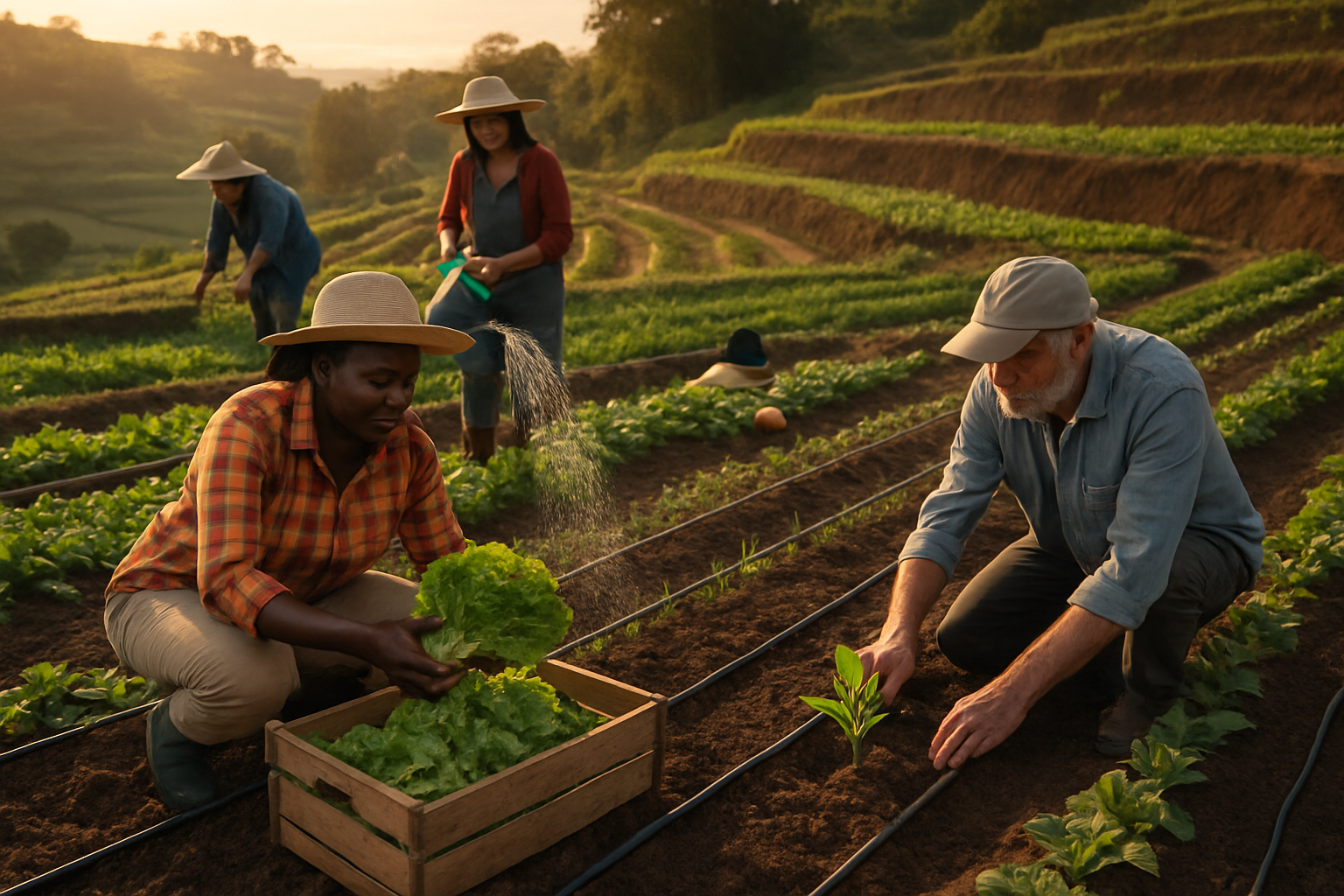
A wave of agricultural innovation is sweeping across developing nations as governments and organizations implement groundbreaking rural development programs that combine indigenous farming wisdom with cutting-edge technology, promising to transform food security and rural livelihoods for millions of farmers worldwide.
From Southeast Asia to West Africa, agricultural initiatives launched in early February 2026 demonstrate a new paradigm in rural development that prioritizes both sustainability and economic empowerment. These programs span five nations—Cambodia, Mexico, Nigeria, Mali, and Indonesia—each addressing unique challenges while sharing common goals of food security, farmer prosperity, and community resilience.
Cambodia's Market Integration Success Story
Cambodia's rural agricultural market is experiencing unprecedented growth through the Ministry of Commerce's Agricultural Market Incentive System (AIMS) project. This comprehensive initiative focuses on gender integration and inclusive development, creating pathways for smallholder farmers to access broader markets and improve their economic standing.
The AIMS program represents a significant shift in Cambodia's agricultural policy, moving from subsistence-focused farming toward market-oriented production. The initiative has already begun showing positive results in rural communities, where farmers are gaining access to new technologies, improved seeds, and direct market connections that were previously unavailable to small-scale producers.
Mexico Champions Indigenous Agricultural Wisdom on Global Stage
In a remarkable showcase of cultural preservation and agricultural innovation, Mexico is sending 19 farmers from its national "Sembrando Vida" (Sowing Life) program to the prestigious BIOFACH 2026 organic products trade fair in Nuremberg, Germany, running from February 10-13.
These farmers represent the rich agricultural heritage of Indigenous communities including the Amuzgo, Mam, Ódami, Totonac, Tzotzil, Yokot'an, and Zapotec peoples, coming from the states of Chiapas, Chihuahua, Guerrero, Oaxaca, Tabasco, and Veracruz. Their participation at this international venue highlights the growing recognition of traditional farming methods as solutions to modern agricultural challenges.
"The delegation will bring to Nuremberg techniques that have sustained communities for centuries, now recognized as cutting-edge sustainable agriculture practices."
— Government Press Release, Mexican Ministry of Welfare
The Sembrando Vida program, one of Mexico's flagship social initiatives, has been instrumental in promoting sustainable agriculture while preserving Indigenous knowledge systems. The farmers' participation in BIOFACH 2026 represents a significant milestone in the global recognition of traditional ecological wisdom as a cornerstone of future food security.
Nigeria's Seed Production Revolution
Nigeria's agricultural sector received a major boost with the unveiling of a new facility in Kano designed to enhance local tomato and pepper seed production. This strategic investment aims to reduce the country's dependence on imported seeds while supporting thousands of farmers across the region.
The facility represents a critical step toward agricultural self-sufficiency for Africa's most populous nation. By focusing on tomato and pepper production—two essential crops in Nigerian cuisine and nutrition—the initiative addresses both food security and economic independence concerns that have long challenged the country's agricultural sector.
The Kano facility is expected to serve as a model for similar installations across Nigeria, potentially transforming the country from a seed importer to a regional seed production hub. This development aligns with broader African Union initiatives to achieve agricultural self-reliance across the continent.
Mali Strengthens School Feeding Programs
In Mali, agricultural development takes on an educational dimension through enhanced school feeding coordination efforts. The second meeting of the technical coordination committee for school feeding convened in Ségou on February 2, 2026, bringing together educational officials from Barouéli, Farako, Markala, Ségou, and local elected officials.
This initiative represents a comprehensive approach to rural development that connects agricultural production with educational outcomes. By ensuring reliable food sources for schools, the program creates sustainable markets for local farmers while improving nutrition and educational attendance among rural children.
The Ségou coordination meeting focused on establishing strategic guidelines and ensuring global coordination of school feeding activities. This approach demonstrates how agricultural policy can serve multiple development goals simultaneously, addressing food security, education, and rural economic development through integrated programming.
Indonesia's Livestock Distribution Initiative
Indonesia's National Amil Zakat Agency (Baznas) announced plans to distribute 200 live cattle to Aceh province in preparation for Ramadan 1447 Hijriah. This initiative supports the traditional Meugang ceremony while strengthening livestock distribution networks and rural economic systems.
The cattle distribution program exemplifies how cultural traditions can be leveraged to support rural development and food security objectives. By facilitating livestock access for religious and cultural practices, the initiative simultaneously supports rural livelihoods and maintains important social traditions that bind communities together.
Common Threads in Global Agricultural Innovation
Despite their geographic diversity, these initiatives share several key characteristics that point toward emerging best practices in agricultural and rural development:
- Cultural Preservation: Programs recognize and valorize traditional knowledge systems rather than replacing them with purely modern approaches
- Market Integration: Initiatives focus on connecting smallholder farmers with broader market opportunities while maintaining local production capacity
- Multi-Sectoral Approaches: Successful programs integrate agriculture with education, nutrition, and cultural preservation objectives
- Technology Transfer: Modern facilities and techniques are introduced in ways that complement rather than displace existing knowledge systems
- Community Ownership: Programs prioritize local participation and ownership rather than top-down implementation
Implications for Global Food Security
These developments occur against the backdrop of increasing global concern about food security, climate change impacts on agriculture, and the need for sustainable farming practices. The initiatives described represent a new model of agricultural development that could be replicated and adapted in other regions facing similar challenges.
The emphasis on indigenous knowledge systems is particularly significant, as traditional farming methods often incorporate sophisticated understanding of local ecosystems, biodiversity preservation, and sustainable resource management. Mexico's representation at BIOFACH 2026 could catalyze broader international recognition of these approaches.
Similarly, Nigeria's focus on seed production autonomy reflects growing awareness among developing nations of the importance of agricultural independence. The ability to produce quality seeds locally reduces dependency on international suppliers and ensures that varieties are adapted to local conditions and preferences.
Looking Forward: Sustainable Rural Transformation
As these programs continue to develop throughout 2026, they will provide valuable data and lessons learned for the global development community. The combination of traditional knowledge preservation, market integration, and technological innovation represents a potentially transformative approach to rural development.
The success of these initiatives will likely depend on continued government support, international cooperation, and the active participation of farming communities themselves. Early indicators suggest strong community engagement and positive preliminary results across all five countries.
For the millions of smallholder farmers across the developing world, these programs offer hope for improved livelihoods, enhanced food security, and the preservation of cultural heritage within a framework of economic progress. The global agricultural community will be watching closely as these innovative approaches to rural development continue to evolve and expand.