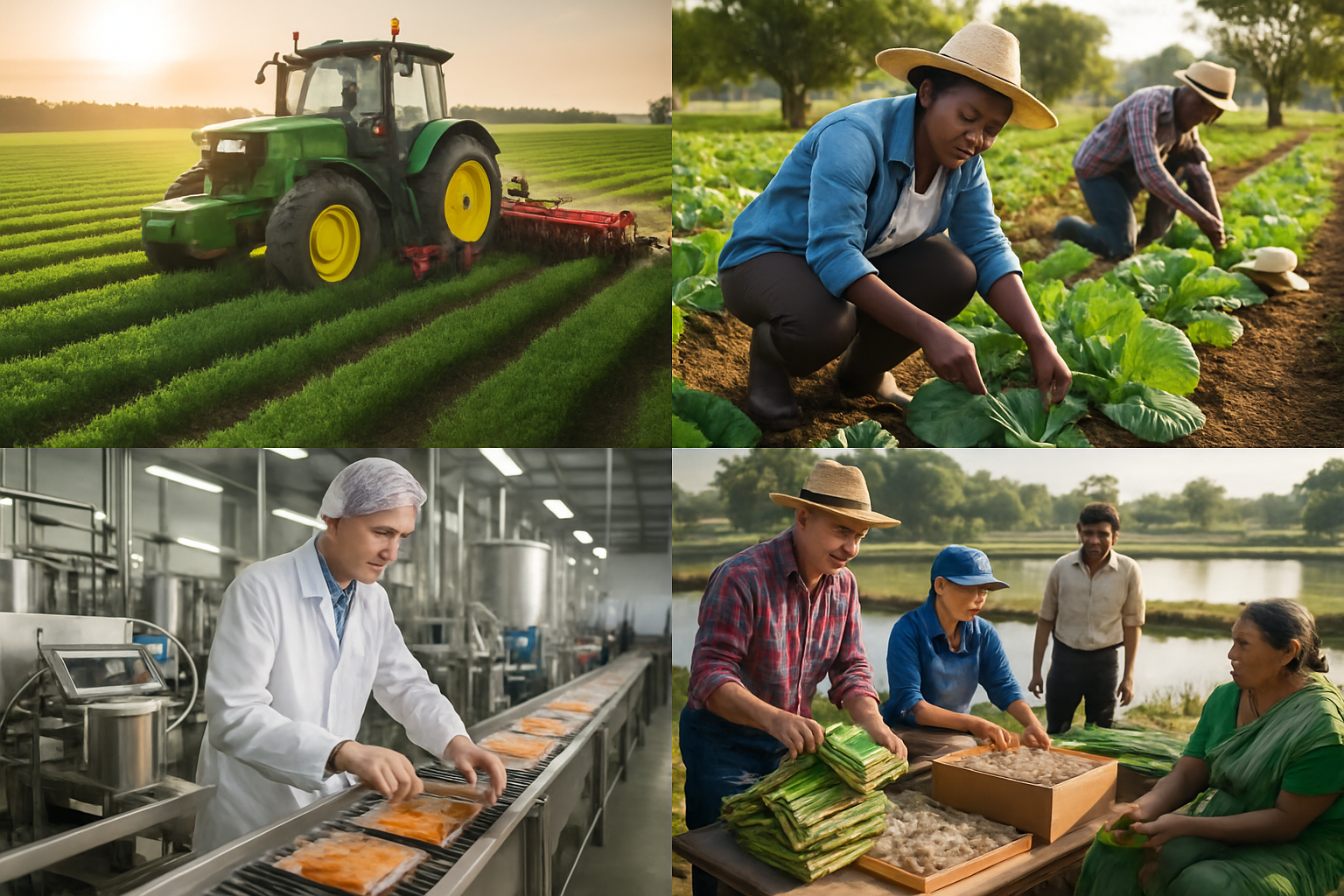
Agricultural production and food security initiatives are experiencing remarkable growth across multiple nations, with Azerbaijan reporting a 33.5% surge in sugar production and Guyana pioneering historic soybean exports, marking a transformative period for global food systems amid climate adaptation challenges.
New data from the State Statistical Committee of Azerbaijan reveals the country produced 44,200 tons of sugar and confectionery sugar between January and February 2026, representing a substantial 33.5% increase from the same period in 2025. This surge reflects broader strengthening of the country's food industry sector and demonstrates successful adaptation to changing agricultural demands.
Regional Food Production Breakthroughs
Azerbaijan's agricultural success extends beyond sugar production. The country also achieved an 11.4% year-on-year increase in overall food production during the first two months of 2026, with flour-based confectionery products reaching 11,723.2 tons—a 2.4% increase over 2025 levels. These gains highlight sophisticated supply chain management and strategic investment in domestic food processing capabilities.
Meanwhile, Guyana is preparing for its first-ever soybean exports, marking a historic milestone in the Caribbean nation's agricultural diversification strategy. President Dr. Irfaan Ali announced a comprehensive package of agricultural and agro-industrial initiatives aimed at strengthening the country's role in regional food security while diversifying the national economy beyond traditional sectors.
"This represents a sweeping transformation of our agricultural capacity and our commitment to deepening regional food security partnerships."
— President Dr. Irfaan Ali, Guyana
International Cooperation and Trade Expansion
The agricultural surge coincides with expanded international cooperation efforts. Azerbaijan has been discussing joint agricultural exports to third countries with Uzbekistan, representing emerging South-South cooperation that bypasses traditional aid models in favor of mutually beneficial trade partnerships.
Azerbaijan's vegetable oil production has also shown remarkable growth during early 2026, according to State Statistics Committee data, while the country maintained strategic import activities including tobacco and industrial tobacco substitutes worth $20.498 million—a 0.7% increase demonstrating balanced trade approaches.
Jordan has emerged as a leader in comprehensive food security planning, with Agriculture Minister Saeb al-Khreisat emphasizing that reducing food waste has become a national priority. The country faces regional and international challenges that create pressure on supply chains and increase shipping and production costs, making efficient resource management critical.
Climate Adaptation and Food Security Measures
These agricultural developments occur during a challenging climate period, with global temperatures having exceeded 1.5°C above pre-industrial levels for 20 consecutive months as of March 2026. This sustained warming has fundamentally altered traditional farming cycles, requiring rapid adaptation in crop selection, irrigation methods, and harvest timing.
Historical context reveals this surge is part of a broader 2026 global agricultural renaissance. Previous Planet News investigations documented similar patterns across Africa, Latin America, and Asia, where countries have successfully integrated cutting-edge technology with traditional farming knowledge to build climate-resilient food systems.
The success factors identified across these initiatives include community ownership of development processes, transparent governance structures, sustained political commitment that transcends electoral cycles, and international cooperation that respects local autonomy while providing essential technical and financial support.
Economic Development Through Agriculture
Agricultural innovations are functioning as comprehensive economic development engines extending far beyond farm-level improvements. Azerbaijan's sugar production surge creates employment across transportation, processing, and packaging sectors while reducing import dependencies. Guyana's soybean initiative generates sustainable rural employment while establishing new export revenue streams that support broader economic stability.
Jordan's strategic approach to food waste reduction demonstrates sophisticated food security understanding that balances immediate consumer access needs with long-term sustainability awareness. The country's National Campaign to Reduce Waste and Rationalize Consumption represents coordination between multiple ministries including National Solidarity, Internal Trade, and Environment.
These economic multiplier effects include improved infrastructure development, enhanced market access capabilities, and strengthened rural communities that can better withstand economic volatility and climate-related disruptions.
Technology-Traditional Knowledge Integration
The most effective agricultural adaptations across these nations demonstrate sophisticated integration of cutting-edge technology with traditional farming wisdom and community-based management systems. This approach has proven more successful than purely technological solutions that ignore local traditions and established community structures.
Azerbaijan combines modern food processing equipment with traditional production techniques that preserve cultural authenticity while meeting contemporary quality standards. Guyana's soybean program incorporates precision agriculture and advanced irrigation systems with indigenous farming practices that have sustained communities for generations.
This synthesis represents a maturation of agricultural development approaches, moving beyond simple technology transfer toward comprehensive systems that respect local knowledge while incorporating beneficial innovations aligned with community needs and environmental sustainability.
Strategic Global Implications
The window for building resilient and equitable food systems is narrowing rapidly as environmental pressures intensify and global population growth increases agricultural resource demands. However, the tools and knowledge exist for comprehensive responses to these challenges, as demonstrated by the successful initiatives across Azerbaijan, Guyana, Jordan, and other nations.
Success depends on sustained political commitment, adequate funding, and coordination between immediate crisis response and long-term resilience building. Food security is increasingly recognized as a global public good requiring unprecedented international cooperation during this critical climate action decade.
The convergence of agricultural innovations, strategic partnerships, and climate adaptation measures provides templates for scaling successful interventions globally while maintaining effectiveness principles that ensure community benefit and environmental sustainability.
Future Trajectory and Implementation
Implementation challenges remain significant, including funding sustainability concerns in developing nations where immediate economic pressures can override long-term environmental considerations. Technical capacity building requires sustained investment in education, training, and institutional development beyond initial technology deployment.
Climate change continues to disrupt project timelines, requiring adaptive management that can respond to rapidly changing conditions. The diversity of approaches provides resilience against single-solution dependencies while offering multiple adaptation pathways suitable for different national circumstances and resource capabilities.
The human dimension remains central to sustainable solutions—millions of farmers, food workers, and vulnerable communities depend on stable and fair global food systems. The choices made during this critical period may determine food security trajectories for decades ahead, making coordinated international action more urgent than ever before.
As these agricultural transformations demonstrate both the urgency of current challenges and the remarkable capacity for innovative human responses, success will ultimately depend on continued cooperation, political commitment, and the sophisticated integration of traditional wisdom with modern innovation that respects community ownership while building sustainable international partnerships.