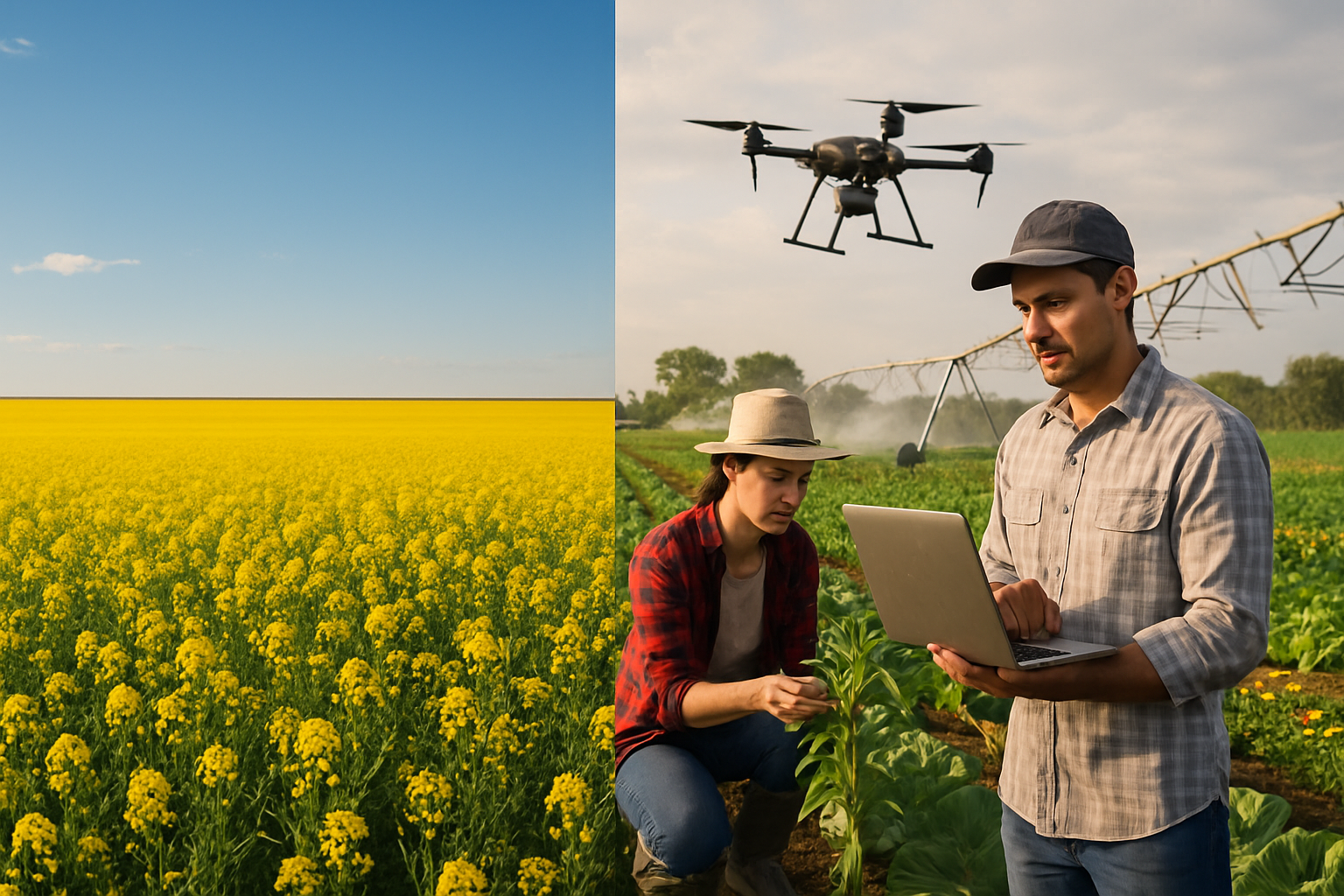
Agricultural sectors across four continents are confronting a convergence of economic pressures, climate challenges, and supply chain disruptions that threaten to reshape global food security, with Canadian farmland values hitting new highs while South African farmers struggle with fuel shortages that could devastate wheat production.
Canadian Farmland Surge Masks Underlying Pressures
Despite mounting agricultural challenges worldwide, Canadian farmland values extended their multi-decade upward trajectory, rising 9% in 2025 according to Farm Credit Canada. The Prairie provinces, traditionally Canada's agricultural heartland, saw the most significant gains as investors continued to view agricultural land as a stable asset class.
The sustained growth in farmland values comes despite trade uncertainties and escalating input costs that have plagued farmers across North America. Agricultural producers are caught between rising land prices that make expansion difficult and increasing operational expenses that squeeze profit margins.
"What we're seeing is a perfect storm of factors affecting global agriculture - from climate pressures to supply chain vulnerabilities to geopolitical tensions affecting fuel and fertilizer supplies."
— Agricultural Policy Expert
South African Wheat Industry Under Siege
In stark contrast to Canada's agricultural optimism, South African farmers are heading into the crucial winter planting season facing surging diesel prices and tightening fuel supplies triggered by Middle East conflicts. The crisis threatens production in sub-Saharan Africa's largest commercial wheat-growing industry at a time when global food security is already under pressure.
Farmers describe a situation of "living in hope" as they struggle to secure adequate fuel supplies for planting and harvesting operations. The diesel shortage not only affects farming equipment but also disrupts the transportation networks essential for moving crops to markets and processing facilities.
Regional Innovations Offer Hope
Despite these challenges, innovative agricultural projects across different regions demonstrate the sector's adaptability. In Guyana's Region Nine, a successful five-acre onion cultivation pilot project in late 2025 is being expanded to 40 acres, representing a collaboration between the Ministry of Agriculture and local farmer Christopher Moses in Manari.
This expansion reflects broader efforts across the Caribbean and Latin America to diversify agricultural production and reduce dependence on food imports. The project combines traditional farming knowledge with modern agricultural techniques, providing a template for sustainable expansion that other regions could adopt.
Market Transparency and Consumer Protection
Meanwhile, in Latvia, regulatory challenges have emerged around food price monitoring and transparency. Retailers often submit incomplete data to the Central Statistical Bureau for consumer price comparisons and food price monitoring, according to a Ministry of Economics report approved by the government.
This data gap complicates efforts to track food inflation and implement effective consumer protection measures at a time when accurate price monitoring is crucial for policy decisions affecting food accessibility.
Climate Change Amplifies Agricultural Risks
The agricultural challenges documented across these four countries occur against the backdrop of unprecedented climate pressures. January 2026 marked the 20th consecutive month of global temperatures exceeding 1.5°C above pre-industrial levels, fundamentally altering traditional farming cycles and increasing weather-related risks.
These sustained temperature increases are disrupting seasonal patterns that farmers have relied on for generations, forcing rapid adaptation in crop selection, irrigation methods, and harvest timing. The climate crisis is also creating optimal conditions for agricultural pests and diseases while disrupting traditional food preservation methods.
Supply Chain Vulnerabilities Exposed
The diverse challenges facing agricultural sectors from Canada to South Africa highlight the interconnected nature of global food systems. Local fuel shortages in one region can affect global grain supplies, while land price pressures in another can influence international commodity markets.
Supply chain experts note that the agricultural sector's resilience depends increasingly on diversification - of crops, suppliers, markets, and production methods. The most successful agricultural operations are those that can adapt quickly to changing conditions while maintaining sustainable practices.
Technology and Traditional Knowledge Integration
Successful agricultural adaptation increasingly requires sophisticated integration of cutting-edge technology with traditional farming wisdom. The Guyana onion project exemplifies this approach, combining community-based agricultural knowledge with modern cultivation techniques and market development strategies.
This technology-tradition synthesis is proving more effective than purely technological solutions that ignore local farming traditions and community needs. The most resilient agricultural systems respect established practices while incorporating beneficial innovations.
Economic Development Beyond Farm Gates
Agricultural challenges extend beyond food production to encompass rural employment, community stability, and national economic health. Rising farmland prices in Canada affect rural community structures, while fuel crises in South Africa threaten entire agricultural value chains from farm to consumer.
The economic multiplier effects of agricultural success or failure ripple through transportation networks, processing facilities, retail systems, and export revenues. This interconnectedness means that agricultural policy decisions have far-reaching consequences for national economic stability and rural development.
International Cooperation Imperative
The scale and complexity of current agricultural challenges require enhanced international cooperation and coordination. Climate change, supply chain disruptions, and market volatilities cross national boundaries, making unilateral responses insufficient.
Success stories like Guyana's onion expansion demonstrate the value of knowledge sharing and technical cooperation between regions facing similar challenges. Such South-South cooperation is proving more culturally appropriate and economically sustainable than traditional aid relationships.
Strategic Implications for Global Food Security
The convergence of challenges documented across these four countries represents a critical juncture for global food security. The window for building resilient, equitable food systems is narrowing rapidly as environmental pressures intensify and population growth increases demands on agricultural resources.
However, the diversity of challenges also provides multiple pathways for solutions. Canadian agricultural prosperity offers lessons in land value management, South African struggles highlight the importance of supply chain security, Guyana's innovations demonstrate successful local adaptation, and Latvia's regulatory challenges underscore the need for transparent market oversight.
The agricultural sector's capacity to adapt and innovate remains remarkable, but success depends on sustained political commitment, adequate funding, and recognition that food security is a global public good requiring unprecedented international cooperation. The choices made in 2026 may determine agricultural trajectories for decades ahead, making coordinated action more crucial than ever for ensuring global food security in an era of accelerating environmental change.