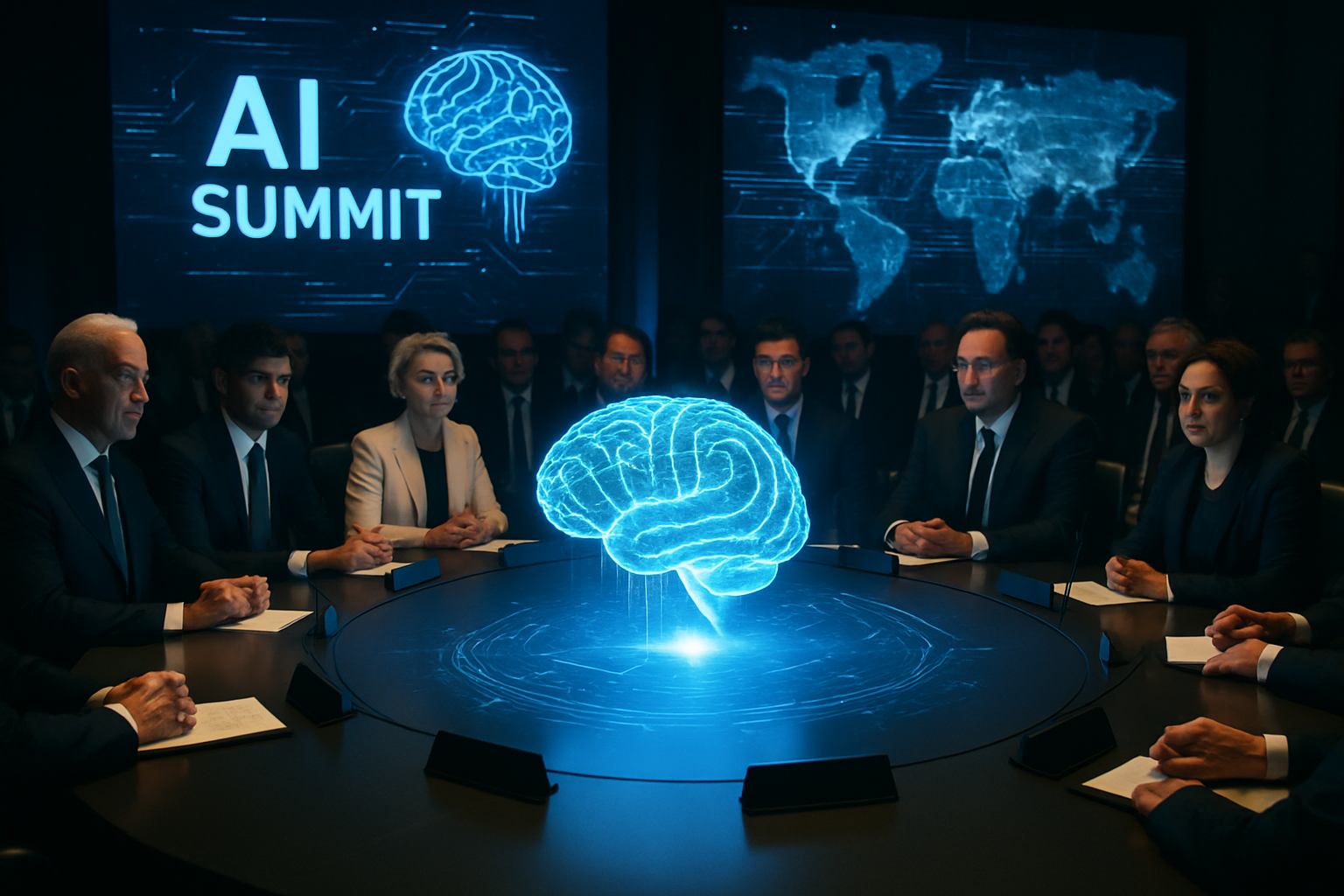
February 2026 marks a critical inflection point in global artificial intelligence development, as nations across multiple continents unveil groundbreaking AI initiatives while grappling with unprecedented regulatory challenges and infrastructure constraints that could reshape the technological landscape for decades to come.
Corporate AI Innovation Surge
Austrian technology firm Aras has significantly expanded its InnovatorEdge platform with new services targeting API management, app development, and agentic AI integration. The company's enhanced offerings focus on secure, governance-compliant integration of Product Lifecycle Management (PLM) systems with partner networks and agent-based artificial intelligence solutions.
Meanwhile, in Austria's tourism sector, feratel has launched its "AI plus" initiative, introducing AI-powered tourism solutions that exclusively access curated destination content. These new AI agent solutions are designed to be deployed across multiple channels while maintaining brand consistency, marking a significant advancement in sector-specific AI applications.
Philippines Launches National AI Strategy
The Philippines has taken a major step toward AI adoption with the official launch of the National Artificial Intelligence Center for Research and Innovation (NAICRI) on February 26. Headed by the Department of Science and Technology (DOST), this government program aims to "harmonize" the nation's efforts to harness AI as a "force of development."
"While there have been many impactful project-based AI efforts before its establishment, these were fragmented and siloed,"
— DOST Secretary Renato Solidum
DOST is building NAICRI under a unified framework philosophy that brings together government, private firms, micro, small, and medium enterprises (MSMEs), and the general public to address various societal needs including healthcare and disaster assistance. Solidum describes NAICRI as the "institutional anchor" to the National AI Strategy approved by the country's leadership.
International AI Summit Highlights Global South Leadership
The AI Impact Summit 2026, held in New Delhi from February 16-20, represented the first major AI conference hosted in the Global South. Featuring over 250,000 delegates from 100+ countries, including tech industry leaders like Google's Sundar Pichai and OpenAI's Sam Altman, the summit positioned India as a bridge between advanced and developing economies.
Under Prime Minister Modi's "People, Planet, Progress" framework, the summit addressed critical AI challenges through seven working groups covering safety, skills, inclusion, and economic growth. The resulting Delhi Declaration, signed by 88 countries, represents the largest AI diplomatic agreement in history, though it relies on voluntary frameworks rather than binding commitments.
Voice AI Ethics Under Scrutiny
ElevenLabs CEO Mati Staniszewski has sparked important conversations about the ethical boundaries of voice AI technology. Speaking at recent industry events, Staniszewski addressed the dual potential of voice AI – from restoring speech capabilities for medical patients to the concerning rise of deepfake applications.
The discussion comes amid growing concerns about AI-generated content, particularly regarding unauthorized use of voices and likenesses. The technology's advancement raises fundamental questions about consent, authenticity, and the potential for misuse in an era where AI can convincingly replicate human speech patterns.
Infrastructure Challenges Persist
Despite rapid AI advancement, the industry faces significant infrastructure constraints. A global memory semiconductor crisis has driven prices up sixfold, affecting major manufacturers including Samsung, SK Hynix, and Micron. These shortages are expected to persist until 2027 when new fabrication facilities come online.
The World Bank projects that AI water demand could reach 4.2-6.6 billion cubic meters by 2027 for data center cooling – equivalent to four to six times Denmark's annual water withdrawal. This environmental impact adds another layer of complexity to AI deployment strategies worldwide.
Educational AI Integration Accelerates
Several nations are pioneering innovative approaches to AI in education. Malaysia operates the world's first AI-integrated Islamic school, successfully combining artificial intelligence with traditional religious and academic learning. Canada has implemented AI teaching assistants in universities while maintaining critical thinking standards, and Singapore's WonderBot 2.0 has achieved success in heritage education.
These success stories demonstrate that effective AI integration requires human-centered approaches, cultural sensitivity, and comprehensive stakeholder engagement rather than wholesale replacement of traditional educational methods.
Regulatory Frameworks Evolve
The regulatory landscape for AI continues to evolve rapidly across jurisdictions. Spain has implemented the world's first criminal executive liability framework for social media platforms, creating unprecedented personal legal risks for tech executives. France has conducted cybercrime raids on AI companies, while the European Union investigates potential Digital Services Act violations by major platforms.
The United Nations has established an Independent International Scientific Panel on AI with 40 global experts, led by Secretary-General António Guterres. This represents the first fully independent global AI impact assessment body, signaling international recognition that AI governance requires coordinated multilateral approaches.
Military-Civilian AI Tensions
The intersection of AI with military applications has created significant tensions between safety-focused companies and defense departments. The Pentagon has integrated ChatGPT into military systems while pressuring companies to deploy AI in classified networks without civilian safety restrictions.
Anthropic faces potential designation as a "supply chain risk" over its refusal to allow military use of Claude AI for "all lawful purposes." The company's ethics policies prohibit violence, surveillance, and autonomous weapons use, highlighting fundamental conflicts between AI safety principles and national defense imperatives.
Market Disruption and Economic Impact
The AI revolution has triggered what industry analysts term the "SaaSpocalypse" – the elimination of hundreds of billions in market capitalization as AI systems replace traditional software solutions. Chinese DeepSeek breakthroughs have challenged US technological dominance, creating a more multipolar AI landscape.
Employment predictions remain sobering, with Microsoft's Mustafa Suleyman forecasting that AI could replace the majority of office workers within two years and lawyers and auditors within 18 months. However, some regions like India show IT companies adapting through worker transition to AI-enhanced roles rather than mass layoffs.
Looking Forward: Critical Decisions Ahead
February 2026 represents a watershed moment in AI development – the transition from experimental applications to essential infrastructure across all sectors. Success in managing this transformation will require unprecedented coordination between governments, technology companies, educational institutions, and civil society.
Key challenges include resolving infrastructure constraints, developing international cooperation frameworks, and creating sustainable business models that prioritize human welfare alongside technological advancement. The decisions made in 2026 will likely determine whether AI fulfills its transformative promise or creates systemic societal disruption requiring dramatic corrections.
The global response to AI development reveals a complex landscape where innovation must be balanced with safety, commercial interests with human welfare, and national competitiveness with international cooperation. As nations continue to navigate these challenges, the examples of successful human-centered AI integration provide hope that technology can enhance rather than replace the fundamental human capabilities that define our potential as societies.