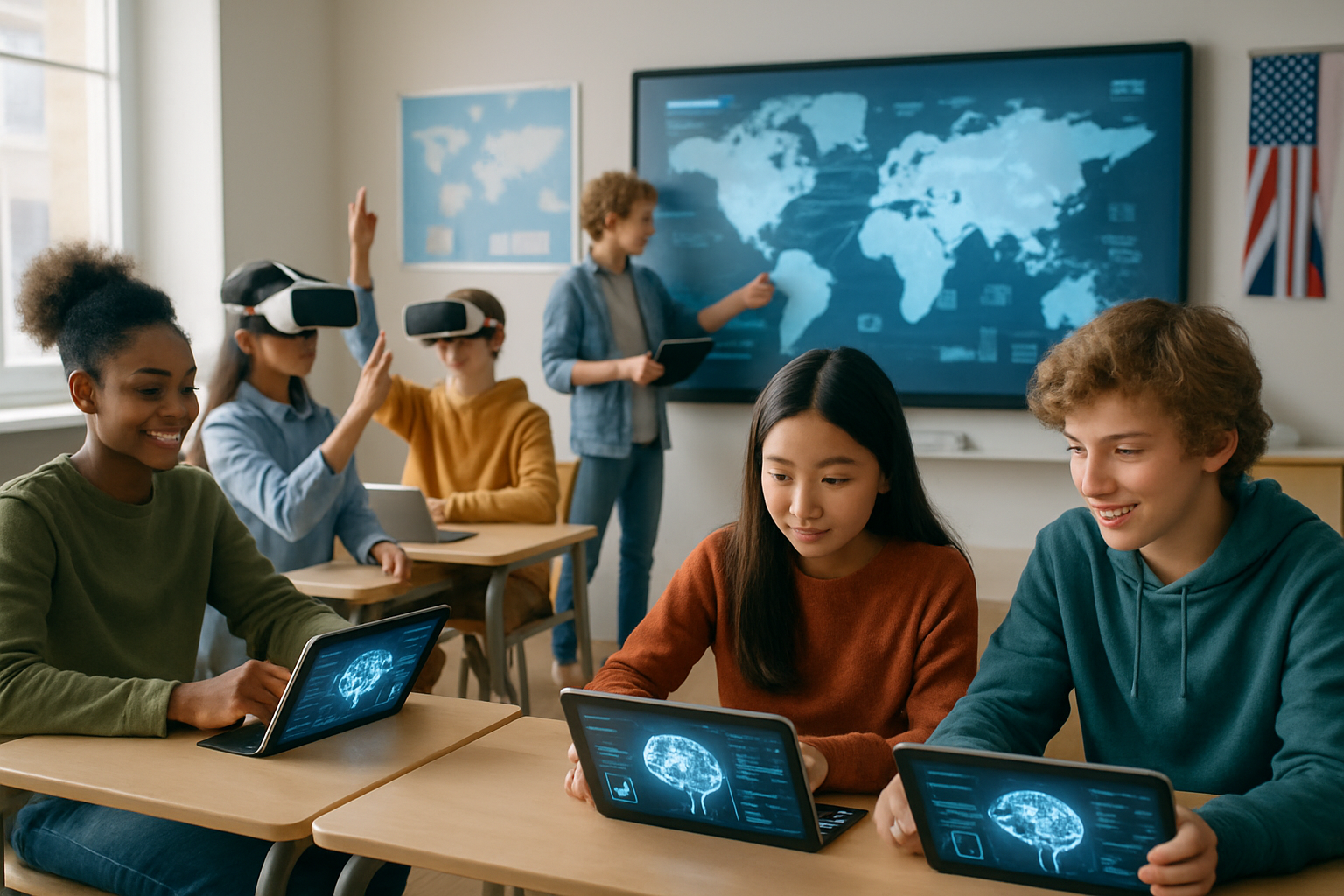
A global transformation is sweeping through educational systems as nations from the Caribbean to Scandinavia embrace artificial intelligence and advanced digital technologies to revolutionize learning experiences and address critical challenges in accessibility, gender equity, and educational outcomes.
The convergence of AI integration in classrooms, standardized assessment innovations, and diversity initiatives in technology education represents a fundamental shift in how educational institutions worldwide are preparing students for an increasingly digital future, while confronting persistent systemic challenges that have hindered progress for decades.
Saint Lucia Addresses AI Learning Concerns
Saint Lucia's Minister for Education and Digital Transformation, Hon. Kenson Casimir, has raised significant concerns about the current state of artificial intelligence implementation in the country's educational system. The minister's recent statements highlight the growing tension between rapid AI adoption and ensuring educational quality and accessibility for all students.
These concerns come at a critical juncture as Caribbean nations work to position themselves competitively in the global digital economy. Saint Lucia's approach reflects a cautious but forward-thinking stance on integrating AI technologies while maintaining educational standards and addressing local needs.
The minister's focus on digital transformation represents part of a broader regional trend, where smaller nations are leveraging technology to overcome geographical and resource limitations in providing world-class education to their populations.
India Celebrates Academic Milestone
In a significant development for India's higher education sector, the University Grants Commission National Eligibility Test (UGC NET) December 2025 results have been declared, with over 5,100 candidates successfully qualifying for Junior Research Fellowship (JRF). This milestone represents a crucial step in strengthening India's research and academic infrastructure.
The UGC NET results underscore India's commitment to expanding its pool of qualified researchers and educators at a time when the country is positioning itself as a global knowledge hub. The examination, conducted by the National Testing Agency, serves as a gateway for aspiring academics and researchers seeking to contribute to India's growing higher education sector.
This achievement occurs within the context of broader educational developments across Asia, where countries are investing heavily in research infrastructure and academic excellence to compete in the global knowledge economy.
Norway Tackles Gender Gaps in AI Education
Norway is confronting a significant challenge in artificial intelligence education, with experts warning that the low participation of women in AI-related fields could create dangerous "blind spots" in technology development. This concern highlights the critical importance of diversity in shaping the future of artificial intelligence.
The Nordic country's focus on gender equity in technology education reflects growing international recognition that diverse perspectives are essential for developing AI systems that serve all segments of society effectively. The lack of female participation in AI fields could result in technology solutions that fail to address the needs and experiences of half the global population.
One inspiring example is Lara, a 16-year-old who began programming at age nine, demonstrating that early exposure and encouragement can successfully attract young women to technology fields. Her story serves as a model for how educational systems can inspire the next generation of female technologists.
Global Context: The AI Education Renaissance
These developments occur within a broader global AI education renaissance that has characterized early 2026. Malaysia has announced the world's first AI-integrated Islamic school, combining artificial intelligence with traditional religious education. Singapore has deployed WonderBot 2.0, an AI-powered conversational learning system developed through a strategic partnership between HeritageSG and Tencent.
The global education technology sector is experiencing unprecedented transformation, moving beyond simple digitization to fundamental reimagining of learning experiences through AI personalization, immersive experiences, and adaptive assessment technologies.
"We are witnessing a fundamental shift from technological upgrades to complete reimagining of how education is delivered and accessed in an interconnected global economy."
— Education Technology Analyst
Challenges and Opportunities
Despite these advances, significant challenges remain. Environmental concerns about AI data center energy consumption have prompted warnings from city leaders like Melbourne's Lord Mayor about AI potentially "cooking the planet." Digital equity gaps continue to affect access to advanced educational technologies, particularly in rural and underserved communities.
The memory crisis affecting AI development, with sixfold price surges in critical components, is creating constraints on educational technology deployment. Regulatory frameworks for child protection, data privacy, and algorithmic bias in educational settings require urgent attention as AI systems become more prevalent in schools.
However, these challenges are spurring innovation in sustainable technology solutions and international cooperation models. Countries are sharing best practices and developing collaborative approaches to ensure that AI in education serves the common good while respecting local values and needs.
The Path Forward
The integration of artificial intelligence in education represents both an unprecedented opportunity and a critical responsibility. As nations like Saint Lucia, India, and Norway navigate different aspects of this transformation, their experiences provide valuable insights for the global education community.
Success in this AI education revolution will depend on maintaining focus on fundamental educational values while embracing technological innovation. The goal remains unchanged: providing every student with the knowledge, skills, and opportunities needed to thrive in an increasingly complex and connected world.
The developments in February 2026 suggest that educational institutions worldwide are moving beyond pilot projects to systematic implementation of AI-enhanced learning systems. This transition requires careful attention to equity, quality, and the preservation of human elements that make education transformative.
As these initiatives continue to evolve, they will undoubtedly shape the future of global education, creating new possibilities for learning while addressing age-old challenges of accessibility, quality, and relevance in preparing students for the demands of the 21st century and beyond.