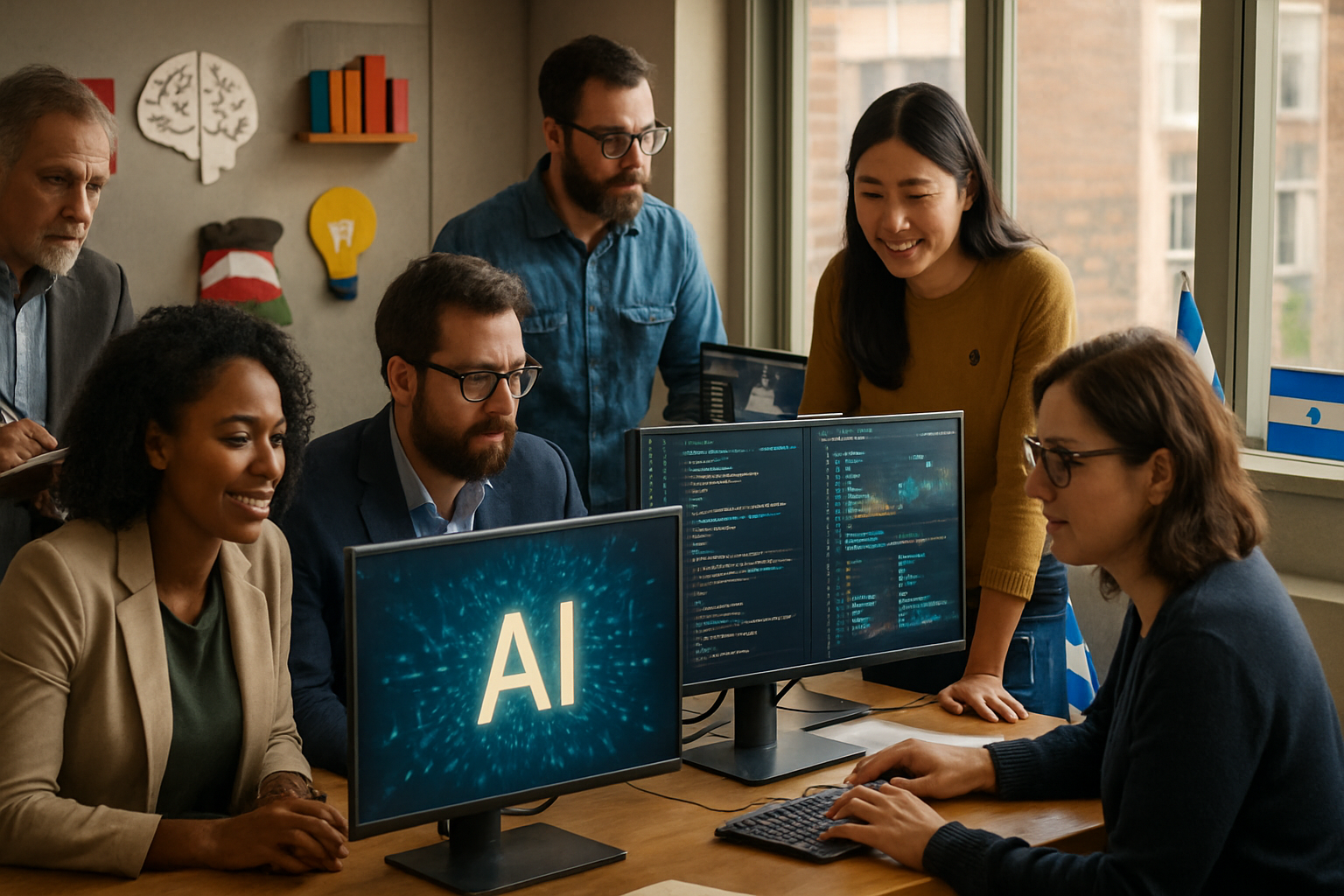
A comprehensive analysis of artificial intelligence developments across six nations reveals March 2026 as a critical inflection point where experimental AI applications are rapidly transitioning into essential educational and technological infrastructure, with countries pioneering innovative approaches that prioritize human-centered collaboration over wholesale replacement of traditional systems.
Austria Leads Educational AI Integration with New Curriculum Framework
Austria's economic sector has welcomed the government's groundbreaking decision to establish computer science and artificial intelligence as a dedicated school subject. The announcement from the Austrian Chamber of Commerce's UBIT division represents a pivotal moment in European educational policy, with spokesperson Drexler characterizing the move as "an important step for IT education in Austria's schools."
This initiative positions Austria at the forefront of the "2026 Educational Technology Renaissance" - a coordinated international movement that emphasizes thoughtful digital tool integration with traditional educational values rather than wholesale technological replacement. The Austrian approach reflects sophisticated understanding that effective AI integration requires balancing innovation with established pedagogical principles.
Cultural Innovation Through AI: Bolivia's Creative Breakthrough
In La Paz, Bolivia, the renowned band Octavia is set to release their groundbreaking music video "Lunes" on March 30, 2026, representing a fusion of artificial intelligence tools with traditional audiovisual storytelling. The project, part of their album "El Origen del Caos," demonstrates how AI can amplify rather than replace human creativity while expanding the conceptual universe of artistic expression.
"This new audiovisual production demonstrates the group's continued innovation within the Bolivian music scene by incorporating artificial intelligence tools combined with traditional audiovisual language."
— La Razón Report
The initiative exemplifies successful AI integration in creative industries, where technology serves as an enhancement tool for human imagination rather than a replacement mechanism. This approach aligns with broader global trends showing that the most promising AI implementations preserve uniquely human elements while leveraging computational advantages.
Canada Pioneers AI Literacy Education Framework
Canada has launched its inaugural AI Literacy Day, marking a significant milestone in global digital education policy. The initiative features comprehensive programming including classroom demonstrations and virtual events coordinated through organizations like MediaSmarts, addressing the critical need for AI literacy across all educational levels.
Dana Connors, a Grade 3 teacher in the Ottawa Catholic School Board, represents thousands of educators participating in this systematic approach to AI education. The Canadian model emphasizes responsible AI usage while maintaining critical thinking standards - a template that other nations are closely studying as they develop their own AI education frameworks.
This development occurs amid broader concerns about AI's impact on educational processes, with Pew Research revealing that over 50% of teenagers globally now regularly use AI tools for homework assignments. Canada's structured approach provides a model for managing this transition responsibly.
Australia Grapples with AI's Creative and Professional Impact
Australian discourse around artificial intelligence reflects growing tensions about AI's role in creative professions. The ongoing debate centers on whether AI will fundamentally alter the nature of creative work or enhance human capabilities. This discussion parallels similar conversations globally as creative professionals navigate the rapidly evolving landscape of AI-assisted content creation.
The Australian experience provides valuable insights into the psychological and professional challenges facing creative workers in an AI-integrated economy. Industry experts emphasize that success will likely depend on developing sophisticated human-AI collaboration models rather than viewing the technology as a direct replacement for human creativity.
Asian Leadership in AI Development and Governance
Nicaragua's coverage of Asia's growing prominence in artificial intelligence development underscores a significant shift in global technology leadership. Asian nations are consolidating their positions as AI pioneers while promoting innovation and maintaining balance in global technological development.
This trend reflects the emergence of what experts term a "multipolar AI landscape," where distributed capabilities across different regions prevent single-entity dominance while enabling culturally sensitive development approaches. Singapore's systematic AI integration, Malaysia's world-first AI-integrated Islamic school, and other Asian initiatives demonstrate sophisticated approaches to balancing technological advancement with cultural preservation.
Apple's Strategic AI Investment Signals Industry Transformation
Apple's hiring of a former Google executive to lead AI marketing amid efforts to improve Siri represents broader industry recognition that AI capabilities have become essential for competitive positioning in consumer technology. The move reflects the transition from AI as an experimental feature to a core business requirement across technology platforms.
This development occurs amid what industry analysts term the "SaaSpocalypse" - the elimination of hundreds of billions in traditional software market capitalization as AI systems demonstrate direct replacement capabilities for conventional solutions. The transformation represents one of the most rapid technology transitions in modern business history.
Infrastructure Challenges Drive Innovation
Despite remarkable progress in AI development, the global semiconductor crisis continues to shape technological advancement patterns. Memory chip prices have surged sixfold, affecting major manufacturers including Samsung, SK Hynix, and Micron, with shortages expected to persist until 2027 when new fabrication facilities come online.
Paradoxically, these constraints are spurring innovation in memory-efficient algorithms, hybrid processing approaches, and sustainable deployment strategies. The crisis is forcing developers to create more thoughtful, efficient AI implementations that maximize capabilities while minimizing hardware requirements - potentially democratizing access to advanced AI technologies.
Global Regulatory Frameworks Emerge
International cooperation on AI governance has intensified dramatically, with the United Nations establishing an Independent Scientific Panel comprising 40 global experts under Secretary-General António Guterres. This represents the first fully independent international AI assessment body, recognizing that AI governance requires unprecedented coordination among governments, technology companies, educational institutions, and civil society.
European nations are leading regulatory innovation, with Spain implementing the world's first criminal executive liability framework for technology platforms and France conducting AI company cybercrime raids. These developments represent the most sophisticated global technology governance efforts since internet commercialization.
Human-Centered AI: The Path Forward
The most successful AI implementations worldwide share common characteristics: they enhance rather than replace human capabilities, maintain sustained commitment to human development, ensure comprehensive stakeholder engagement, and demonstrate cultural sensitivity in implementation approaches.
Examples include Canada's AI teaching assistants that maintain critical thinking standards in universities, Malaysia's AI-integrated Islamic school that combines technological advancement with traditional religious learning, and Singapore's WonderBot 2.0 heritage education system that preserves cultural knowledge while leveraging advanced technology.
Economic Implications and Strategic Significance
Educational and technological AI investments are increasingly viewed as strategic 21st-century infrastructure rather than cost centers. Countries implementing comprehensive, culturally-sensitive reforms report improved community resilience, enhanced international competitiveness, and better preparation for addressing global challenges including climate change and technological disruption.
Prevention-first approaches to AI integration demonstrate superior economic outcomes through reduced crisis intervention costs, decreased unemployment, and improved workforce productivity. The evidence suggests that educational systems serving as strategic infrastructure create self-reinforcing cycles where excellence supports economic development, enabling further investment in human capital.
Critical Juncture: March 2026
March 2026 represents a critical juncture in global AI development, with decisions made during this period likely to determine trajectories for the remainder of the decade. The convergence of supply chain constraints, regulatory intensification, massive corporate investments, and international cooperation requirements creates unprecedented coordination challenges.
Success depends on resolving infrastructure constraints while maintaining innovation momentum, developing sustainable business models that prioritize human welfare alongside technological advancement, and fostering international cooperation that balances national competitiveness with global stability.
"The future lies in sophisticated human-AI collaboration that amplifies human capabilities while preserving creativity, cultural understanding, and ethical reasoning that define human potential."
— International AI Policy Analysis
The window for effective coordinated action is narrowing rapidly as AI development accelerates. The choices made in 2026 regarding infrastructure development, international cooperation frameworks, and sustainable business models will establish decades-long patterns for human-AI relationships.
The evidence from these six nations demonstrates that the most promising path forward involves treating AI as sophisticated amplification tools that serve specific human goals rather than wholesale replacement mechanisms. Success requires unprecedented coordination among stakeholders while maintaining focus on human flourishing, democratic values, and cultural authenticity.
As artificial intelligence transitions from experimental applications to essential infrastructure, the global community faces both unprecedented opportunities and significant responsibilities. The developments across Austria, Bolivia, Canada, Australia, Nicaragua, and Singapore provide valuable templates for balancing technological innovation with human-centered values - a balance that will prove crucial for ensuring AI serves humanity's highest aspirations while preserving the creativity, empathy, and wisdom that define human potential.