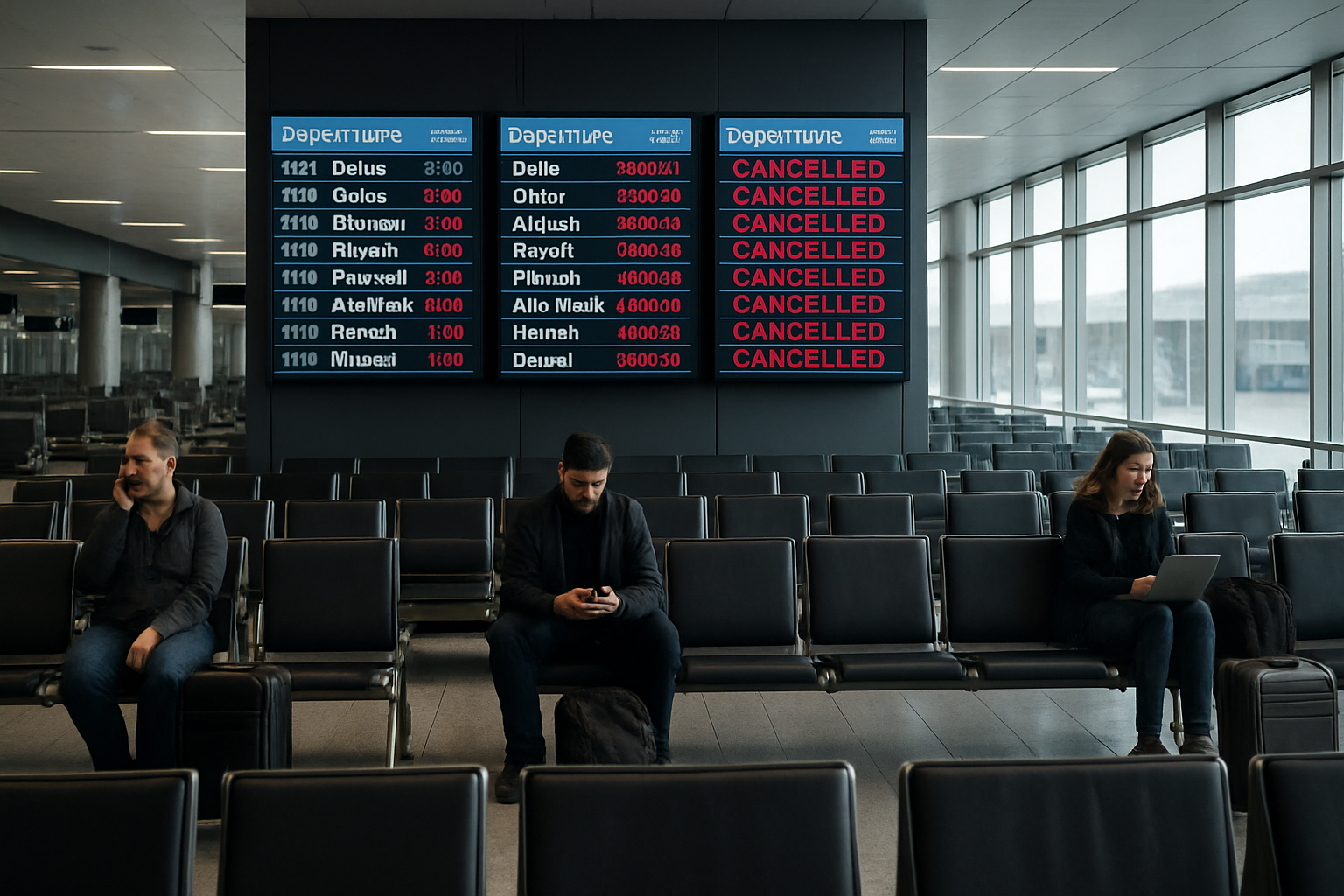
Airlines worldwide continue suspending flights to Middle East destinations as the region's security crisis enters its second week, creating the most extensive aviation disruption since the COVID-19 pandemic with over 18,000 flights cancelled globally.
The ongoing crisis, which began with coordinated military operations in late February 2026, has forced eight Middle Eastern countries to simultaneously close their airspace to civilian traffic, affecting critical Europe-Asia transit routes and stranding hundreds of thousands of passengers worldwide.
Current Flight Suspension Status
Major airlines across multiple continents have extended or implemented new suspensions to Middle East destinations. Australia's flagship carrier confirmed that Iran has launched fresh attacks on Persian Gulf countries, prompting carriers to cancel most flights to the region over security concerns.
European governments have mobilized extensive evacuation efforts, with Canada launching its first overland departure operation for citizens choosing to leave Kuwait. The Canadian Embassy announced Monday the inaugural land-based evacuation route, while French Ambassador to Kuwait Olivier Gauvin confirmed the departure of evacuation buses as part of voluntary repatriation operations, with approximately 50 French citizens beginning their exit from the region.
Aviation authorities report that Kuwait Airways has announced special flights from Paris to Dammam Airport to facilitate passenger returns to Kuwait, though travelers now require Saudi transit visas for this alternative routing.
Energy Market Disruption Fuels Crisis
The aviation crisis parallels a severe energy market disruption, with oil prices surging and global travel costs reaching unprecedented levels. Industry reports indicate the conflict has sent oil prices soaring, fundamentally upending global travel patterns and pushing airline ticket costs on some routes to extreme highs.
The Strait of Hormuz, which handles 40% of global seaborne oil transit, has been effectively closed, creating cascading effects throughout the transportation industry. Major shipping companies have suspended operations, with over 150 oil and LNG tankers stranded in the Persian Gulf representing billions in cargo value.
Cricket Teams Caught in Travel Chaos
The crisis has even affected international sporting events, with Cricket West Indies forced to abandon ICC-organized charter flight arrangements for its squad members stranded in India following their T20 World Cup participation. The organization waited nine days for charter arrangements before securing commercial travel alternatives.
In a statement released Tuesday, Cricket West Indies confirmed that after repeated delays to charter arrangements handled by the International Cricket Council, it was no longer prudent to wait. The charter flight, intended to transport both the West Indies and South Africa teams home, was cancelled due to ongoing international airspace closures amid the Middle East conflict.
Players and staff described the situation as "increasingly distressing," with some departing on different commercial flights scheduled for Tuesday and Wednesday. The disruption highlights how the regional crisis has affected even previously arranged international transportation logistics.
Alternative Routes and Contingency Planning
Airlines have implemented extensive contingency measures, including enhanced fuel loading to avoid refueling in affected zones, complex rerouting through alternative hubs, and dramatically increased operational costs. Some carriers are utilizing Caribbean stopovers for trans-Pacific routes, fundamentally altering traditional flight patterns.
The crisis has exposed the aviation industry's vulnerability to geopolitical instability in strategic regions, forcing a fundamental reconsideration of route planning and risk assessment procedures. With Russian and Ukrainian airspace already unavailable due to ongoing conflicts, the simultaneous closure of Middle Eastern airspace has created unprecedented routing challenges for international aviation.
Government Evacuation Efforts Intensify
Multiple governments have activated emergency evacuation protocols on a scale not seen since the Arab Spring of 2011. European nations have coordinated unprecedented evacuation efforts, with Cyprus activating its ESTIA plan for the first time in the country's history.
The coordinated response demonstrates both the strengths and limitations of international crisis management frameworks, with varying levels of government preparedness revealed across different nations' emergency response capabilities.
Economic and Industry Impact
The aviation disruption extends far beyond passenger inconvenience, affecting global supply chains, cargo operations, and trade routes. The Middle East serves as a critical connecting hub between Europe and Asia, and the prolonged closure of this corridor is creating ripple effects throughout international commerce.
Financial markets have responded negatively to the crisis, with aviation stocks particularly affected. Several major airlines have postponed financial announcements and strategic decisions pending resolution of the regional security situation.
Recovery Timeline Remains Uncertain
Unlike weather-related disruptions that typically have predictable recovery timelines, the current crisis depends entirely on military operations resolution and diplomatic normalization. Airlines are conducting daily operational reviews but cannot make long-term scheduling decisions while multiple airspaces remain closed.
Industry experts note that even when flights resume, clearing the backlog of cancelled flights and stranded passengers could take weeks. The situation represents a watershed moment for the aviation industry, forcing enhanced contingency planning and route diversification strategies for future geopolitical volatility.
Aviation authorities continue to advise passengers to verify flight status directly with airlines before traveling to airports, as the situation remains fluid with frequent updates to flight schedules and routing options.