A disturbing wave of antisemitic attacks and religious violence has emerged across multiple countries, with new incidents reported in Australia, Malaysia, and the United Kingdom, adding to a growing global pattern of threats against religious minorities.
The latest incidents follow a concerning trend that has seen religious communities worldwide face increased targeting, with authorities struggling to protect places of worship and community members from coordinated attacks.
Australia Faces Coordinated Antisemitic Campaign
In Australia, courts have revealed the extent of a sophisticated antisemitic campaign that included the firebombing of a Maroubra childcare centre, the torching of a prominent Jewish leader's former residence, and the defacing of a Newtown synagogue. The attacks, described by authorities as a "deliberate tactic to divide" communities, were reportedly ordered by overseas actors.
The man responsible for orchestrating these attacks has been jailed, with the court noting the systematic nature of the violence. The case represents part of a broader pattern of antisemitic incidents that have plagued Australia in recent months, following the devastating December 14, 2025 Bondi Beach Hanukkah festival attack that claimed 15 lives - Australia's deadliest antisemitic attack.
Adding to concerns, a separate incident involved a 22-year-old man who mimicked the actions of the Bondi attackers while on the same footbridge where the original shooting occurred. The man, Zayne Jason William McMillan, was seen posing and moving his hands as though holding a firearm, actions his lawyer attributed to "drunken stupidity."
Religious Desecration in Malaysia
Meanwhile, in Malaysia, authorities are investigating the desecration of Hindu religious symbols, with an individual named Tamim claiming ignorance about the significance of a "soolam" - a religious symbol he described as looking like "rusty metal." The incident has sparked outrage among religious activists who maintain the sacred nature of the site was clearly evident.
The case highlights ongoing tensions around religious respect and understanding in Malaysia's diverse society, where incidents targeting religious minorities have periodically sparked communal concerns.
UK Grooming Gang Investigations
In the United Kingdom, Members of Parliament are demanding urgent action regarding grooming gangs in London, calling for the government's ongoing inquiry to "look specifically at London as part of its local investigations." The demand represents growing pressure on authorities to address systematic failures that have allowed exploitation of vulnerable communities to continue.
The calls come amid broader concerns about how religious and ethnic minority communities have been affected by organized criminal exploitation, with some cases involving targeting based on religious identity.
Historical Context and Escalating Patterns
These incidents occur against the backdrop of a documented surge in antisemitic violence globally. Ireland's Jewish Council recently documented 143 antisemitic incidents over a six-month period from September 2025 to February 2026, expressing "deep concern" and calling for a "rapid development of dedicated national plan to counter growing antisemitism."
"The systematic nature of these attacks represents a concerning evolution from isolated incidents to coordinated campaigns targeting religious communities"
— International security expert
Australia has been particularly affected, with the February 21, 2026 Brisbane Synagogue ramming attack adding to the pattern of vehicle-based assaults on religious institutions. A 32-year-old Sunnybank man used a Toyota Hilux to knock down the gates of a Margaret Street synagogue in what police described as a "targeted attack."
Enhanced Security Measures
In response to the escalating threats, Australian authorities have implemented significant security enhancements. NSW Police established a new armed response command with over 250 specialist officers equipped with long-arm rifles and modified rapid-response vehicles. Operation Shelter, an anti-hate crime unit originally developed after October 7 tensions, has been made permanent.
The security measures include intelligence-led patrols of high-risk areas, places of worship, and community centers. Jewish communities across Australia have increased their security protocols, working closely with law enforcement while expressing concerns about the surveillance's potential chilling effects on community life.
International Cooperation and Response
European authorities have also documented sophisticated foreign interference in targeting religious communities. British counter-terrorism police recently arrested four men suspected of spying for Iranian intelligence services, with investigations focused on alleged surveillance of Jewish community locations and individuals.
The arrests, which included one Iranian national and three dual British-Iranian citizens, revealed systematic targeting of religious institutions, community centers, and prominent community members. Similar Iranian recruitment operations have been reported across Denmark, Germany, and France, indicating coordinated continental-wide surveillance networks.
Community Impact and Resilience
Religious communities worldwide report adapting to the new security reality while maintaining their commitment to openness and religious practice. Enhanced security measures at synagogues, mosques, and other religious institutions have become commonplace, with many communities establishing emergency response protocols and strengthened coordination with law enforcement.
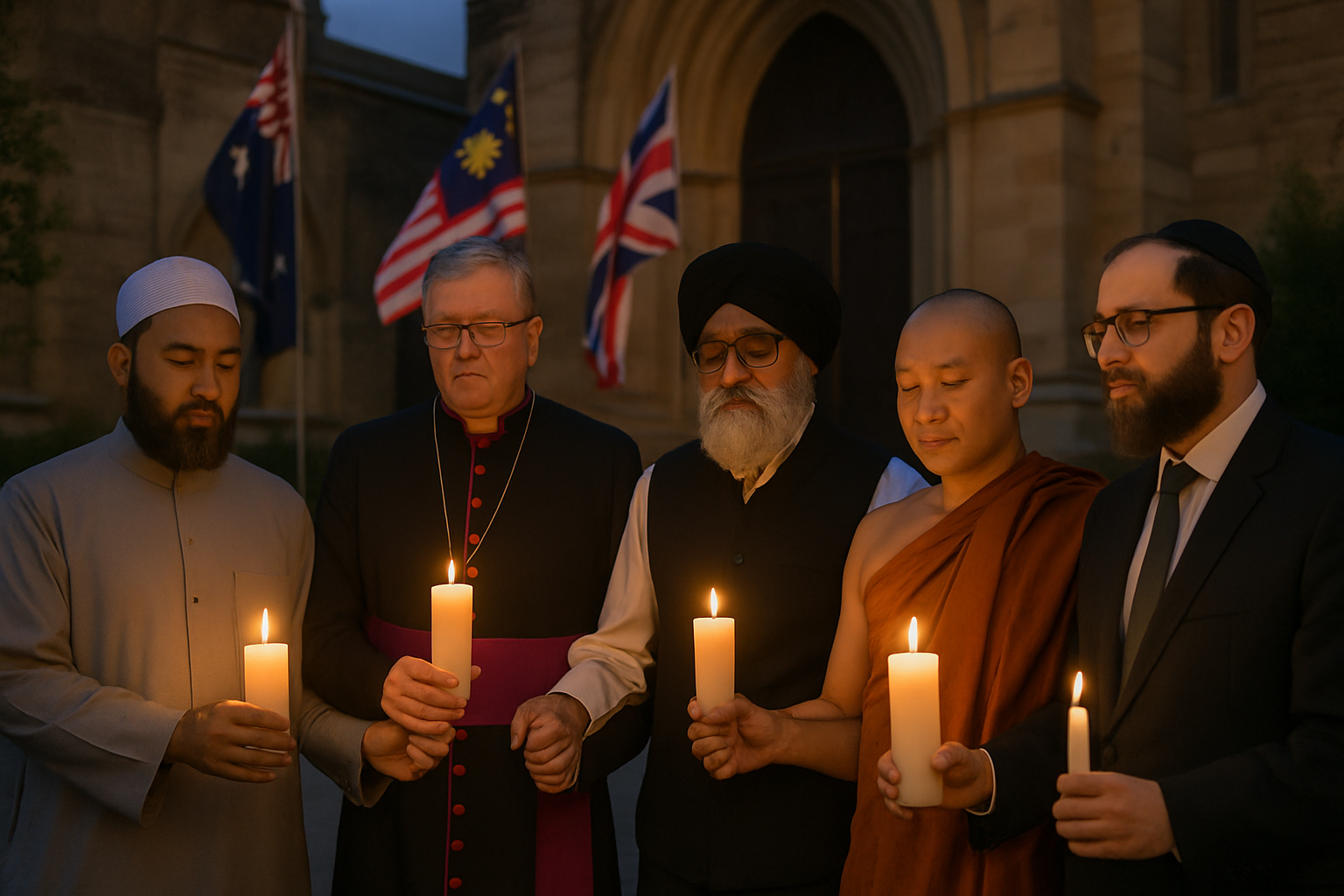
Interfaith support networks have emerged as a crucial response, with religious leaders from different faiths coming together to condemn hatred and support affected communities. These solidarity efforts represent an important counter-narrative to the divisive intentions behind the attacks.
Legal and Policy Responses
Governments are grappling with how to strengthen legal frameworks to address religious violence while maintaining democratic principles. Enhanced hate crime legislation and improved prosecution tools are being implemented across multiple jurisdictions.
The challenge for democratic societies lies in balancing effective security responses with the preservation of civil liberties and religious freedom. Success requires sustained political commitment, adequate law enforcement resources, and comprehensive approaches addressing the root causes of religious hatred.
Looking Forward
The recent incidents across Australia, Malaysia, and the UK underscore the global nature of threats facing religious minorities. The sophisticated planning demonstrated in some attacks, combined with the use of digital platforms for coordination and recruitment, presents new challenges for security services worldwide.
As communities and governments work to address these threats, the coming months will test the effectiveness of enhanced security measures, international cooperation mechanisms, and society's commitment to protecting religious freedom and minority rights in an increasingly polarized world.
The incidents serve as a stark reminder that vigilance and coordinated action remain essential for protecting the fundamental right to religious practice and ensuring that places of worship remain safe spaces for all communities.