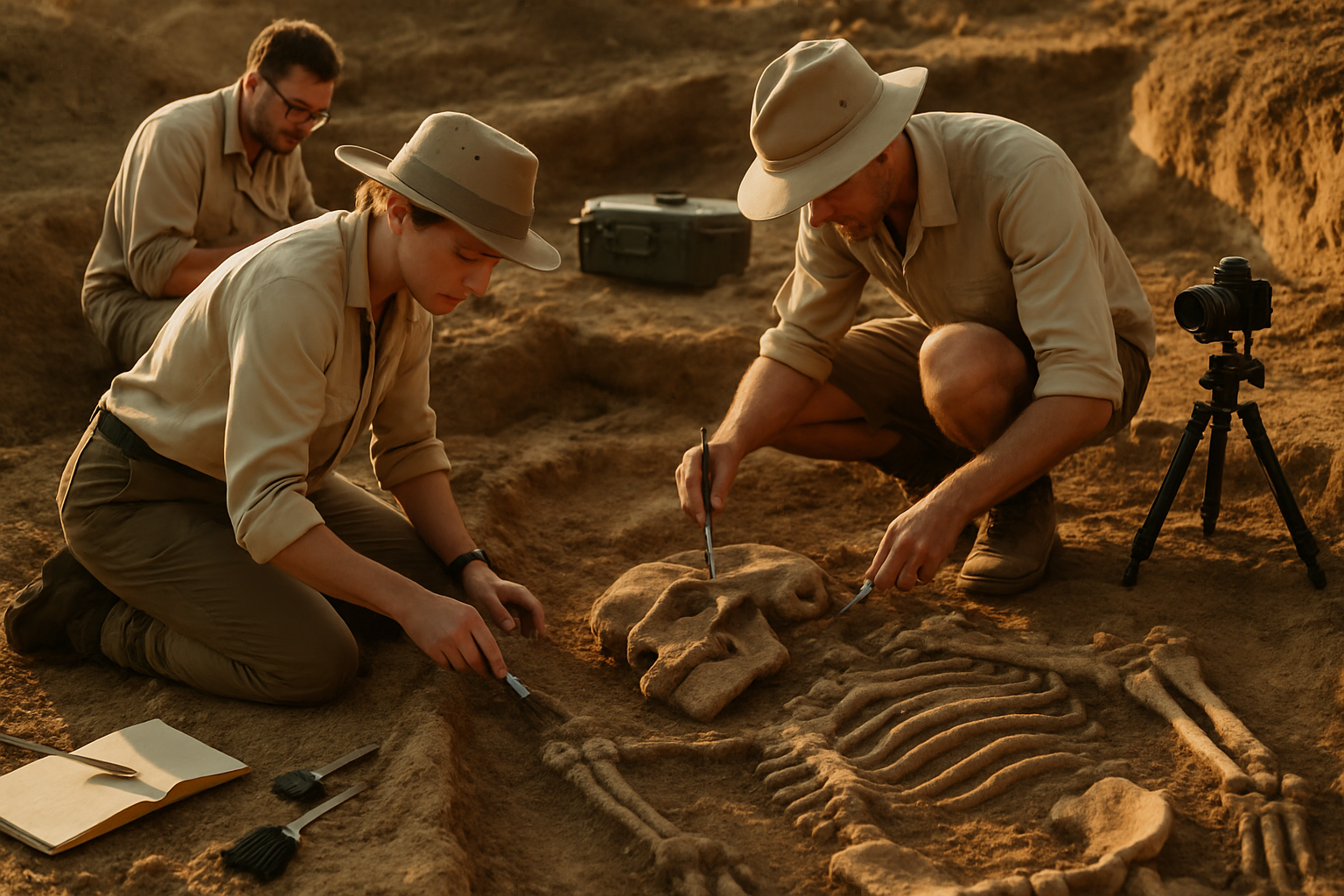
Archaeological teams across Austria, Israel, Portugal, and Serbia have unveiled remarkable discoveries that fundamentally challenge our understanding of ancient civilizations, from the world's oldest dog DNA evidence to sophisticated Iron Age maritime trade networks that may rewrite the history of warfare and commerce.
These discoveries, emerging as part of the ongoing "2026 Archaeological Renaissance," demonstrate how cutting-edge scientific techniques combined with traditional archaeological methods are revealing previously invisible aspects of human and animal history spanning millennia.
Ancient Canine Companionship: 16,000 Years of Human-Dog Bond
The most significant breakthrough comes from Austrian and Portuguese research teams who have identified the oldest dog DNA on record, extending the timeline of human-dog companionship by an unprecedented 5,000 years to 16,000 years ago. This discovery fundamentally alters our understanding of when and how domestic dogs became integral to human society.
Research published simultaneously in Austria and Portugal reveals that hunter-gatherer societies during the Last Glacial Maximum provided sophisticated care for their canine companions, including specialized food preparation and ritual burials typically reserved for valued community members. The DNA evidence distinguishes early domestic dogs from their wild wolf ancestors during one of the harshest periods in human history.
"This discovery challenges traditional narratives about human development, revealing sophisticated social intelligence and empathy during crucial evolutionary periods."
— International Research Collaboration
The findings suggest that interspecies bonds between humans and dogs influenced human cognitive and emotional development, providing survival advantages including predator warnings, tracking assistance, and psychological resilience during the Ice Age. This evidence of resource sharing during harsh survival periods demonstrates that the human-dog relationship was already sophisticated and mutually beneficial 16,000 years ago.
Iron Age Maritime Revolution: 2,600-Year-Old Shipwreck Secrets
Off the coast of northern Israel, marine archaeologists have made the first documented discovery of iron traded as a semi-finished product, dating back 2,600 years. This underwater excavation near the ancient port city of Tantura has uncovered evidence that may fundamentally rewrite our understanding of Iron Age warfare and commerce.
The shipwreck contains iron materials intended for weaponry production during a period of significant upheaval among rival empires in the eastern Mediterranean. This discovery provides the earliest evidence of sophisticated iron trade networks that supplied raw materials for military conflicts across the ancient world.
The implications are profound: rather than iron weapons being produced locally, ancient civilizations operated complex international supply chains for military materials. This suggests a level of economic and political sophistication in the Iron Age that historians had not previously documented.
Literary Legend Meets Archaeological Reality: D'Artagnan's Final Resting Place
In Serbia, an extraordinary archaeological discovery has potentially solved a 350-year-old mystery. Human remains discovered beneath the floor of St. Peter and Paul Church in Maastricht may belong to Charles de Batz de Castelmore d'Artagnan, the real French musketeer who inspired Alexandre Dumas' legendary character in "The Three Musketeers."
D'Artagnan died during the siege of Maastricht on June 25, 1673, while serving under King Louis XIV, but his burial location had remained unknown for centuries. The discovery occurred when the church floor suddenly subsided in February 2026, revealing a grave positioned directly in front of the altar.
Church officials and archaeologists are conducting comprehensive investigations using advanced DNA testing, carbon dating, isotope analysis, and environmental reconstruction techniques. The investigation seeks evidence of battle wounds consistent with D'Artagnan's documented military career and burial practices appropriate to his rank and status.
Methodological Revolution in Archaeological Research
These discoveries exemplify the "2026 Archaeological Renaissance" characterized by unprecedented international cooperation and technological advancement. Modern research integrates cutting-edge analytical techniques including DNA analysis, isotope studies, sophisticated imaging, and AI-powered data processing with traditional archaeological expertise.
The success of these investigations demonstrates how ground-penetrating radar, advanced chemical analysis, digital documentation systems, and environmental reconstruction techniques are unlocking previously inaccessible historical information while enabling global research collaboration.
Climate Change and Archaeological Urgency
These discoveries occur during a critical period for archaeological preservation, as January 2026 marked the 18th consecutive month of global temperatures exceeding 1.5°C above pre-industrial levels. Archaeological sites worldwide face unprecedented threats from climate change, extreme weather, and environmental degradation, adding urgency to systematic documentation and preservation efforts.
The research represents a race against time to document archaeological treasures before potential environmental damage threatens these irreplaceable sources of human history. International cooperation frameworks are essential for sharing expertise while respecting local cultural heritage ownership.
Economic and Cultural Impact
Beyond their scientific significance, these discoveries are generating substantial benefits through cultural tourism, international media attention, and enhanced diplomatic relationships. Countries positioning themselves as archaeological research leaders attract scholars, tourists, and cultural enthusiasts worldwide, contributing to sustainable economic development.
The findings also strengthen international academic partnerships and create templates for collaborative archaeological research that transcends national boundaries through shared expertise, coordinated funding, and digital documentation systems.
Future Research Directions
Each discovery opens extensive avenues for future investigation. The ancient dog DNA research will expand to additional European and Asian sites, while the Iron Age shipwreck findings may lead to discoveries of similar maritime trade networks throughout the Mediterranean.
Results from the potential D'Artagnan identification are expected within months through ongoing DNA testing and analytical procedures. Regardless of the specific outcome, the discovery contributes valuable information about 17th-century Dutch burial practices and demonstrates the remarkable potential for archaeological discoveries across European historical sites.
Historical Understanding Transformed
Together, these discoveries represent a fundamental shift in understanding ancient human capabilities versus gradual primitive-to-complex evolutionary progression. The evidence suggests that ancient communities possessed sophisticated social structures, advanced technical skills, and complex international networks much earlier than traditional historical models assumed.
From Ice Age human-animal bonds to Iron Age international trade, from medieval military history to modern archaeological techniques, these findings demonstrate that much of human history remains hidden, requiring continued research investment and international cooperation to unlock the secrets of our shared past.
The convergence of these remarkable discoveries during March 2026 establishes this period as a watershed moment in archaeological research, where traditional scholarly methods enhanced by revolutionary analytical techniques are fundamentally reshaping our understanding of ancient civilizations and their lasting contributions to human development.